With so many LED face masks on the market, it's hard to know what actually matters. Here's an honest guide to what separates a capable mask from a clever-looking gadget — and what to look for when you're ready to invest.
Type "best LED face mask" into any search engine and you'll be met with dozens of glossy options, each promising a transformed complexion. But LED light therapy is a genuine technology — and like any tool, the results you get depend almost entirely on whether you're using the right one correctly. This guide cuts through the marketing noise and explains, honestly, what makes an LED face mask worth your time and money.
What Makes the Best LED Face Mask? Start with Wavelengths
The single most important thing to check when comparing LED face masks is which wavelengths they offer. Wavelength — measured in nanometres (nm) — determines what the light actually does when it reaches your skin. A mask that only emits one colour of light is, by definition, a limited tool.
Research into photobiomodulation (the science of how light interacts with living tissue) suggests that different wavelengths may each play a distinct role in supporting skin appearance:
- Red (630 nm) — widely studied for its potential to support a firmer-looking, more radiant complexion. Read more about red LED light therapy.
- Blue (450 nm) — associated with a calmer, clearer-looking skin surface. Explore the science behind blue light therapy.
- Yellow (580 nm) — often linked to a more even, luminous-looking skin tone. Discover what yellow light therapy can do.
- Near-infrared (NIR, 850 nm) — invisible to the naked eye, NIR penetrates deeper into the skin and is studied for its potential to support a plumper, more resilient-looking complexion. Learn more about near-infrared therapy.
- Purple — a simultaneous combination of red (630 nm) and blue (450 nm), offering the potential benefits of both wavelengths in a single mode. Purple is not a separate wavelength; it's a clever pairing. See what purple LED light therapy may offer.
A mask that covers all five of these modes gives you genuine versatility — you can tailor each session to what your skin needs on any given day, rather than being locked into a one-size-fits-all approach.
LED Count, Coverage and Build Quality
Wavelengths matter most, but they're not the only thing worth scrutinising. Here's what else separates a capable mask from a cosmetic gimmick:
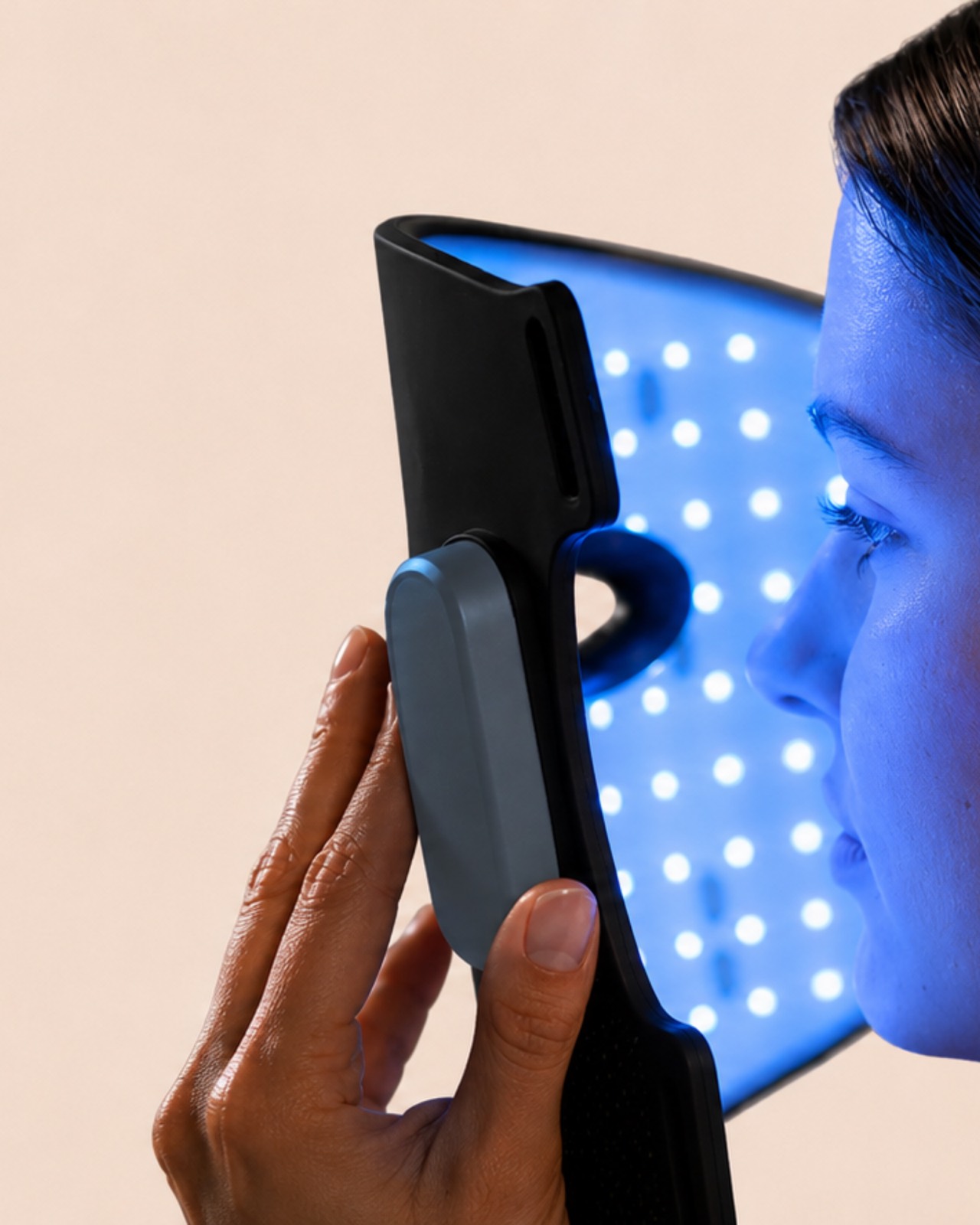
- LED count: More LEDs generally means more even light distribution across the face. A low LED count can leave patches of skin under-treated.
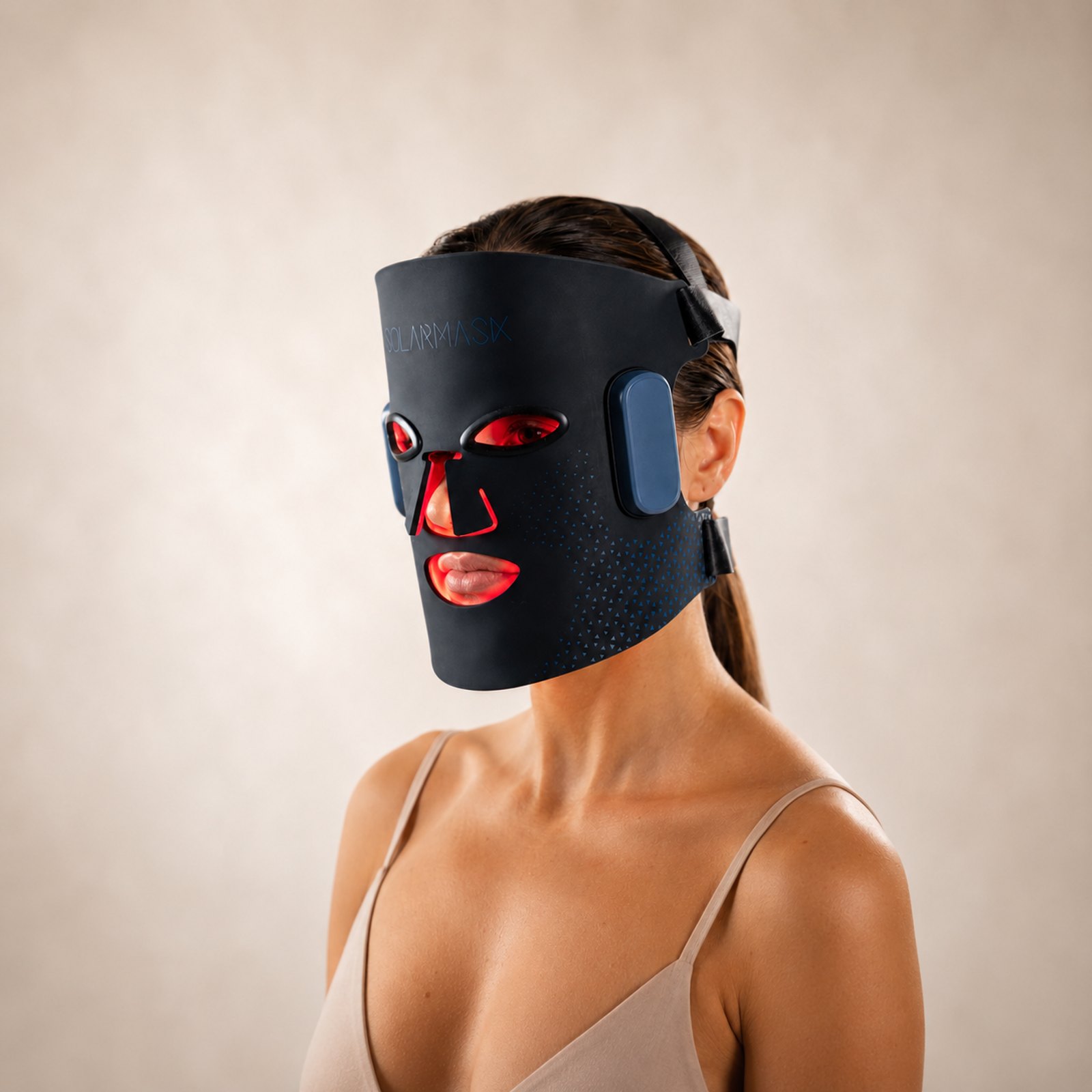
- Full-face coverage: The mask should sit close to the contours of your face — cheeks, forehead, chin and nose — so the light reaches the skin rather than dispersing into the air.
- Safety certifications: Look for CE certification at minimum, and confirm there is no UV radiation. UV output in a skincare device would be a serious concern.
- Session timer: A built-in automatic timer removes the guesswork and ensures you're never over-treating. The standard session length supported by photobiomodulation research is 15 minutes.
- Ease of use: If a device is fiddly or uncomfortable, you simply won't use it consistently — and consistency is everything with light therapy.
How Often Should You Use an LED Face Mask?
Even the best LED face mask will underdeliver if you use it sporadically. Light therapy works cumulatively — each session builds on the last. A sensible protocol is 3–5 sessions per week during the first 4–6 weeks, then dropping to 1–2 sessions per week for ongoing maintenance. This is the schedule supported by most photobiomodulation research and the one we recommend for SolarMask users. For a deeper dive, our guide on how often to use an LED mask covers this in full.
Each SolarMask session lasts exactly 15 minutes — the mask switches off automatically at the end of the timer, so there's no risk of over-treating and nothing to remember.
At-Home vs. Professional LED Treatment: Is There Really a Difference?
One question that comes up often: are professional LED treatments in a clinic simply better than at-home devices? The honest answer is more nuanced than the beauty industry sometimes suggests. Professional devices can be more powerful, but at-home masks offer something salons cannot — frequency and convenience. You can do three or four sessions a week from your sofa, without booking appointments or paying per visit. Over time, that consistent exposure can make a meaningful difference to your skin's overall appearance. We've compared at-home and salon LED treatment in detail here if you'd like to weigh up the options.
Why SolarMask Stands Out
SolarMask was designed around one straightforward idea: give people at home access to the same five wavelengths used in professional LED protocols, without the professional price tag. It houses 312 LEDs across all five light modes — red (630 nm), blue (450 nm), yellow (580 nm), near-infrared (850 nm) and purple (630 + 450 nm combined). It's CE-certified, emits no UV radiation, and includes a 15-minute automatic timer built into every session.
At €149, it sits at a considered mid-range price point: meaningfully more capable than entry-level single-wavelength masks, but a fraction of the cost of a course of professional clinic treatments. Many users report visibly clearer, more even-looking skin within the first few weeks of consistent use — though results always vary from person to person, and light therapy is not a substitute for medical advice or treatment.
If you're ready to see what all five wavelengths can do for your skin, explore the SolarMask and find out whether it's the right fit for your routine.
- The best LED face mask covers multiple wavelengths — ideally all five: red, blue, yellow, near-infrared and purple.
- LED count and full-face coverage determine how evenly light is delivered to your skin.
- CE certification and zero UV output are non-negotiable safety markers.
- A 15-minute automatic timer and a consistent schedule (3–5× per week initially) are essential for results.
- SolarMask offers all five wavelengths, 312 LEDs, CE certification and a built-in timer — at €149.
Frequently Asked Questions
How do I know which LED colour to use on my face?+
It depends on what your skin needs on any given day. Red and near-infrared are popular for general radiance and firmness-support; blue is often chosen when skin looks congested or uneven; yellow may help with overall luminosity; and purple combines red and blue simultaneously. With SolarMask, you have all five modes available and can switch between them freely.
Is 15 minutes per session really enough?+
Yes — 15 minutes is the session length most consistently used in photobiomodulation research on facial skin. Longer does not necessarily mean better, and SolarMask's automatic timer is set to exactly 15 minutes for this reason.
Are LED face masks safe to use at home?+
LED face masks that are CE-certified and emit no UV radiation are considered safe for cosmetic home use for most people. That said, if you are pregnant, taking light-sensitive medication, or have a skin condition, please consult your GP or dermatologist before starting. Our article on LED mask safety covers this topic in more depth.
How soon will I see results?+
Many users notice a difference in their skin's appearance within the first 3–4 weeks of consistent use (3–5 sessions per week). That said, results differ from person to person, and light therapy works cumulatively — so sticking to a regular schedule is key.
Can I use SolarMask alongside my usual skincare routine?+
Generally, yes. LED light therapy pairs well with most skincare products. For specific guidance on combining your mask with serums, retinol or SPF, take a look at our skincare routine guide.
Finding the best LED face mask comes down to one question: does it give you the full spectrum of wavelengths, reliably, safely and conveniently? A single-colour device might be a starting point, but five wavelengths in one mask means you're never choosing between what your skin needs. SolarMask was built with exactly that principle in mind — and at €149 with 312 LEDs, a built-in 15-minute timer, CE certification and zero UV output, it's designed to earn a permanent place in your weekly routine. Consistent use is the real secret — and with everything in one device, there's very little standing in the way.
Would you like to give this a go yourself?
The SolarMask LED Mask — all five wavelengths
Professional light therapy for home use. One mask, five treatments, 15 minutes per session. CE-certified.
View the mask →Esmee writes about skincare, LED light therapy and the science behind SolarMask. Any questions? Please email contact@solarmask.eu.
 Recommended by Dr. Farah MacDonald — physician & skin specialist
Sources & scientific studies
- Wunsch A, Matuschka K (2014). A controlled trial to determine the efficacy of red and near-infrared light treatment in patient satisfaction, reduction of fine lines, wrinkles, skin roughness, and intradermal collagen density increase. Photomedicine and Laser Surgery.
- Avci P et al. (2013). Low-level laser (light) therapy (LLLT) in skin: stimulating, healing, restoring. Seminars in Cutaneous Medicine and Surgery.
- Hamblin MR (2017). Mechanisms and mitochondrial redox signaling in photobiomodulation. Photochemistry and Photobiology.
- De Arruda Vidal C et al. (2020). LED phototherapy for facial rejuvenation. Journal of Cosmetic and Laser Therapy.
Medical disclaimer: This article is for informational purposes only and does not constitute medical advice. LED light therapy supports the skin but does not cure conditions; results vary from person to person. If you are pregnant, taking light-sensitive medication or have a skin condition, please consult your doctor first.