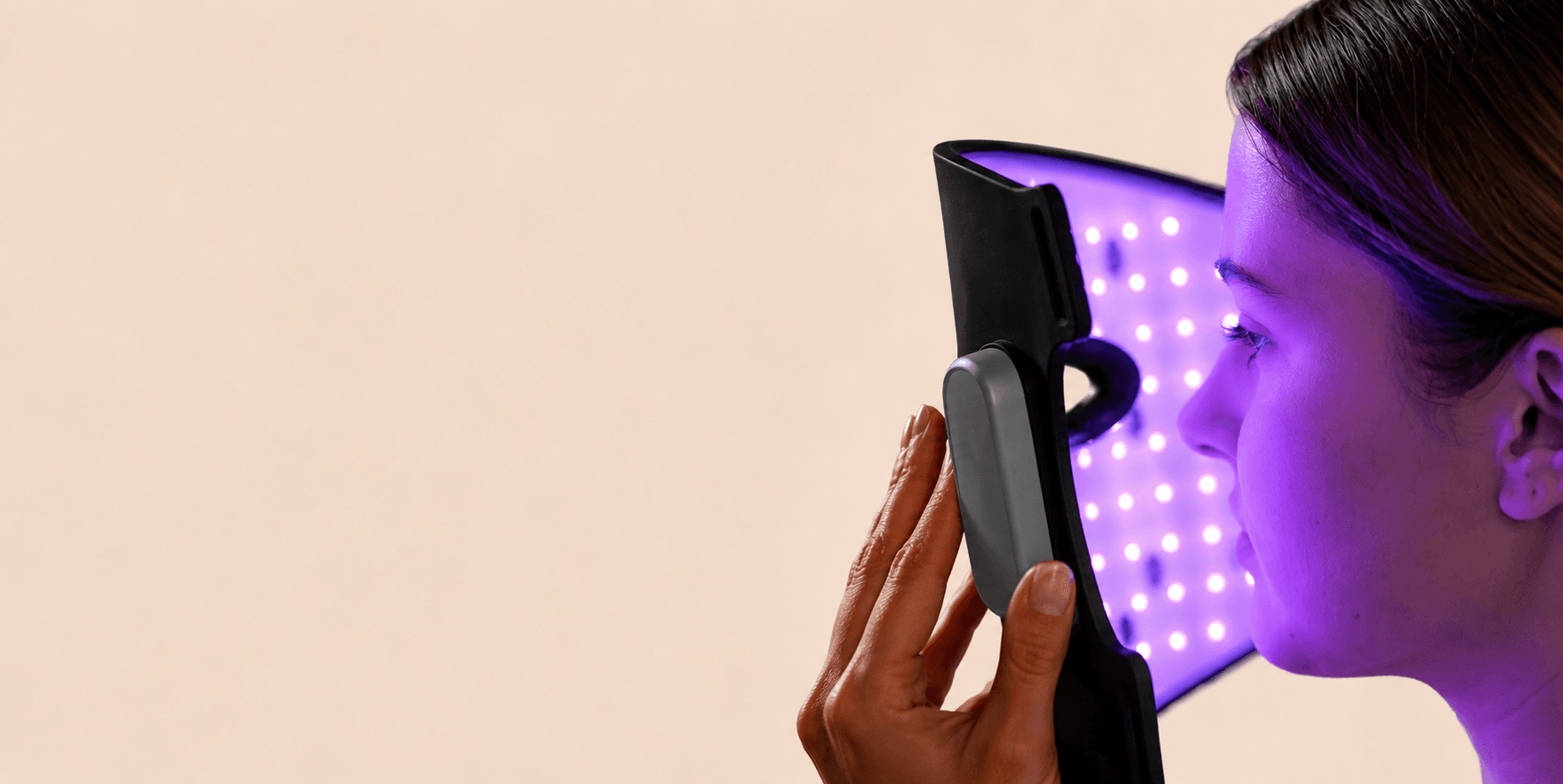
A salon treatment, a professional light therapy device or an LED mask for home use? We compare effectiveness, cost and convenience — honestly and objectively.
- Salons and home use the same science (photobiomodulation) — the difference lies in frequency and cost
- Results with LED therapy come mainly from consistency: 3–5 sessions a week, week after week
- A few salon visits a month are difficult to maintain and expensive; at home, you can treat yourself every few days
- A one-off purchase for home use is usually cheaper than a course of salon treatments
- When purchasing, look out for wavelengths, number of LEDs, CE mark and a safe auto-timer
For years, LED light therapy was mainly offered in salons and clinics. Now you can use the same technology at home. But is a home mask just as good as a professional treatment? The honest answer: the science is the same — the difference lies in how often you treat and what it costs.
Does it work differently in the salon than at home?
No, the underlying mechanism is identical. Whether the light comes from a salon panel or a home mask, the same wavelengths activate the same processes in your skin via photobiomodulation. Professional devices may be more powerful, but a good at-home mask with the right wavelengths and enough LEDs delivers a comparable dose — and you can use it much more often.
Why frequency makes the difference
This is the crux of the matter. LED therapy works cumulatively: the results build up with every session. Research shows improvement with 3–4 treatments per week, week after week. A few salon visits per month simply don’t achieve that frequency — whereas at home you can treat yourself for 15 minutes every few days.
In other words: the best device isn’t necessarily the most powerful one, but the one you actually use consistently. Read about the optimal frequency for using an LED mask.
Cost comparison
With LED therapy, you need many sessions to see results. As a result, a one-off purchase for home use is almost always more cost-effective than an ongoing series of salon treatments — and you save on travel time.
What should you look for in a home mask?
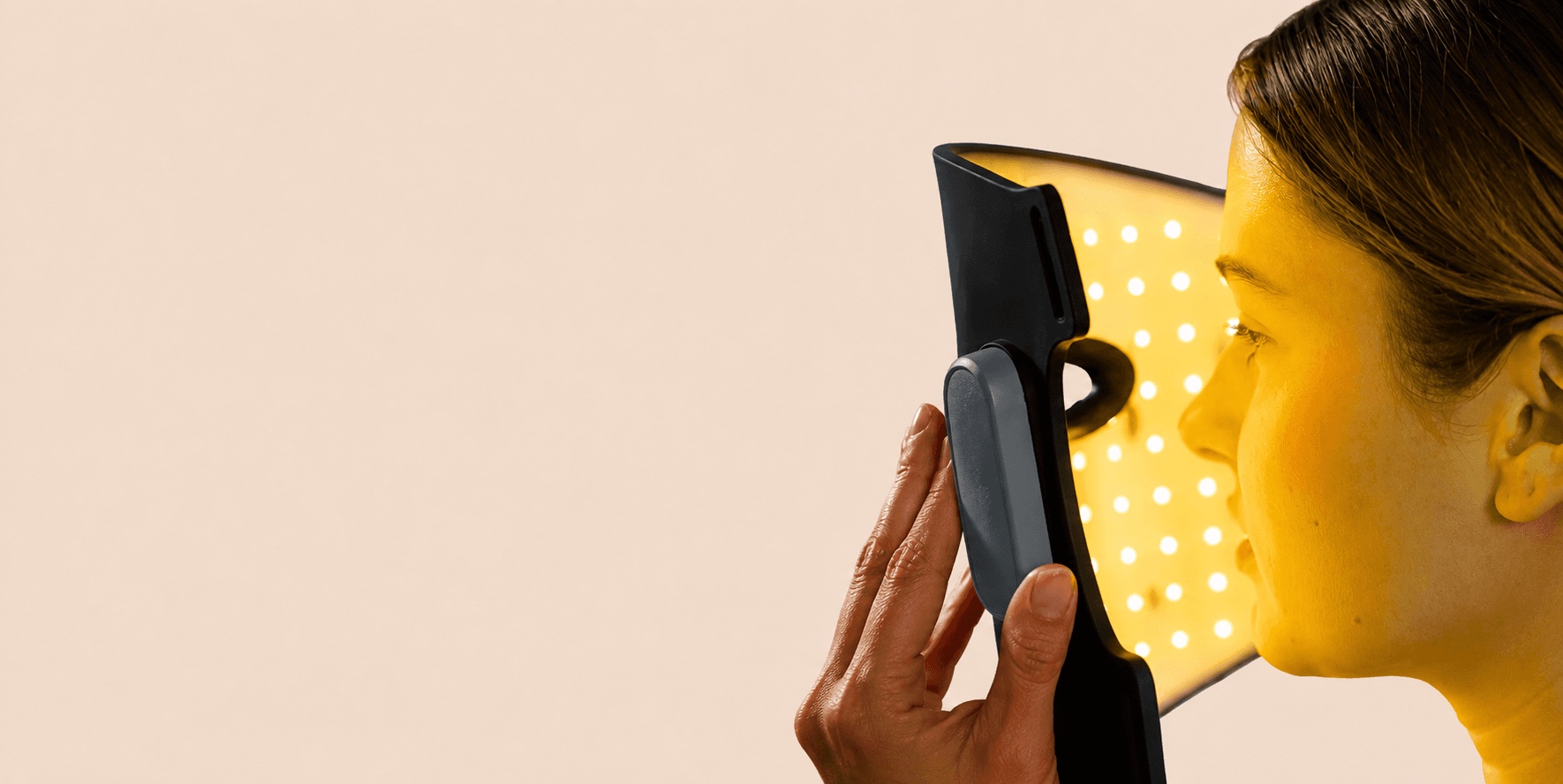
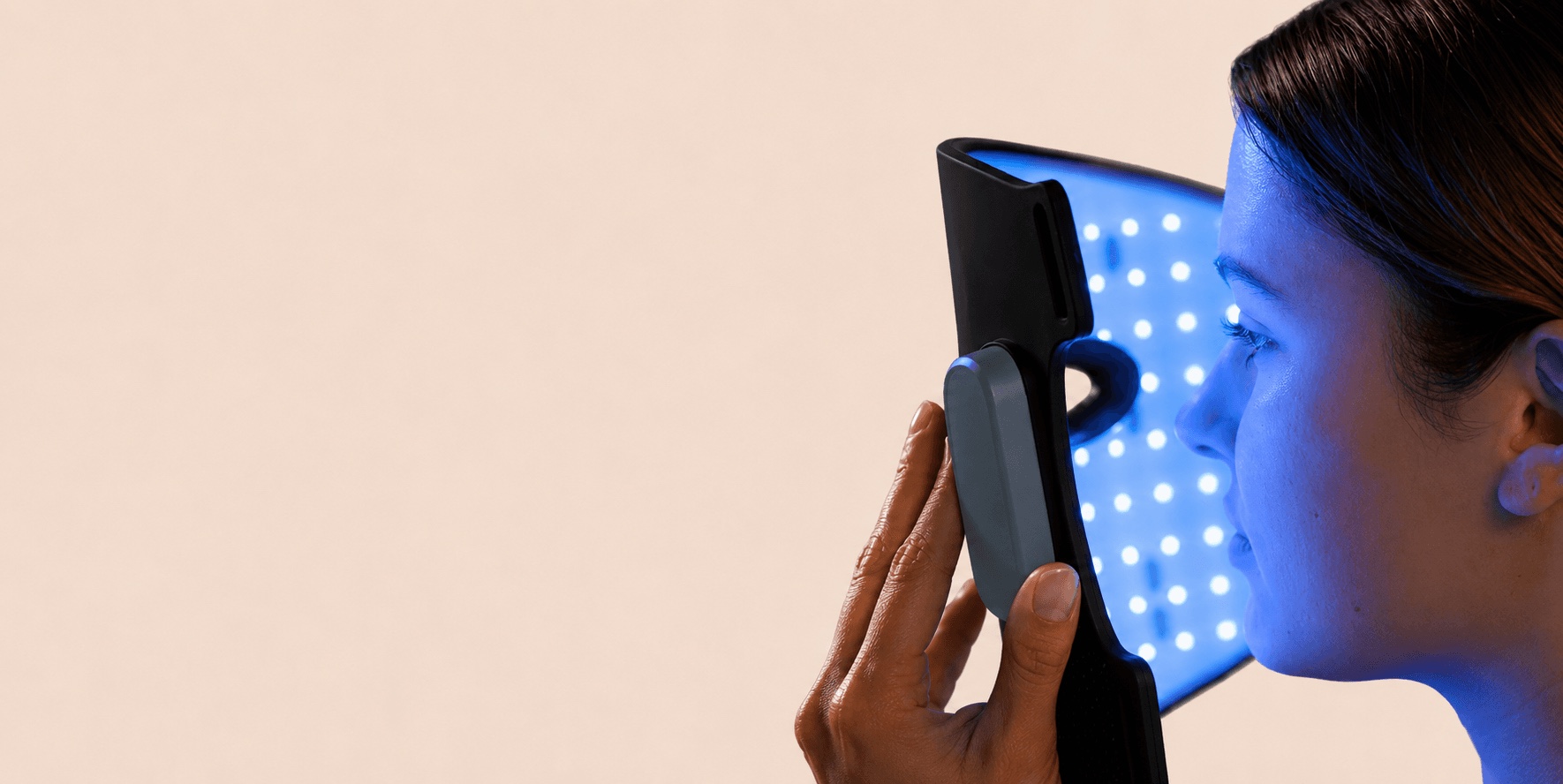
- Wavelengths: multiple clinically proven colours (red, blue, yellow, near-infrared, purple) cover more skin concerns than a single colour
- Number of LEDs: more LEDs provide more even coverage of the face
- CE mark: proof that the device meets European safety requirements
- Safe auto-timer: switches off automatically after the correct time, so you don’t over- or under-treat
- Comfort: a mask that fits well is used more often — and frequency determines the results
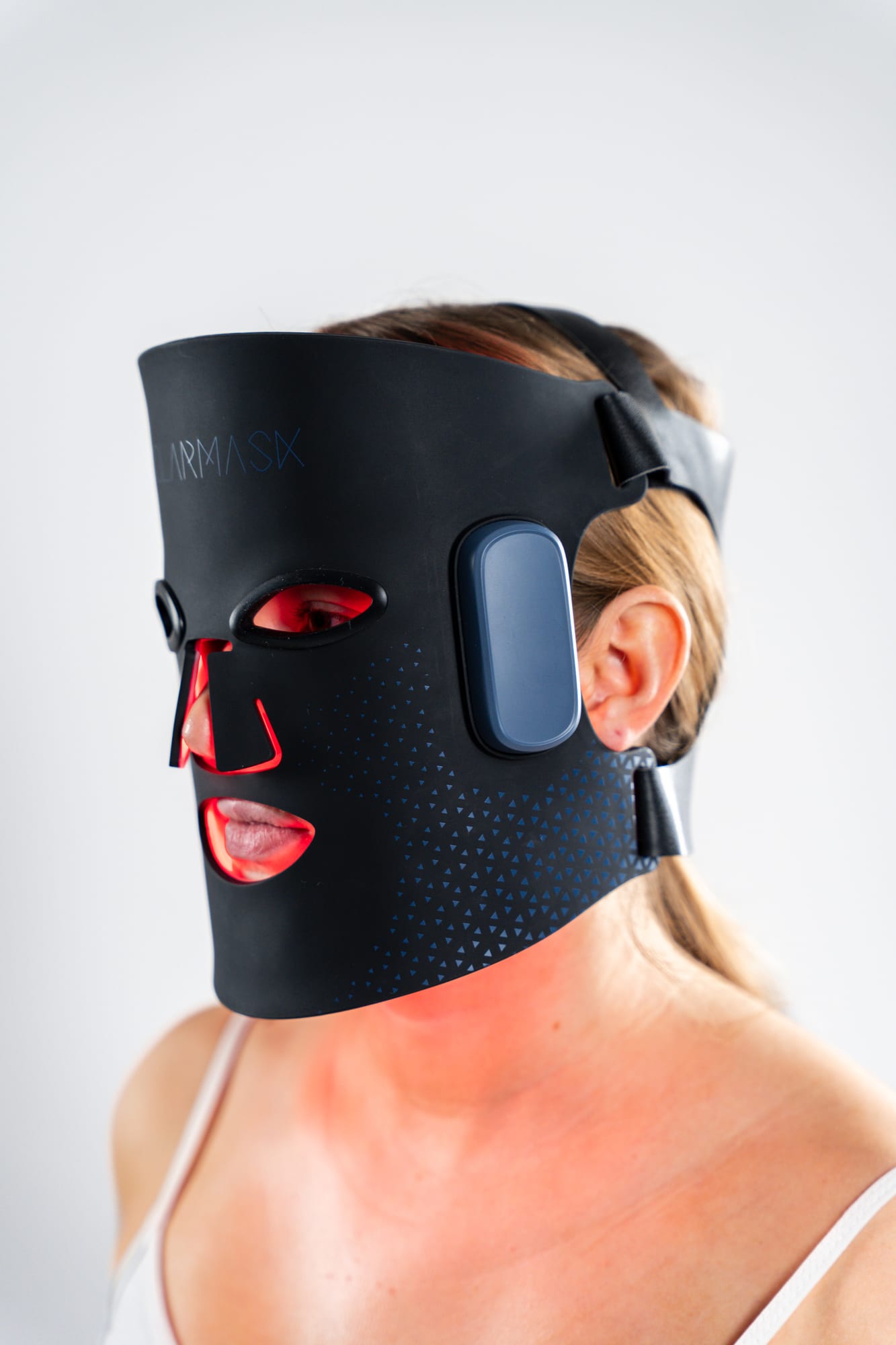
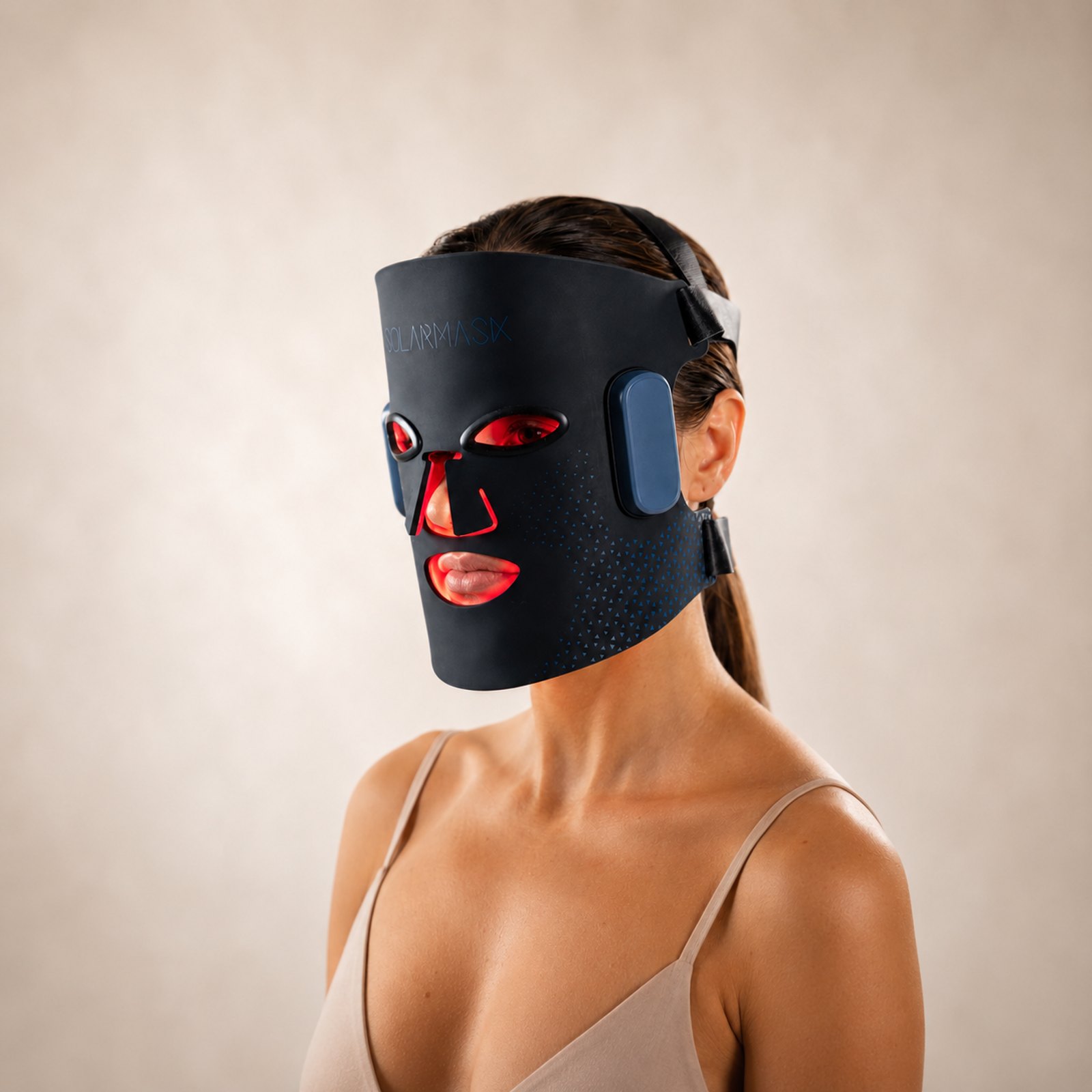
The SolarMask combines 312 LEDs and all five wavelengths in a single CE-certified device, with a fixed 15-minute auto-timer.
Frequently asked questions
Is a home mask just as effective as a salon treatment?
The science is identical. Because results come mainly from consistency and you can treat yourself much more often at home, many people actually achieve better results at home than with occasional salon visits.
Why is using it at home cheaper?
A salon course consists of many paid sessions. You buy a home mask once and can then use it as often as you like, without travel time or appointments.
Do I need multiple wavelengths?
For a single specific purpose, one colour may suffice, but most people have multiple concerns (anti-ageing, acne and redness). A mask with all five wavelengths covers all these in a single device.
Salon or at home: the science is the same. The difference lies in how often you treat your skin and what it costs — and that’s precisely where a good at-home mask comes out on top. With the SolarMask, you have all five wavelengths at home for the price of a few salon visits.
Would you like to give this a go yourself?
The SolarMask LED Mask — all five wavelengths
Professional light therapy for home use. One mask, five treatments, 15 minutes per session. CE-certified.
View the mask →Esmee writes about skincare, LED light therapy and the science behind SolarMask. Any questions? Please email contact@solarmask.eu.
 Recommended by Dr. Farah MacDonald — physician & skin specialist
Sources & scientific studies
- Wunsch A, Matuschka K (2014). A controlled trial to determine the efficacy of red and near-infrared light treatment in patient satisfaction, reduction of fine lines, wrinkles, skin roughness, and intradermal collagen density increase. Photomedicine and Laser Surgery.
- Avci P et al. (2013). Low-level laser (light) therapy (LLLT) in skin: stimulating, healing, restoring. Seminars in Cutaneous Medicine and Surgery.
- Hamblin MR (2017). Mechanisms and mitochondrial redox signaling in photobiomodulation. Photochemistry and Photobiology.
- De Arruda Vidal C et al. (2020). LED phototherapy for facial rejuvenation. Journal of Cosmetic and Laser Therapy.
Medical disclaimer: This article is for informational purposes only and does not constitute medical advice. LED light therapy supports the skin but does not cure conditions; results vary from person to person. If you are pregnant, taking light-sensitive medication or have a skin condition, please consult your doctor first.