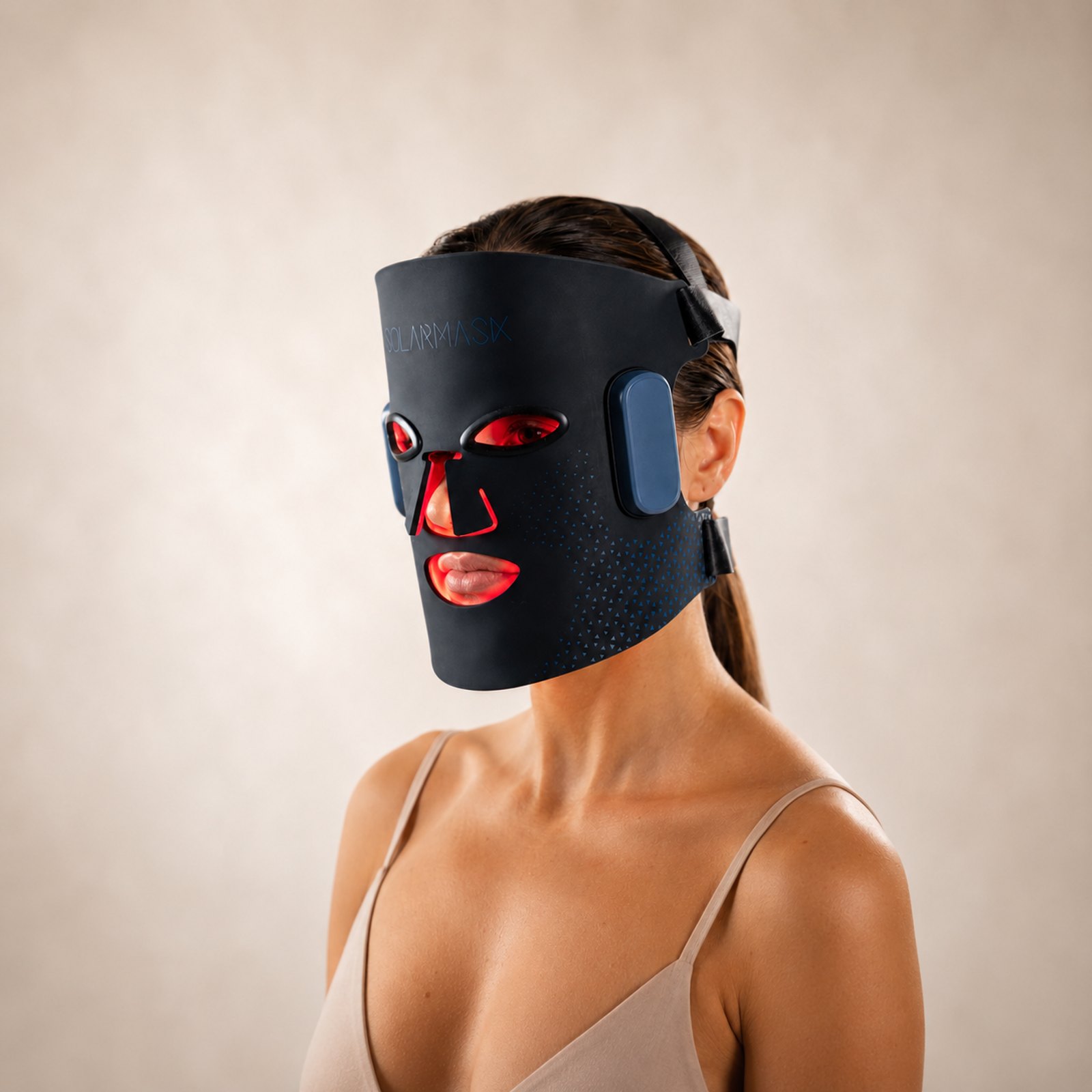
The LED mask market is flooded with options at every price point. Before you buy, here is exactly what to look for — so you get the results you are actually hoping for.
You have decided you want an LED mask — great. But now comes the harder part: working out which one is actually worth your money. A quick search returns dozens of options, from budget gadgets to premium devices, all making bold promises. So how do you cut through the noise? This guide walks you through every buying check that matters, in plain language, so you can shop with confidence.
LED Mask Buying Guide: The Checks That Actually Matter
Most people focus on price first and specifications second. It is worth flipping that around. A lower price tag means very little if the device lacks the wavelengths, the LED count or the safety certification to do what you want it to do. Work through the checklist below before you reach for your card.
1. How Many Wavelengths Does It Offer?
This is the single most important specification to check. Different wavelengths of light interact with the skin in different ways, and not all LED masks are created equal here.
- Red light (around 640 nm) is associated with a visibly brighter, more radiant complexion.
- Blue light (around 458 nm) works at the skin's surface and is widely used for a clearer-looking skin tone.
- Yellow light (around 595 nm) is a favourite for those whose skin looks tired or uneven — it is linked to a more settled, even-toned appearance.
- Near-infrared light (NIR, around 854 nm) is invisible to the eye but penetrates deeper into the skin, contributing to a more rested, refreshed look over time.
- Purple light is simply red and blue delivered simultaneously — it is not a separate wavelength and does not have its own nm value.
Many entry-level masks offer only red and blue. That covers two bases, but it leaves yellow and near-infrared entirely out of the picture. If you want a comprehensive routine without buying multiple devices, look for a mask that covers all five modes. With SolarMask you get all five — red, blue, yellow, near-infrared and purple — in one session, at home. Curious about the science behind each wavelength? The LED mask scientific research page goes deeper on what the evidence currently says.
2. LED Count and Coverage
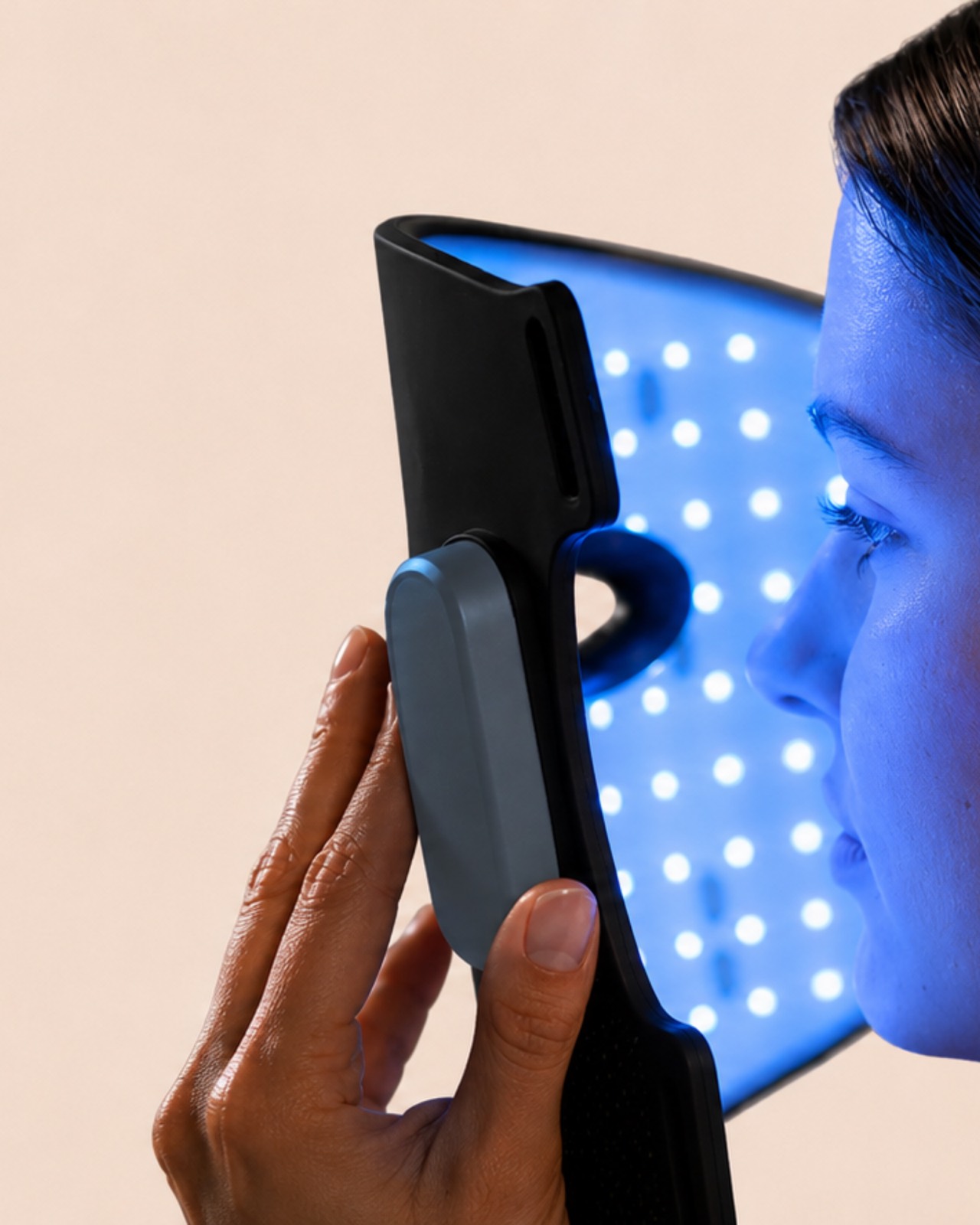
The number of LEDs in a mask directly affects how evenly the light reaches your skin. A sparse arrangement leaves gaps in coverage, which means some areas of your face receive significantly less light than others. Look for a mask with a high, evenly distributed LED count across the full face panel — forehead, cheeks, chin and nose included.
SolarMask houses 312 LEDs, positioned to cover the entire face surface without blind spots. That is a meaningful number compared with many competitors at a similar or higher price.
3. Safety Certification and UV Emissions
This one is non-negotiable. Any LED mask sold in Europe should carry CE certification — it signals that the device has been tested against EU safety standards. Beyond that, confirm explicitly that the mask emits no UV radiation. UV exposure carries well-documented skin risks, and a legitimate LED therapy device has no reason to include it.
SolarMask is CE-certified and emits zero UV radiation. If a mask you are considering cannot confirm both of those things, that is a firm reason to look elsewhere. For a broader look at skin safety across different skin types, this guide on LED mask safety is worth a read before you buy.
4. Session Time and How the Device Works in Practice
Check how long each session lasts and whether the device manages this automatically. Some cheaper masks require you to time sessions yourself, which introduces inconsistency. A built-in automatic timer removes that variable — the session runs for the intended duration and stops on its own.
SolarMask sessions last exactly 15 minutes, managed by an automatic timer that switches the device off at the end of every session. No guesswork, no overrunning. For the first four to six weeks, three to four sessions per week is the recommended routine. After that, one to two sessions per week is typically sufficient as a maintenance rhythm.
5. Price, Value and What You Are Actually Getting
Price is not a reliable proxy for quality in the LED mask market. Very cheap devices often cut corners on LED count, wavelength range or certification. Very expensive devices do not automatically outperform mid-range ones. The question to ask is not "is this expensive?" but "does the specification justify the price?"
SolarMask is priced at €199. For that you get 312 LEDs, five wavelength modes, CE certification, no UV, and a 15-minute automatic timer. If you are comparing it against salon LED treatments, the at-home vs salon comparison article lays out the practical and financial differences clearly.
6. Real Reviews and Honest Expectations
Before buying any LED mask, look for genuine user reviews — not just the cherry-picked testimonials on a brand's own homepage. Pay attention to reviews that mention realistic timelines, because LED light therapy is a consistent-use routine, not a one-session fix. Look for comments on comfort, ease of use and what people actually notice after a few weeks.
Results do vary from person to person. What most consistent users report is a visibly healthier-looking complexion, a more even skin tone and a generally fresher appearance after several weeks of regular sessions — not overnight transformation. You can read what SolarMask users have to say on the reviews page.
- Check wavelength count — ideally all five modes: red, blue, yellow, NIR and purple.
- Higher LED count means more even coverage across the full face.
- CE certification and zero UV emissions are non-negotiable safety requirements.
- A built-in 15-minute automatic timer keeps every session consistent.
- Price should reflect specification — compare what you actually get, not just the number.
- Read real user reviews and set realistic timeline expectations.
- SolarMask (€199) covers all five of the above criteria.
Frequently asked questions
How many wavelengths should a good LED mask have?+
Most dermatology-informed routines reference at least red and near-infrared light, but a mask with five modes — red, blue, yellow, near-infrared and purple — gives you much more flexibility without needing separate devices.
Is CE certification enough to confirm an LED mask is safe?+
CE certification is the minimum standard for sale in Europe and a meaningful baseline. You should also confirm the mask emits no UV radiation. Both together give you a reasonable safety foundation. If you use photosensitive medication, are pregnant, or have a skin condition, speak to your doctor before starting any light therapy routine.
How long should an LED mask session last?+
SolarMask sessions run for exactly 15 minutes, controlled by an automatic timer. Consistency matters more than duration — sticking to the recommended schedule of three to four sessions per week (first four to six weeks) is more important than running a longer session.
How quickly can I expect to see results?+
Most users begin to notice a visibly brighter, more even-looking complexion after several weeks of consistent use. Results differ from person to person, and LED light therapy is a routine rather than a quick fix.
Is an at-home LED mask worth buying compared with salon treatments?+
For many people, yes — especially when you factor in the cumulative cost of repeated salon visits versus a one-off device purchase. The key is using the mask consistently. Our dedicated article on at-home vs salon LED treatments covers this in detail.
Buying an LED mask does not have to be complicated — but it does require asking the right questions before you commit. Check the wavelengths, the LED count, the safety certification, the session mechanics and the price-to-specification ratio. If a device passes all five checks, you are on solid ground. SolarMask was built with every one of those checkpoints in mind: 312 LEDs, five wavelength modes, CE certification, no UV, and a fixed 15-minute automatic timer — all for €199. If you are ready to take a closer look, the SolarMask product page has everything you need.
Would you like to give this a go yourself?
The SolarMask LED Mask — all five wavelengths
Professional light therapy for home use. One mask, five treatments, 15 minutes per session. CE-certified.
View the mask →Esmee writes about skincare, LED light therapy and the science behind SolarMask. Any questions? Please email contact@solarmask.eu.
 Recommended by Dr. Farah MacDonald — physician & skin specialist
Sources & scientific studies
- Wunsch A, Matuschka K (2014). A controlled trial to determine the efficacy of red and near-infrared light treatment in patient satisfaction, reduction of fine lines, wrinkles, skin roughness, and intradermal collagen density increase. Photomedicine and Laser Surgery.
- Avci P et al. (2013). Low-level laser (light) therapy (LLLT) in skin: stimulating, healing, restoring. Seminars in Cutaneous Medicine and Surgery.
- Hamblin MR (2017). Mechanisms and mitochondrial redox signaling in photobiomodulation. Photochemistry and Photobiology.
- De Arruda Vidal C et al. (2020). LED phototherapy for facial rejuvenation. Journal of Cosmetic and Laser Therapy.
Medical disclaimer: This article is for informational purposes only and does not constitute medical advice. LED light therapy supports the skin but does not cure conditions; results vary from person to person. If you are pregnant, taking light-sensitive medication or have a skin condition, please consult your doctor first.