LED light therapy has gone from professional clinics to living rooms worldwide — but what does the scientific landscape actually look like, and what should you realistically expect from an at-home LED mask?
If you have searched for "led masker wetenschappelijk onderzoek" (LED mask scientific research), you are not alone. More and more people want to understand what is actually going on beneath the surface before investing in a home light therapy device. That is a healthy instinct. In this article we walk through what is currently understood about LED light therapy, what remains uncertain, and what that means for you as a consumer.
LED Mask Scientific Research: Where Does It Stand?
LED (Light Emitting Diode) therapy has been explored in dermatological and cosmetic contexts for several decades. The underlying principle is photobiomodulation — the idea that specific wavelengths of light can interact with cells in the skin. Different wavelengths are thought to reach different depths in the skin tissue, which is why the choice of wavelength matters so much.
It is important to be honest here: the body of research on at-home LED devices is still growing, and findings vary. What we can say is that the interest from researchers, clinicians, and consumers has increased significantly, and that different wavelengths are understood to behave differently at the skin level. The science behind light therapy is a fascinating area — but one where we want to be careful not to overstate what is proven.
The Five Wavelengths: What Each One Is Known For
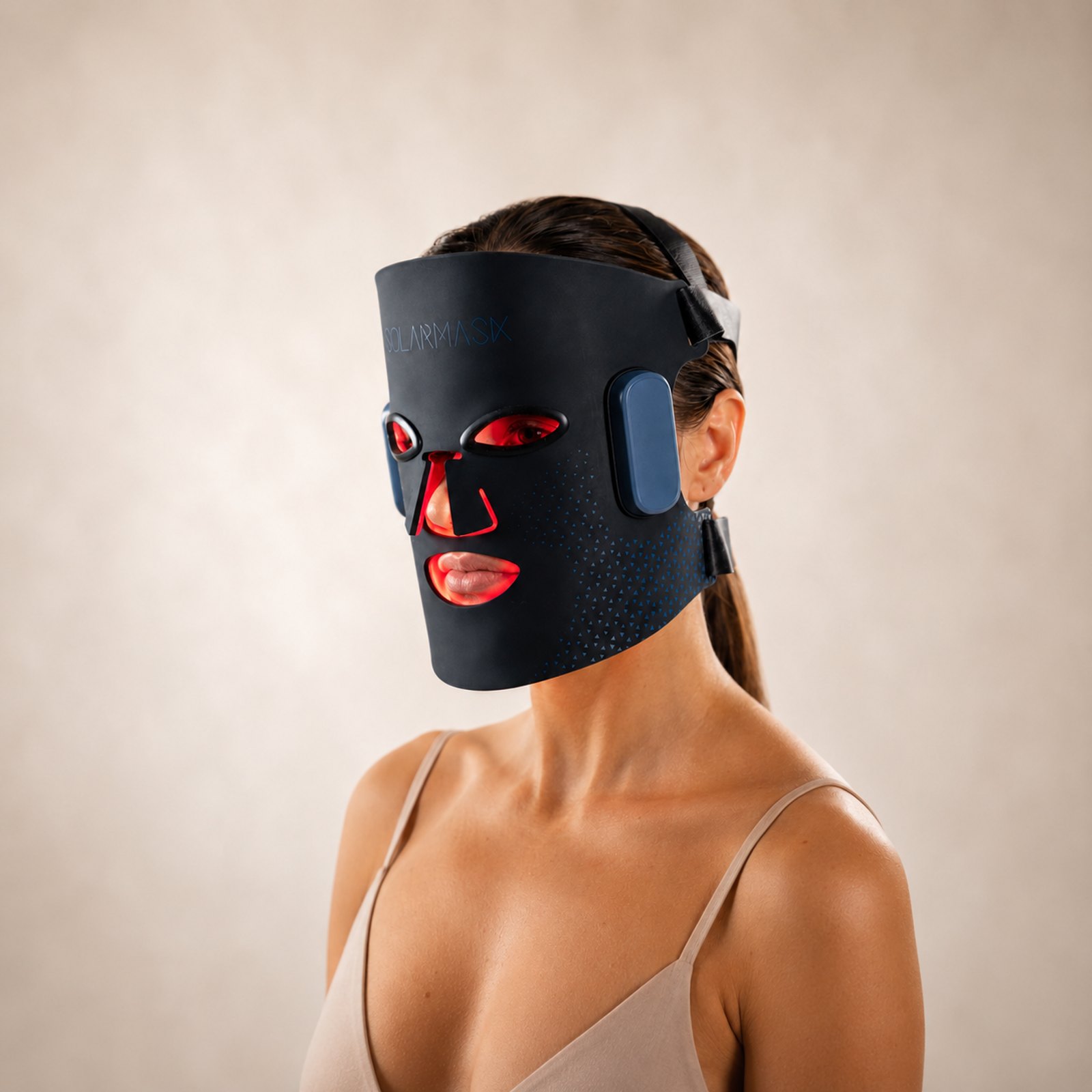
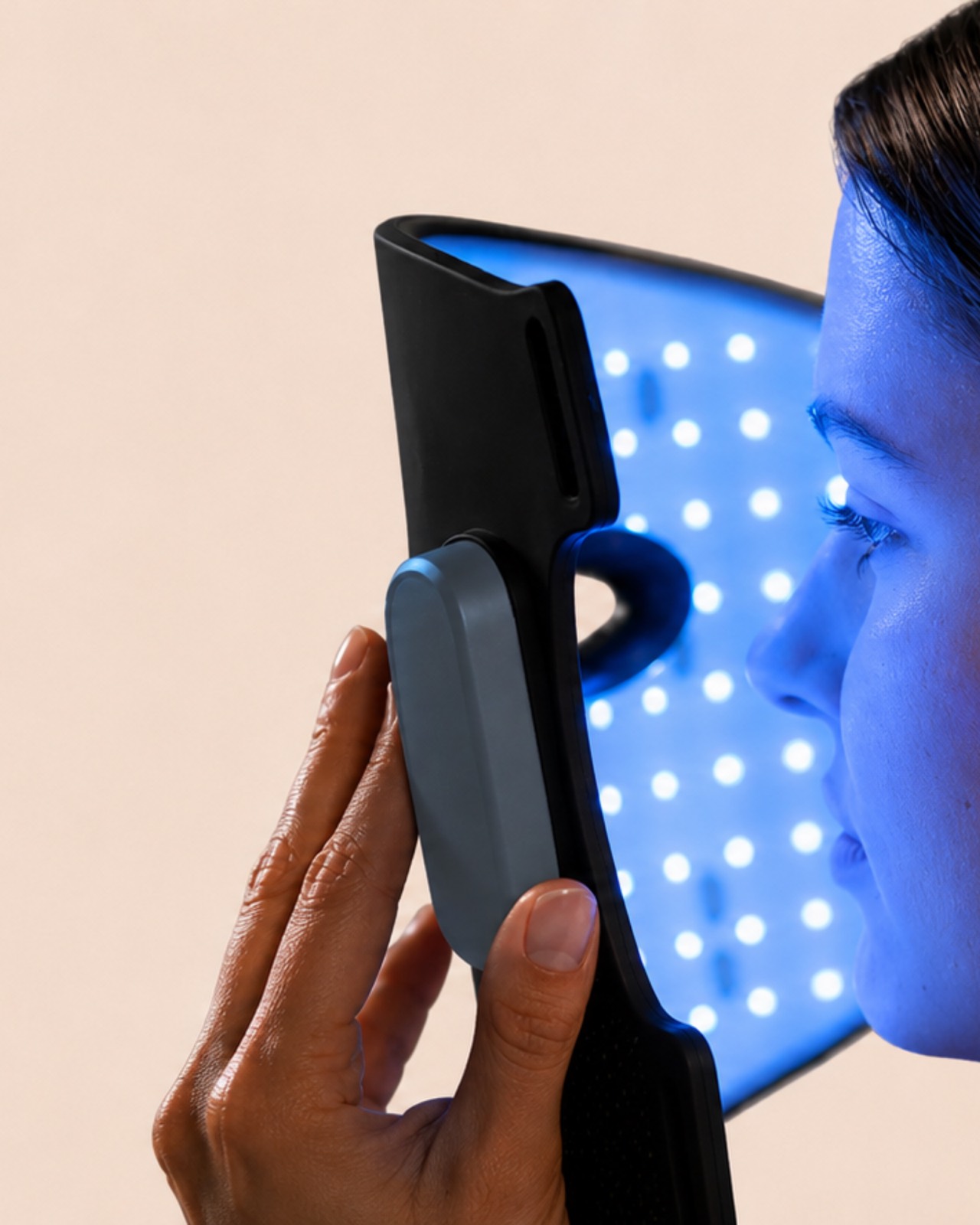
Understanding what each wavelength does is central to evaluating any LED mask. The SolarMask uses 312 LEDs across five distinct wavelengths. Here is what is currently understood about each one:
- Red light (630 nm) — This wavelength penetrates the skin to a moderate depth. It is perhaps the most widely discussed in cosmetic light therapy contexts. Many users report that consistent use contributes to a brighter, more even-looking complexion.
- Blue light (450 nm) — Blue light works closer to the skin's surface. It is particularly associated with a calmer, clearer-looking skin appearance, and many users with visible blemishes find that their skin looks less congested over time.
- Yellow light (580 nm) — Yellow light sits between red and blue on the spectrum and is considered particularly gentle. It is often associated with a more radiant, rested-looking skin tone. If you want to understand more about what this wavelength does, our article on yellow light for sensitive skin goes into more detail.
- Near-infrared light (NIR, 850 nm) — NIR penetrates deepest of the five wavelengths. It is thought to support skin that looks firmer and more refreshed, though individual results vary.
- Purple light — Purple is not a separate wavelength. It is the simultaneous emission of red (630 nm) and blue (450 nm) light, allowing you to use both wavelengths in a single session.
Having five wavelengths in one device matters because different skin concerns and skin types may respond better to different wavelengths — and with SolarMask, you have all five available in a single LED mask.
At-Home vs. Professional Devices: A Research Consideration
One of the common questions in the scientific literature — and among consumers — is whether at-home LED devices are comparable to professional clinic treatments. The honest answer is that professional devices often use higher irradiance (energy output), and much of the research has been conducted on clinical-grade equipment.
That said, at-home LED masks have become considerably more sophisticated. Consistency of use is a factor that is often cited: a 15-minute session with SolarMask three to four times per week during the first four to six weeks — and once or twice per week as maintenance thereafter — is a practical routine that many users find easy to sustain. Our article on whether at-home LED masks are worth it compared with salon treatments explores this comparison in more depth.
It is also worth noting what at-home LED masks do not do. The SolarMask emits no UV radiation and is CE-certified. It is a cosmetic device, not a medical one, and it does not replace professional medical care or advice.
What to Look For When Evaluating an LED Mask
Given the range of products on the market, the scientific context actually helps you become a smarter buyer. Here are the key factors to consider:
- Wavelength transparency — Does the brand clearly state the exact nanometre values for each light colour? Vague descriptions like 'red light' without a wavelength figure are a red flag.
- Number of LEDs — More LEDs generally mean more even light coverage across the face. SolarMask uses 312 LEDs.
- Certifications — Look for CE certification as a minimum quality indicator. Avoid devices that claim UV emission or that cannot demonstrate any form of safety certification.
- Realistic claims — Be wary of any device that promises guaranteed medical results or uses language like 'clinically proven to cure'. Cosmetic LED devices support the appearance of the skin; they do not treat or cure conditions.
- Wavelength variety — A device with multiple wavelengths allows you to address different skin needs. A single-wavelength device limits your options.
For a more detailed breakdown of what to look for, our guide on the best LED mask in 2026 covers these criteria in full.
Being Honest About Expectations
Perhaps the most important thing that the scientific landscape teaches us is the value of managed expectations. LED light therapy is not a quick fix, and results differ from person to person. What many consistent users describe is a complexion that looks healthier, more even, and visibly clearer over time — not an overnight transformation.
Equally, light therapy is not suitable for everyone without consideration. If you are using photosensitising medication, are pregnant, or have a skin condition, please consult a doctor before starting any LED light therapy routine. Lichttherapie does not replace medical advice.
- LED light therapy is based on photobiomodulation — different wavelengths interact with skin cells at different depths.
- Five wavelengths (630 nm, 450 nm, 580 nm, 850 nm, and purple = 630 + 450 combined) each have distinct properties.
- Research is ongoing; at-home devices are cosmetic tools, not medical ones.
- Key buying criteria: wavelength transparency, LED count, certifications, and honest claims.
- Results vary per person; consistent use over weeks is recommended.
The interest in LED mask scientific research is a sign that consumers are becoming more informed — and that is a good thing. Understanding what wavelengths do, what certifications mean, and what realistic outcomes look like puts you in a much stronger position to make a decision that suits your skin and your lifestyle. If you are curious about how SolarMask brings all five wavelengths together in one CE-certified, easy-to-use device, you can explore the full details on the SolarMask product page.
Frequently asked questions
Is there scientific research on at-home LED masks specifically?+
Research on LED light therapy has largely been conducted on professional clinical devices. The body of research on at-home devices is still developing. At-home LED masks are cosmetic tools and should not be compared directly to medical treatments.
How many wavelengths does the SolarMask use, and why does it matter?+
SolarMask uses five wavelengths: red (630 nm), blue (450 nm), yellow (580 nm), near-infrared (850 nm), and purple (which is red and blue emitted simultaneously — not a separate wavelength). Having multiple wavelengths in one device means you can address different skin needs without switching products.
How long is each SolarMask session?+
Each session is exactly 15 minutes. The mask has an automatic timer and switches off by itself. The recommended frequency is three to four times per week for the first four to six weeks, followed by one to two times per week as maintenance.
Is the SolarMask a medical device?+
No. SolarMask is a CE-certified cosmetic device. It emits no UV radiation, but it is not a medical device and does not replace professional medical advice or treatment.
Is LED light therapy suitable for all skin types?+
Many skin types can use LED light therapy, but it is not suitable for everyone without consideration. If you use photosensitising medication, are pregnant, or have a skin condition, please consult a doctor first. Results also differ from person to person.
Would you like to give this a go yourself?
The SolarMask LED Mask — all five wavelengths for €169
Professional light therapy for home use. One mask, five treatments, 15 minutes per session. CE-certified.
View the mask →Esmee writes about skincare, LED light therapy and the science behind SolarMask. Any questions? Please email contact@solarmask.eu.
 Recommended by Dr. Farah MacDonald — physician & skin specialist
Sources & scientific studies
- Wunsch A, Matuschka K (2014). A controlled trial to determine the efficacy of red and near-infrared light treatment in patient satisfaction, reduction of fine lines, wrinkles, skin roughness, and intradermal collagen density increase. Photomedicine and Laser Surgery.
- Avci P et al. (2013). Low-level laser (light) therapy (LLLT) in skin: stimulating, healing, restoring. Seminars in Cutaneous Medicine and Surgery.
- Hamblin MR (2017). Mechanisms and mitochondrial redox signaling in photobiomodulation. Photochemistry and Photobiology.
- De Arruda Vidal C et al. (2020). LED phototherapy for facial rejuvenation. Journal of Cosmetic and Laser Therapy.
Medical disclaimer: This article is for informational purposes only and does not constitute medical advice. LED light therapy supports the skin but does not cure conditions; results vary from person to person. If you are pregnant, taking light-sensitive medication or have a skin condition, please consult your doctor first.