LED light therapy is one of the most talked-about at-home skincare technologies right now — but is a LED mask safe for everyone? Here is what you need to know before you start.
LED light therapy has gone from professional treatment rooms to living-room routines remarkably quickly. And as with any skincare technology that gains traction, questions follow. The most common one? <em>Is a LED mask safe</em> — especially if your skin is sensitive, reactive, or simply different from the model on the box? In this article we break down how LED light therapy works, which skin types can use it with confidence, and when it makes sense to pause and seek advice first.
Is a LED Mask Safe? Understanding How the Light Works
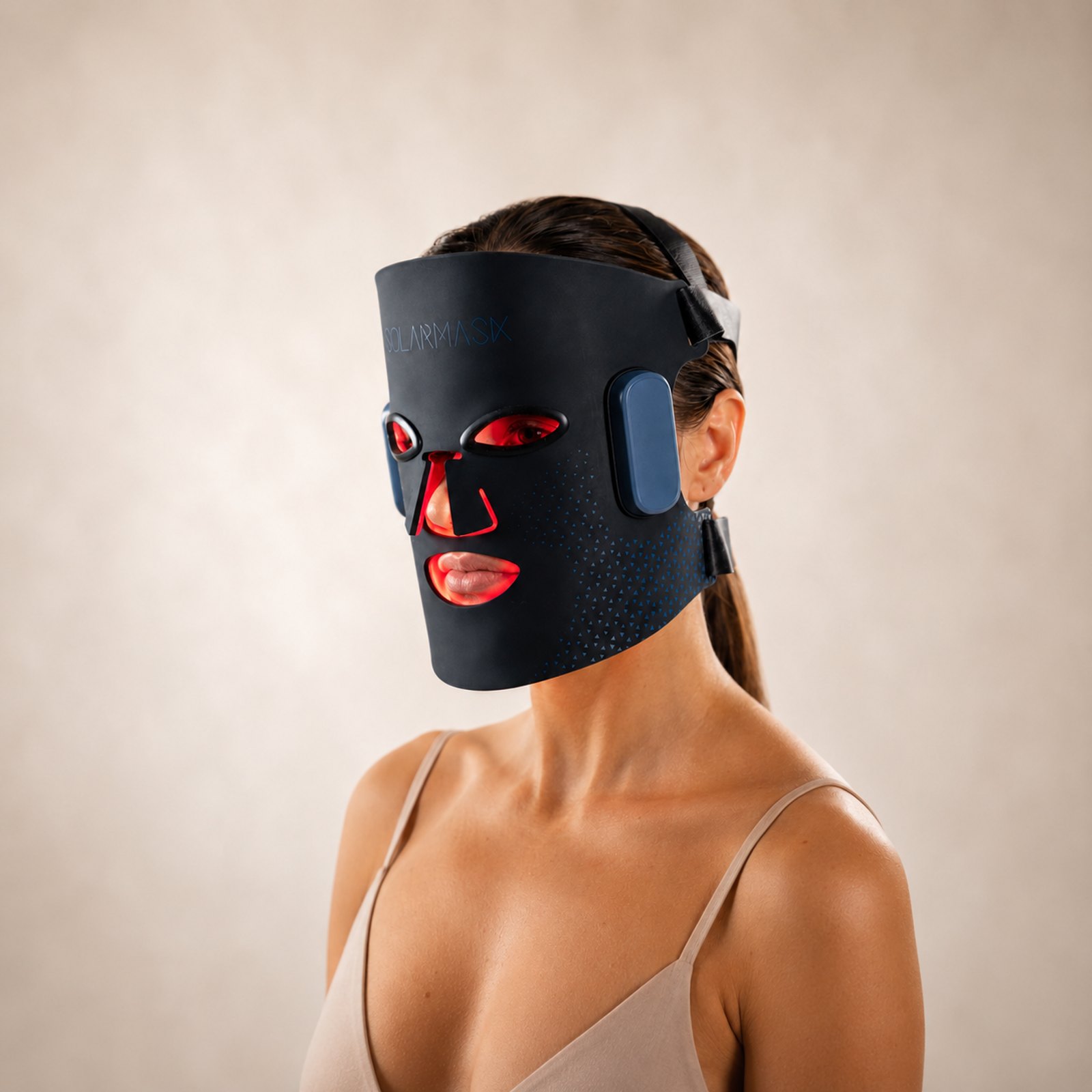
LED stands for Light-Emitting Diode. Unlike UV light — the wavelength responsible for sunburn and long-term skin damage — LED light therapy uses specific, non-ionising wavelengths that sit within the visible and near-infrared spectrum. The SolarMask, for example, is CE-certified and emits <strong>zero UV radiation</strong>. That distinction matters enormously for safety.
The device works by delivering targeted wavelengths of light to the skin, where they are absorbed by cells and can influence processes such as circulation and skin cell behaviour. Different wavelengths interact with the skin in different ways — which is why the number and variety of wavelengths in a mask matters. To understand the science in more depth, the science behind light therapy is a good place to start.
Because no heat, needles, or abrasive action is involved, LED therapy is considered a low-risk skincare tool when used correctly. That said, "low risk" does not mean "no considerations at all" — and that nuance is exactly what the rest of this article explores.
Which Skin Types Can Use a LED Mask?
The encouraging answer is that LED light therapy is generally well-tolerated across a broad range of skin types. Here is a quick overview:
- Normal and combination skin — LED therapy fits easily into a regular routine with no special precautions needed for most people.
- Dry or dehydrated skin — wavelengths such as red (630 nm) and near-infrared (850 nm) can contribute to a more radiant, visibly plumper-looking complexion over time. Many users report a noticeably more hydrated appearance after several weeks of consistent use.
- Oily or blemish-prone skin — blue light (450 nm) is the wavelength most closely associated with a calmer, clearer-looking surface. Rather than targeting any specific skin condition, it can contribute to a visibly less congested appearance.
- Sensitive skin — this is where people most often hesitate, but LED therapy is non-abrasive and generates no thermal energy. Many people with sensitive skin use it comfortably, starting with shorter sessions and building gradually.
- Mature skin — wavelengths like red and NIR are among the most researched in the context of skin appearance, and many users over 40 use LED therapy as part of an anti-ageing-focused routine.
- Darker skin tones — because SolarMask emits no UV, there is no risk of UV-triggered pigmentation changes. People with deeper Fitzpatrick skin types can use LED therapy without the concerns associated with certain laser or IPL treatments.
Results will always vary from person to person, and consistency matters more than any single session. For guidance on building the right routine, how often you should use a LED mask walks through the recommended schedule in detail.
When to Exercise Caution — or Skip It Altogether
Being honest about contraindications is part of being a responsible brand. There are situations where LED therapy is not the right choice, or where you should consult a medical professional before starting:
- Light-sensitising medication — certain antibiotics, retinoids at prescription strength, and other pharmaceuticals can increase your skin's sensitivity to light of any kind. If you are taking medication that carries a photosensitivity warning, check with your GP or dermatologist first.
- Pregnancy — as a precaution, we recommend speaking to your midwife or doctor before using any light-therapy device during pregnancy.
- Active skin conditions — if you have a diagnosed skin condition currently being treated by a medical professional, please seek their advice before adding LED therapy to your routine. LED light therapy is not a medical treatment and does not replace medical care.
- Epilepsy — although the SolarMask does not use a strobe or flicker effect, anyone with a history of photosensitive epilepsy should consult their neurologist before use.
- Recent cosmetic procedures — if you have had laser resurfacing, a chemical peel, or injectables very recently, allow your skin to fully heal first and ask your practitioner when it is appropriate to reintroduce LED therapy.
If none of the above applies to you, you are very likely in the clear — but when in doubt, a quick conversation with a healthcare professional is always the sensible step.
The Five Wavelengths in SolarMask — and Why That Range Matters for Safety and Results
One question we hear frequently is: "Do I really need more than one wavelength?" The answer depends on what you are hoping to achieve. Different wavelengths interact with different structures and depths within the skin — and a single wavelength will only ever address part of the picture.
The SolarMask combines five light modes in a single device: <strong>Red (630 nm)</strong> for a more radiant, visibly youthful-looking complexion; <strong>Blue (450 nm)</strong> for a calmer, clearer-looking skin surface; <strong>Yellow (580 nm)</strong> for a more even, soothed-looking tone; <strong>Near-Infrared (850 nm)</strong> for deeper-reaching support and a visibly firmer appearance; and <strong>Purple</strong>, which combines red and blue simultaneously for a dual-action effect — purple is not a separate wavelength but the simultaneous delivery of the 630 nm and 450 nm modes.
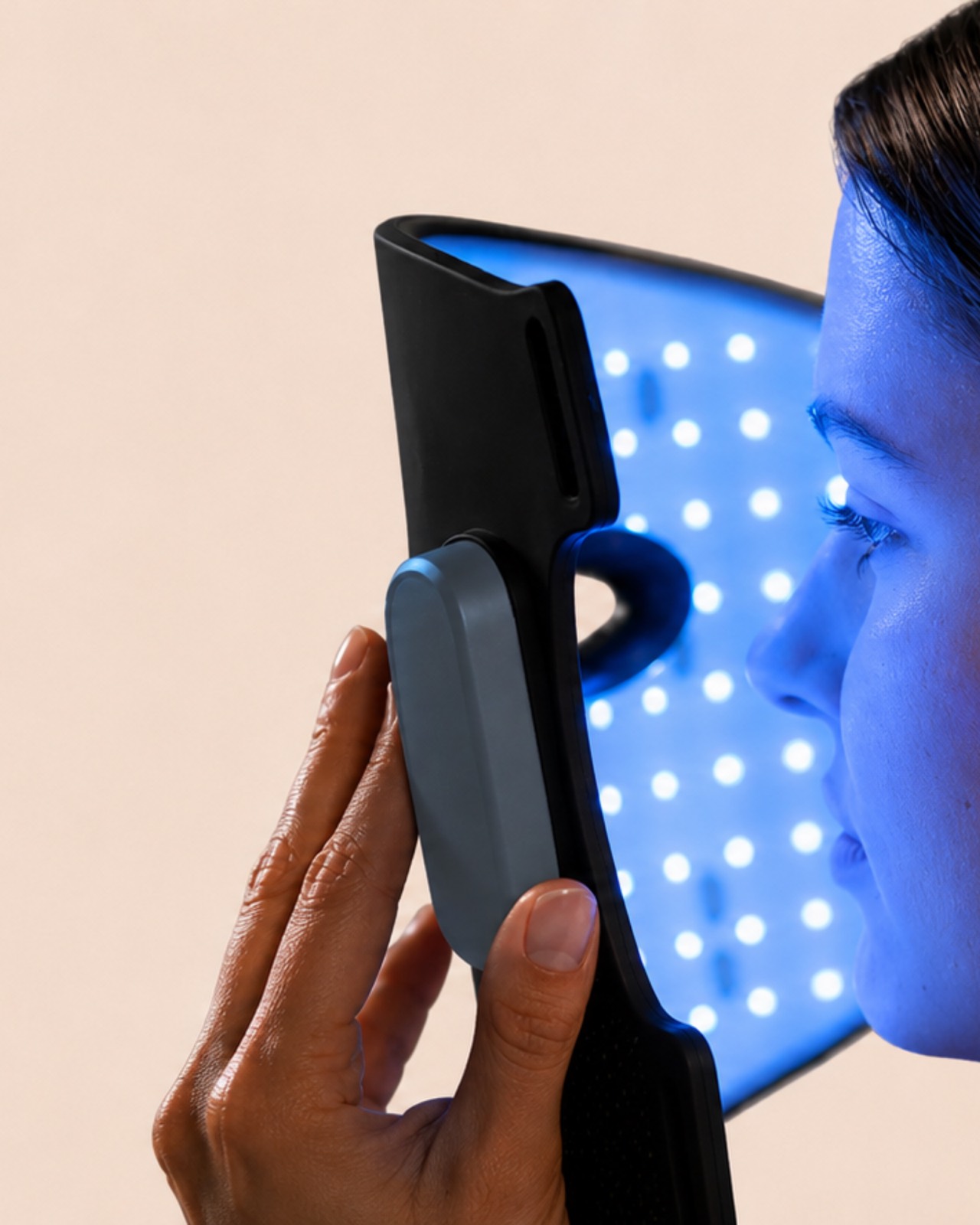
Curious about what each wavelength specifically contributes? You can explore individual deep-dives: red LED light therapy, blue LED light therapy, yellow LED light therapy, near-infrared LED light therapy, and purple LED light therapy. With 312 LEDs across all five modes and a fixed 15-minute automatic timer per session, SolarMask brings everything your skin could benefit from into one straightforward routine.
How to Use Your LED Mask Safely and Effectively
Even a well-designed, safe device benefits from a sensible approach. A few practical pointers:
- Start on clean, product-free skin — make sure no active exfoliants or strong acids are sitting on your face before a session.
- Keep your eyes closed or use the provided eye protection — the light is not harmful to intact, closed eyelids, but direct prolonged exposure to bright light is never comfortable.
- Stick to the recommended schedule — 3 to 4 sessions per week for the first 4 to 6 weeks, then 1 to 2 sessions per week for maintenance. Each session lasts exactly 15 minutes; the device stops automatically.
- Follow with your usual skincare — moisturiser, SPF in the morning, and any targeted serums can all be applied after your session as normal.
- Be consistent — light therapy is cumulative. Most users begin to notice a visible difference after several weeks of regular use, not after a single session.
For tips on how LED therapy fits around actives like retinol and SPF, LED mask in your skincare routine covers the key combinations to know.
- LED masks emit no UV radiation and are generally safe across most skin types.
- Sensitive skin, darker skin tones, and mature skin can typically all use LED therapy comfortably.
- Always check with a doctor if you take light-sensitising medication, are pregnant, or have an active skin condition.
- SolarMask offers five wavelengths (630 nm red, 450 nm blue, 580 nm yellow, 850 nm NIR, and purple = red + blue) in one device — 312 LEDs, 15-minute sessions.
- Consistency is key: 3–4× per week for the first 4–6 weeks, then 1–2× per week for maintenance.
- Results vary per person; LED therapy does not replace medical advice or treatment.
So, is a LED mask safe? For the vast majority of people, the answer is yes — particularly when the device is CE-certified, UV-free, and used according to clear guidelines. LED light therapy is one of the gentler tools in modern skincare, and its broad compatibility with different skin types is a large part of why it has found a lasting place in so many routines. The key is going in with realistic expectations, following the recommended schedule, and knowing when it is wise to seek a professional opinion first. If you are ready to see how all five wavelengths can work together for your skin, you can explore the SolarMask and read what other users have experienced on the reviews page.
Frequently Asked Questions
Is a LED mask safe for sensitive skin?+
LED light therapy is non-abrasive and generates no heat, which makes it one of the more gentle skincare technologies available. Many people with sensitive skin use it comfortably. If your skin is particularly reactive, you may want to start with less frequent sessions and build up gradually. Results vary per person.
Can I use a LED mask if I take medication?+
Certain medications — including some antibiotics and prescription-strength retinoids — can increase your skin's sensitivity to light. If your medication carries a photosensitivity warning, please consult your GP or pharmacist before using a LED mask.
Does LED light therapy work on darker skin tones?+
Yes. Because SolarMask emits no UV radiation, the concerns associated with UV-based treatments (such as post-inflammatory pigmentation) do not apply. LED therapy is generally considered suitable for all Fitzpatrick skin types.
How long is each session, and how often should I use the mask?+
Each session lasts exactly 15 minutes — the SolarMask has a fixed automatic timer that stops the device for you. The recommended schedule is 3 to 4 sessions per week during the first 4 to 6 weeks, followed by 1 to 2 sessions per week for ongoing maintenance.
Is LED light therapy a medical treatment?+
No. SolarMask is a cosmetic device, not a medical one. It is designed to support the visible appearance of your skin and is not intended to diagnose, treat, or cure any medical condition. If you have a skin concern being managed by a healthcare professional, please seek their guidance before adding LED therapy to your routine.
Would you like to give this a go yourself?
The SolarMask LED Mask — all five wavelengths
Professional light therapy for home use. One mask, five treatments, 15 minutes per session. CE-certified.
View the mask →Esmee writes about skincare, LED light therapy and the science behind SolarMask. Any questions? Please email contact@solarmask.eu.
 Recommended by Dr. Farah MacDonald — physician & skin specialist
Sources & scientific studies
- Wunsch A, Matuschka K (2014). A controlled trial to determine the efficacy of red and near-infrared light treatment in patient satisfaction, reduction of fine lines, wrinkles, skin roughness, and intradermal collagen density increase. Photomedicine and Laser Surgery.
- Avci P et al. (2013). Low-level laser (light) therapy (LLLT) in skin: stimulating, healing, restoring. Seminars in Cutaneous Medicine and Surgery.
- Hamblin MR (2017). Mechanisms and mitochondrial redox signaling in photobiomodulation. Photochemistry and Photobiology.
- De Arruda Vidal C et al. (2020). LED phototherapy for facial rejuvenation. Journal of Cosmetic and Laser Therapy.
Medical disclaimer: This article is for informational purposes only and does not constitute medical advice. LED light therapy supports the skin but does not cure conditions; results vary from person to person. If you are pregnant, taking light-sensitive medication or have a skin condition, please consult your doctor first.