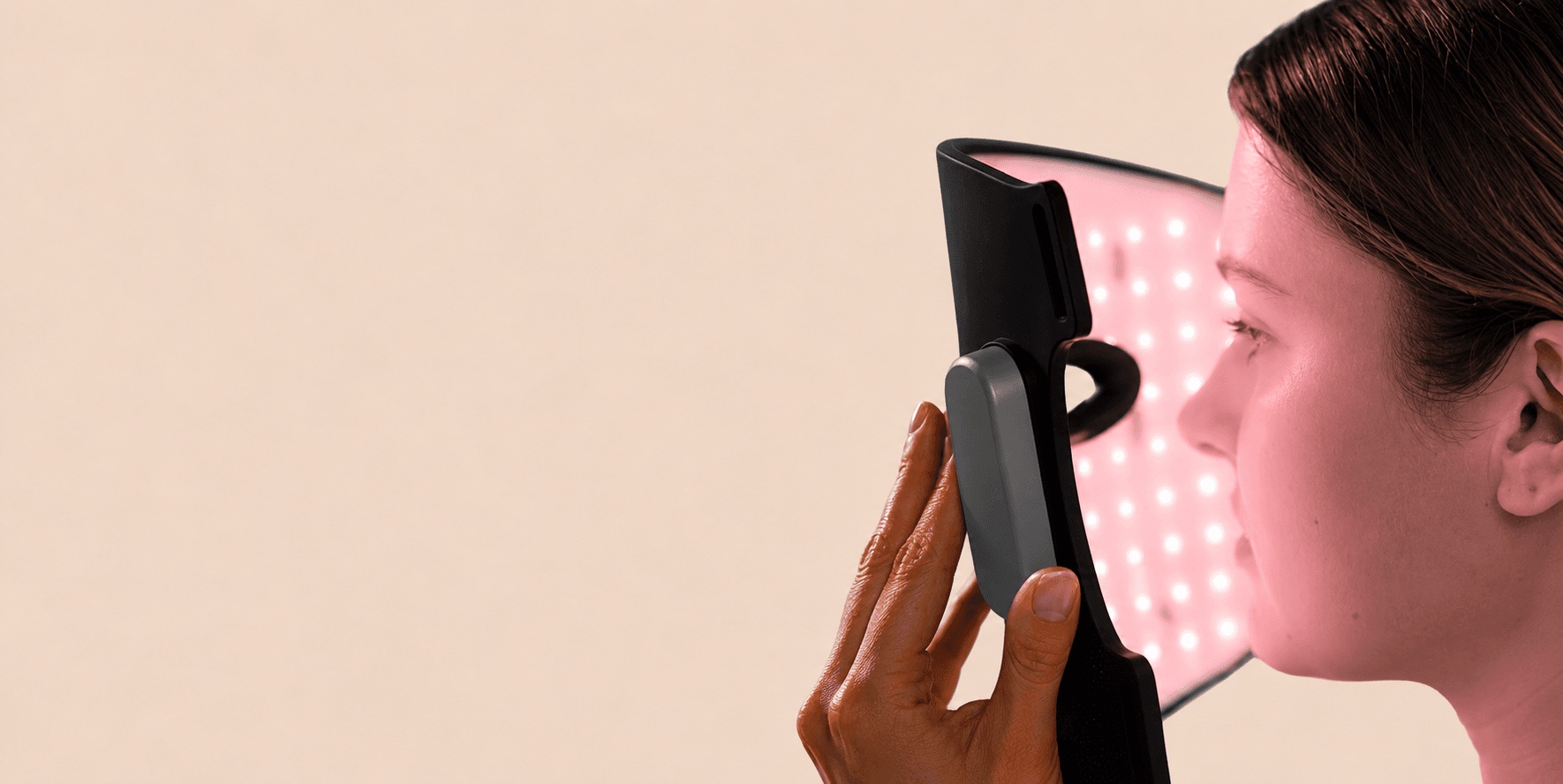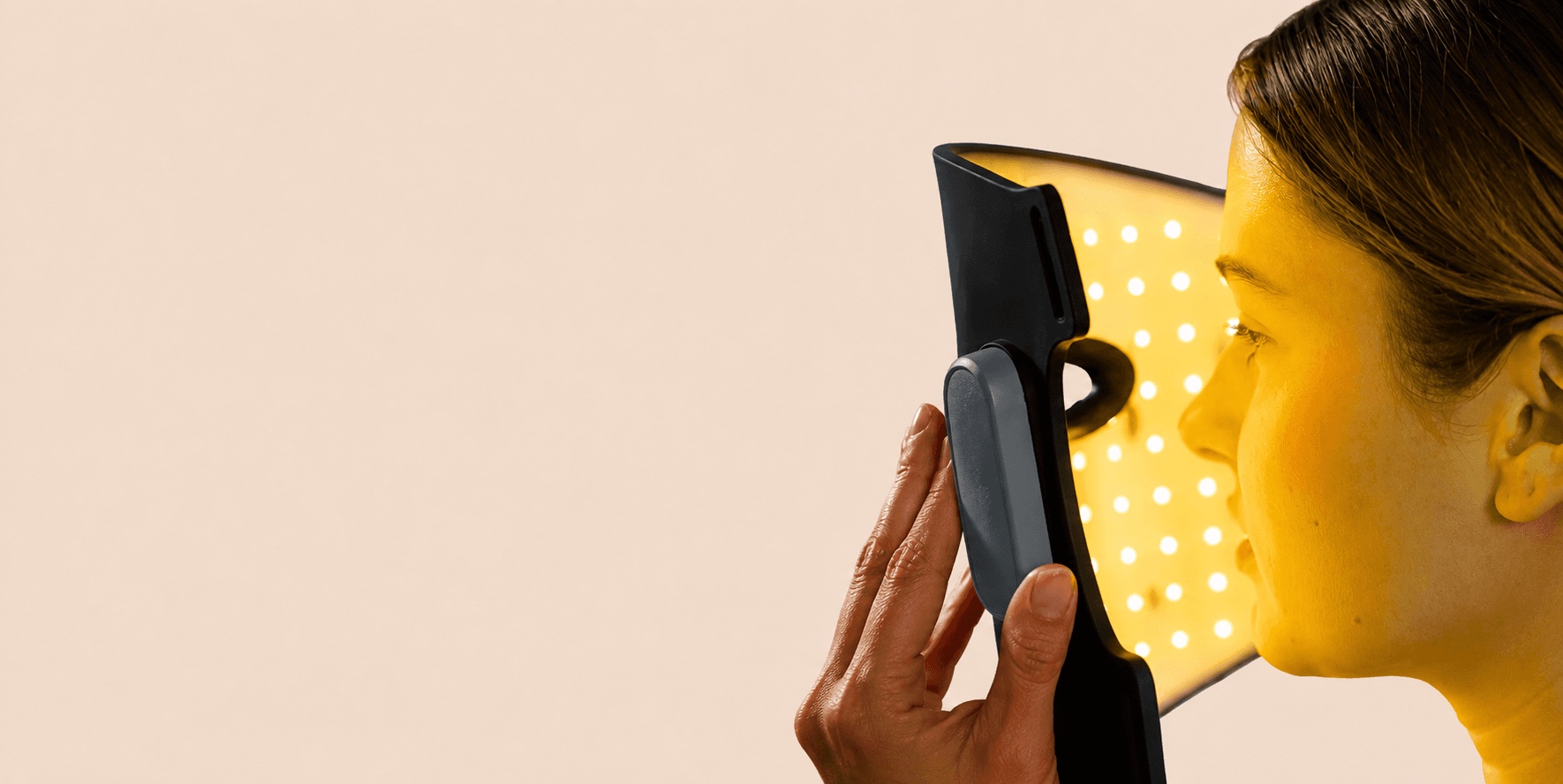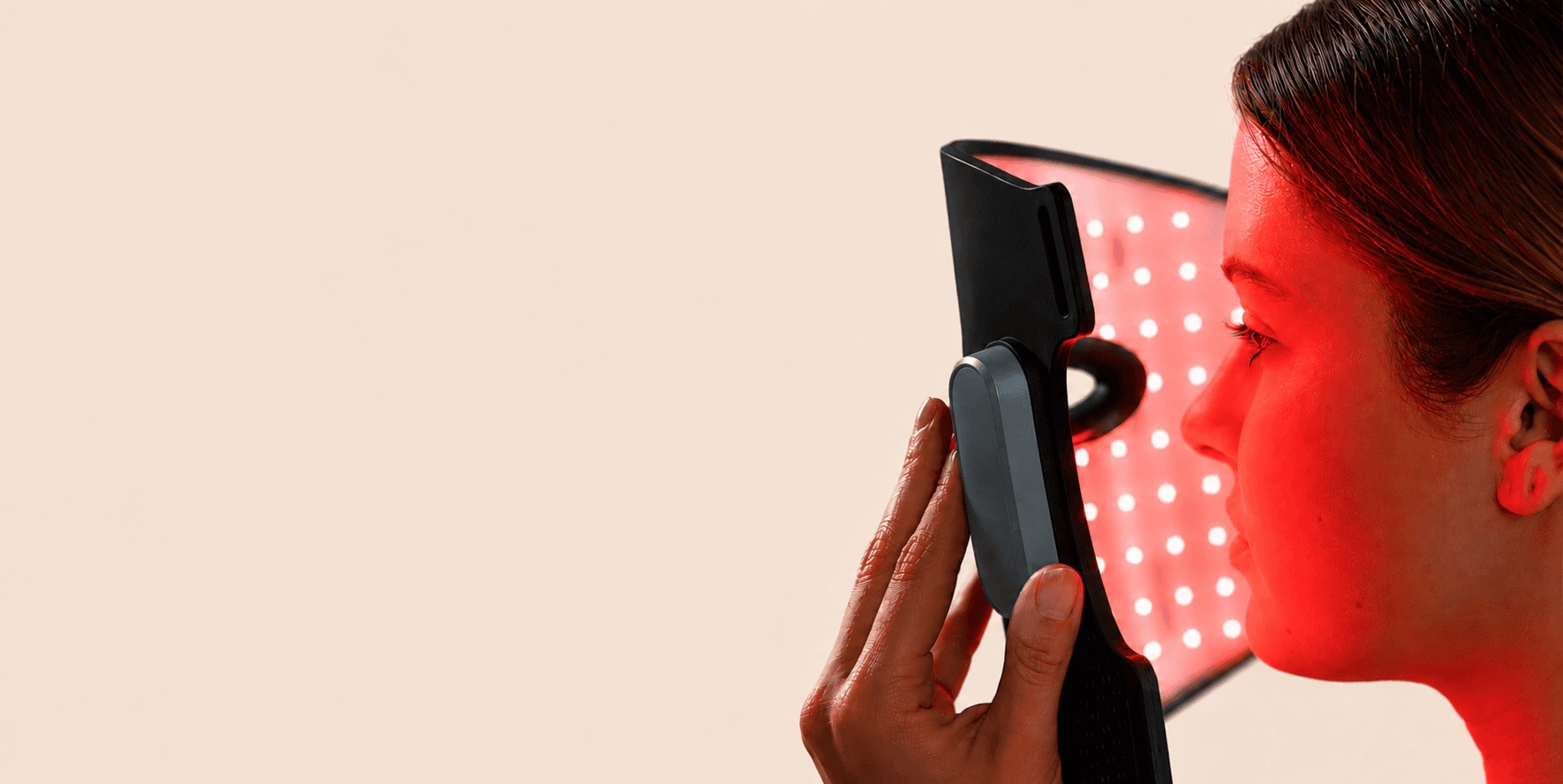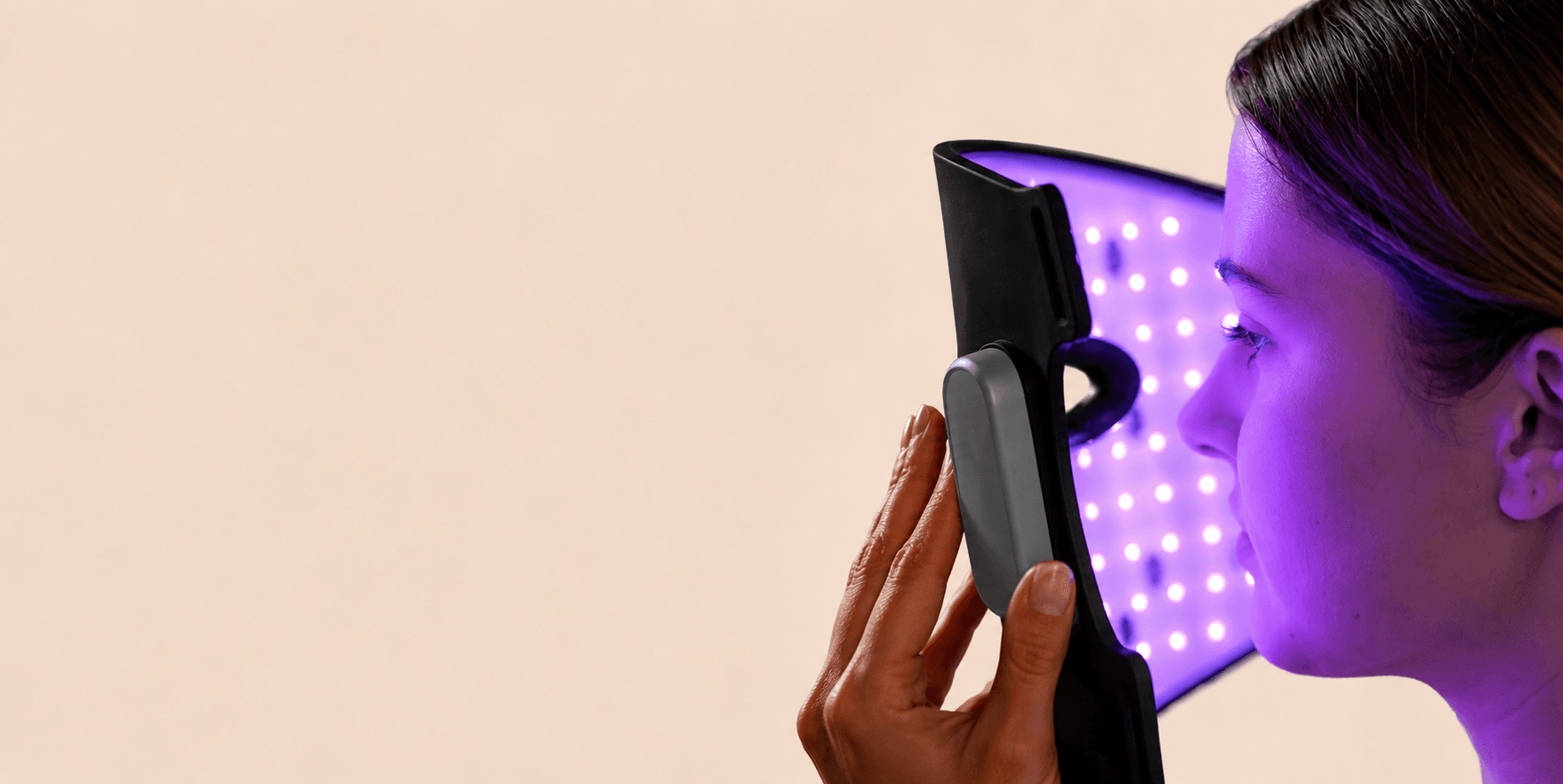
Purple LED light combines red (630 nm) and blue (450 nm) — targeting blemishes and promoting a smoother, firmer-looking complexion in a single session. Well-researched and honest.
- Purple light combines red (630 nm) and blue (450 nm) in a single session
- Blue targets surface imperfections, whilst red supports and soothes deeper layers
- Research into the combination shows a clear improvement in skin appearance
- Ideal for a combination of concerns: visible blemishes and redness or unevenness
- One mode, two wavelengths — suitable for almost all skin types, for use at home
Most skin problems rarely occur on their own. Active spots are often accompanied by redness, and those who have suffered from acne are often left with small scars or uneven texture. A single wavelength usually only tackles one aspect. Purple light is different: it combines red light (630 nm) and blue light (450 nm) simultaneously, allowing you to tackle both acne and skin repair in the same session.
In this article, we explain how this combination works, why 1 + 1 is greater than 2 in this case, and how to make the most of purple light at home. No exaggerated claims — just what the science shows.
What is purple LED light therapy?
Purple light isn’t a separate wavelength, but a clever combination of two proven colours: blue around 450 nm and red around 630 nm. Together, they appear as a purple glow. The idea is simple but powerful — you let two wavelengths work simultaneously at different depths in the skin.
The underlying principle is called photobiomodulation: specific light waves act as a biological stimulus for your cells. Blue has an antibacterial effect on the surface, whilst red stimulates repair and collagen production in the deeper layers. By combining them, you cover the full spectrum of acne-prone skin.
- No UV light — no risk of burns or DNA damage
- Non-invasive — no needles, no medication, no recovery time
- Two effects in one session — killing bacteria and repairing the skin
- Suitable for most skin types, including sensitive and acne-prone skin
How does it work at a molecular level?
The blue component (450 nm) remains in the upper layers of the skin, where it targets the acne-causing bacterium Cutibacterium acnes. This bacterium naturally produces porphyrins. When blue light shines on them, oxygen radicals are created that break down the bacteria from within — without dryness or the side effects of antibiotics.
The red light (630 nm) penetrates deeper, into the dermis. There, it is absorbed by cytochrome c oxidase in the mitochondria, causing cells to produce more ATP (cellular energy). The result: more collagen, faster recovery and fewer inflammatory substances. In this way, the red soothes the redness caused by acne, whilst the blue tackles the source.
It is precisely this synergy that makes purple light so appealing: the two wavelengths work at different depths and reinforce each other’s effect — stronger together than either alone.
The proven benefits at a glance
1. Blemishes and skin imperfections simultaneously
Because blue targets the bacteria behind blemishes and red supports skin repair, the skin not only looks brighter but also smoother and more even. Research into the combined wavelengths shows a clear improvement in skin appearance.
2. The synergy effect
The combination produces a more visible effect than red or blue alone. The red light complements the action of blue by supporting skin repair — so you address both the cause and the appearance in a single session.
3. Reduced redness and a more even texture
The anti-inflammatory effect of red light soothes the chronic redness associated with acne, whilst collagen stimulation firms the skin. The result is a calmer, more even complexion.
4. Prevention of new breakouts
By killing bacteria and helping to balance sebum, purple light reduces the risk of clogged pores. Ideal if you have your acne under control and want to prevent it from returning.
5. Recovery from a history of acne
Do you have active acne with post-acne scars or fine lines? Then purple light is the all-in-one choice: it tackles the current breakout whilst supporting the recovery of what the acne has left behind.
Who is purple LED light suitable for?
Purple light is the logical choice when your skin problem has more than one aspect. It is suitable for most skin types and combines prevention with recovery.
- You have active acne with redness or scarring
- You want to tackle spots and early signs of ageing at the same time
- You’re looking for an all-in-one routine rather than separate treatments
- Your acne is under control and you want to prevent new breakouts
- You want an approach without medication or harsh creams
Suitable for most skin types; build up gradually if you have extremely sensitive skin. Consult a GP or dermatologist if you are taking light-sensitive medication, have an active skin condition or are pregnant.
How to get the most out of purple LED light at home
As with other wavelengths, consistency is key. Purple light works cumulatively — each session builds on the previous one. Do not skip sessions during the first few weeks.
Step-by-step routine
- Cleansing: mild cleanser, no scrubs or active acids immediately before the session. Clean skin allows the light to penetrate better.
- Optional serum: a moisturising or soothing serum (hyaluronic acid) is fine. Avoid retinol and strong acids immediately before a session.
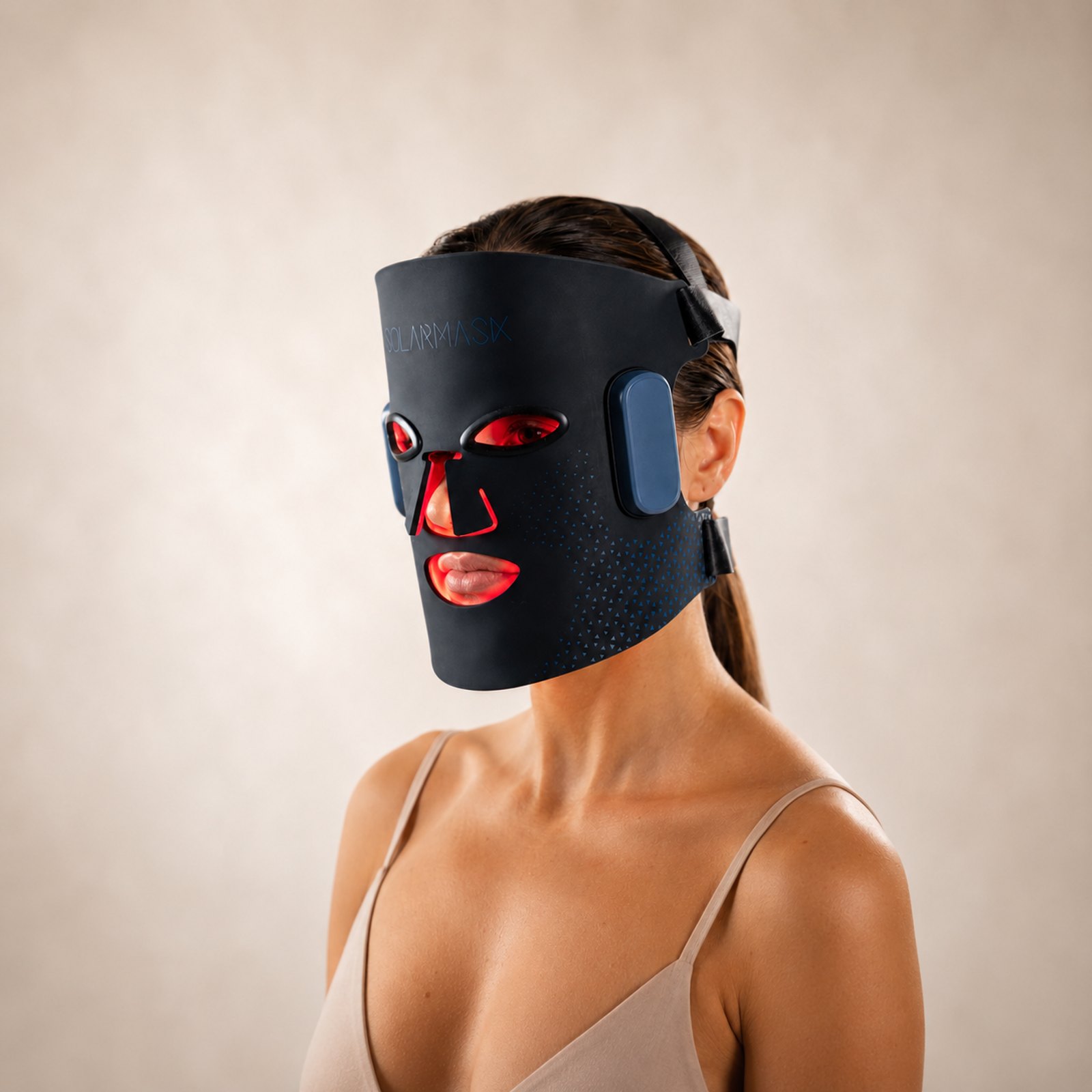
- Apply mask: select the purple mode, 0–5 cm from your face.
- 15 minutes: close your eyes or wear the eye protection provided and relax.
- Finish: apply a soothing moisturiser. Always use SPF during the day — UV protection remains essential.
The optimal light dose is around 4–9 J/cm² per session — the range from successful combination studies. The SolarMask is calibrated for this.
What can you realistically expect?
Purple light is not a quick fix. The results are gradual but real — and because you’re targeting two processes at once, you’ll often notice your skin calming down early on.
- ✓ Less visible redness
- ✓ Pimples are less noticeable
- ✓ Skin feels calmer
- ✓ Visibly clearer complexion
- ✓ A more even complexion
- ✓ Fewer new blemishes
- ✓ A more even, fresher complexion
- ✓ Improved texture and less visible imperfections
- ✓ Long-lasting results with regular maintenance
Results vary from person to person. Age, skin type, consistency and lifestyle (sleep, diet, hydration) all play a role.
Is purple LED light therapy safe?
Yes. Both wavelengths — blue (450 nm) and red (630 nm) — have been extensively studied and are considered very safe when used correctly. Purple light contains no UV, is non-ionising and causes no thermal damage.
- No proven side effects when used correctly
- Suitable for both teenagers and adults with acne
- The SolarMask LED Mask is CE-certified
- Mild temporary redness or slight dryness from overuse subsides quickly
Frequently Asked Questions
What is the difference between purple light and separate red or blue settings?
Purple light is not a separate wavelength, but a combination of red (630 nm) and blue (450 nm). This allows you to tackle blemishes (blue) and achieve firmer, more even-toned skin (red) in the same session, rather than on different days.
How soon will I see results from purple light?
Most people notice calmer-looking skin with less visible redness after 1–2 weeks. By week 4, the complexion looks brighter, and after 8 weeks of consistent use, it looks more even and fresher.
Is purple light suitable for sensitive skin?
Yes. Purple light is non-invasive and contains no UV. If you have very sensitive skin, build up your use gradually — for example, 2–3 times a week in the first few weeks.
Can I combine purple light with my skincare routine?
Yes, with moisturising and soothing products. Do not use retinol or strong acids immediately before a session; it’s better to schedule those for another day. Always use sun cream during the day.
Do I need purple light or is one wavelength enough?
For pure anti-ageing, red is sufficient; for blemishes, blue is sufficient. If you have both concerns — blemishes and redness or uneven skin tone — then purple is the most effective choice. The SolarMask mask features both purple and the individual wavelengths.
Purple light is your multitasking hero: it tackles blemishes and works towards firmer, more even-toned skin at the same time, at two depths, in a single session. No fuss — just two scientifically proven wavelengths that are more effective when combined. And with the SolarMask LED Mask, you get not just purple, but all five researched wavelengths in a single device.
Would you like to give this a go yourself?
The SolarMask LED Mask — all five wavelengths
Professional light therapy for home use. One mask, five treatments, 15 minutes per session. CE-certified.
View the mask →Before & after with this light
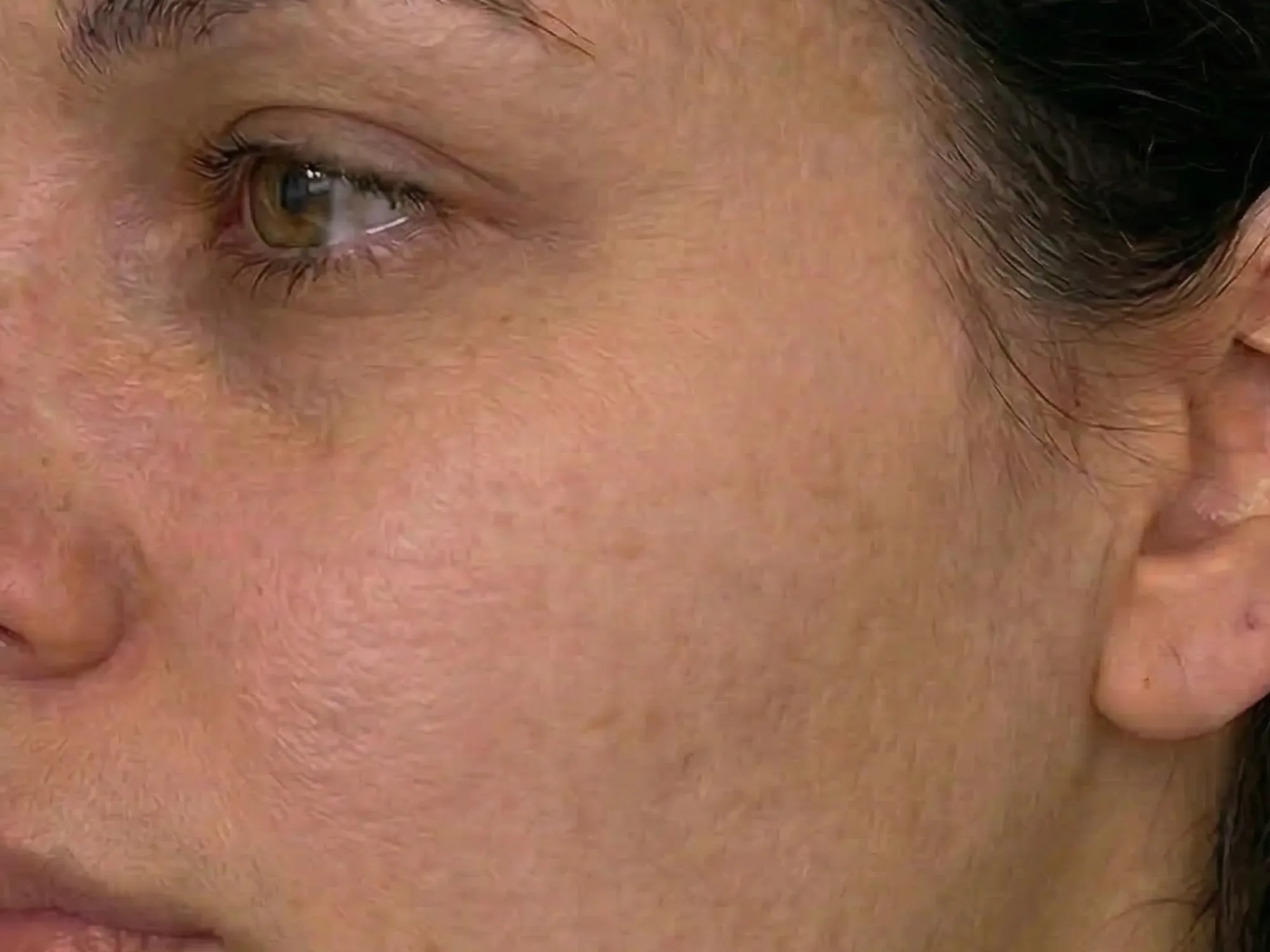
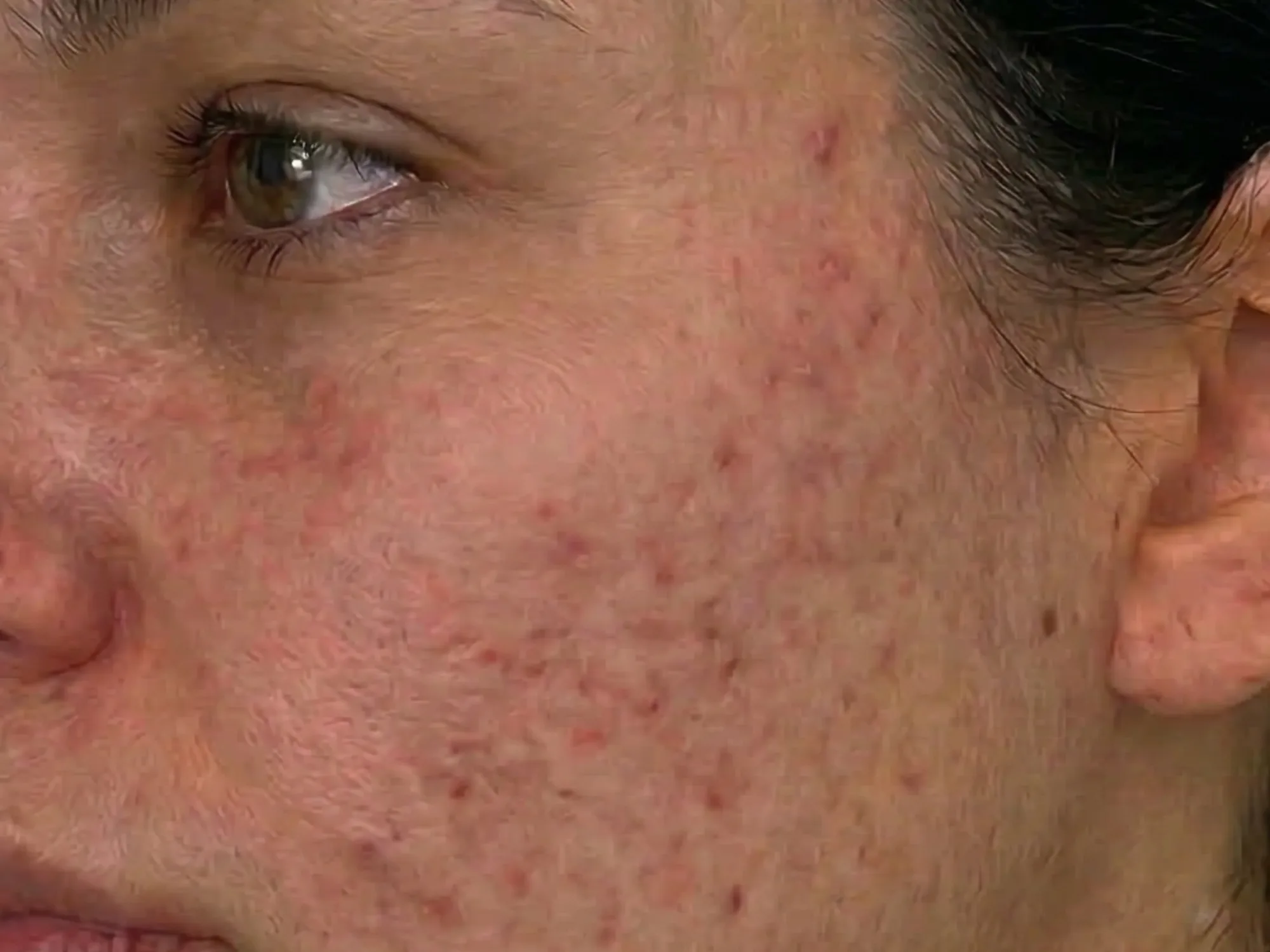
Drag the slider to see the difference.
Esmee writes about skincare, LED light therapy and the science behind SolarMask. Any questions? Please email contact@solarmask.eu.
 Recommended by Dr. Farah MacDonald — physician & skin specialist
Sources & scientific studies
- Wunsch A, Matuschka K (2014). A controlled trial to determine the efficacy of red and near-infrared light treatment in patient satisfaction, reduction of fine lines, wrinkles, skin roughness, and intradermal collagen density increase. Photomedicine and Laser Surgery.
- Avci P et al. (2013). Low-level laser (light) therapy (LLLT) in skin: stimulating, healing, restoring. Seminars in Cutaneous Medicine and Surgery.
- Hamblin MR (2017). Mechanisms and mitochondrial redox signaling in photobiomodulation. Photochemistry and Photobiology.
- De Arruda Vidal C et al. (2020). LED phototherapy for facial rejuvenation. Journal of Cosmetic and Laser Therapy.
Medical disclaimer: This article is for informational purposes only and does not constitute medical advice. LED light therapy supports the skin but does not cure conditions; results vary from person to person. If you are pregnant, taking light-sensitive medication or have a skin condition, please consult your doctor first.