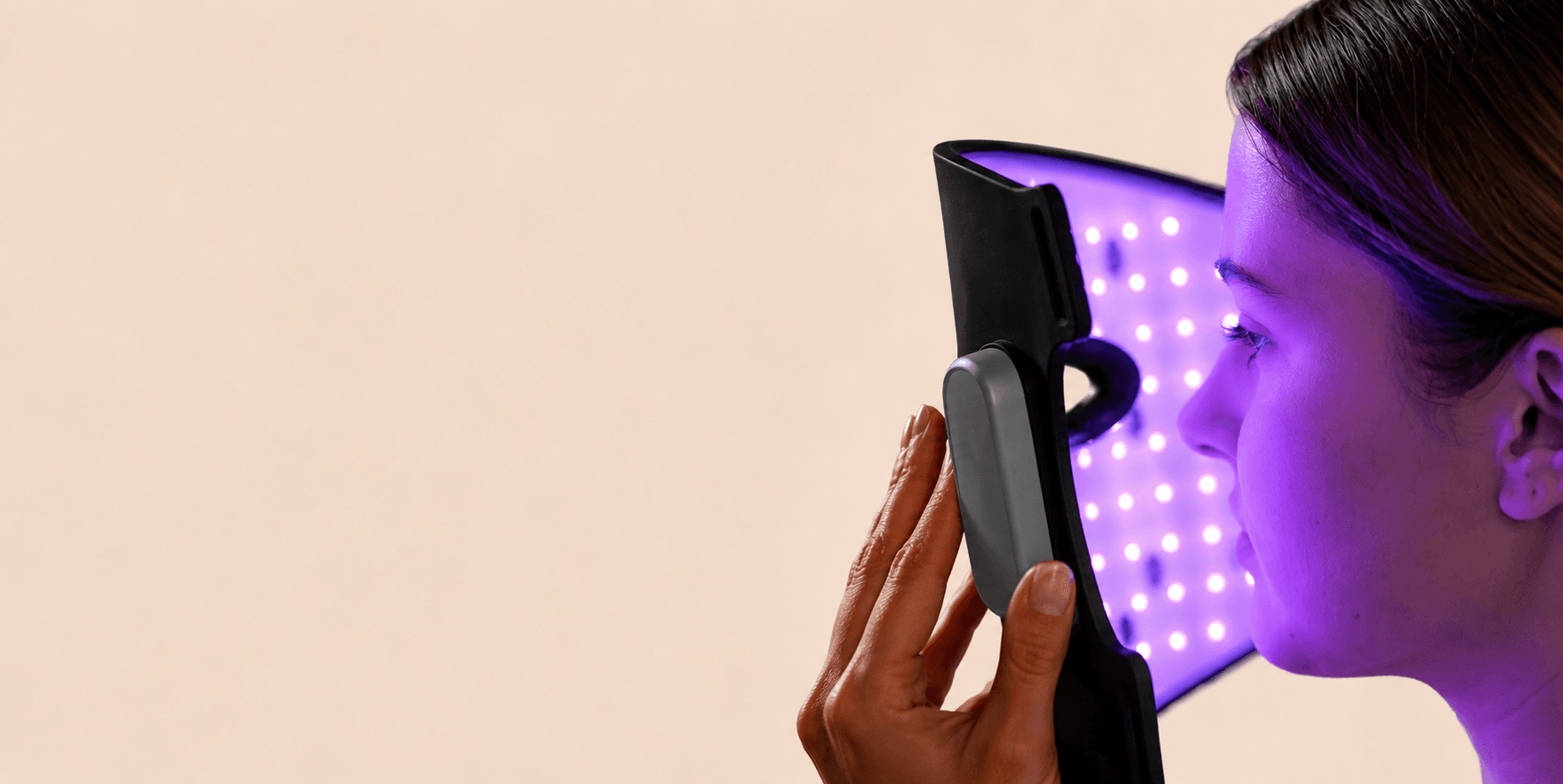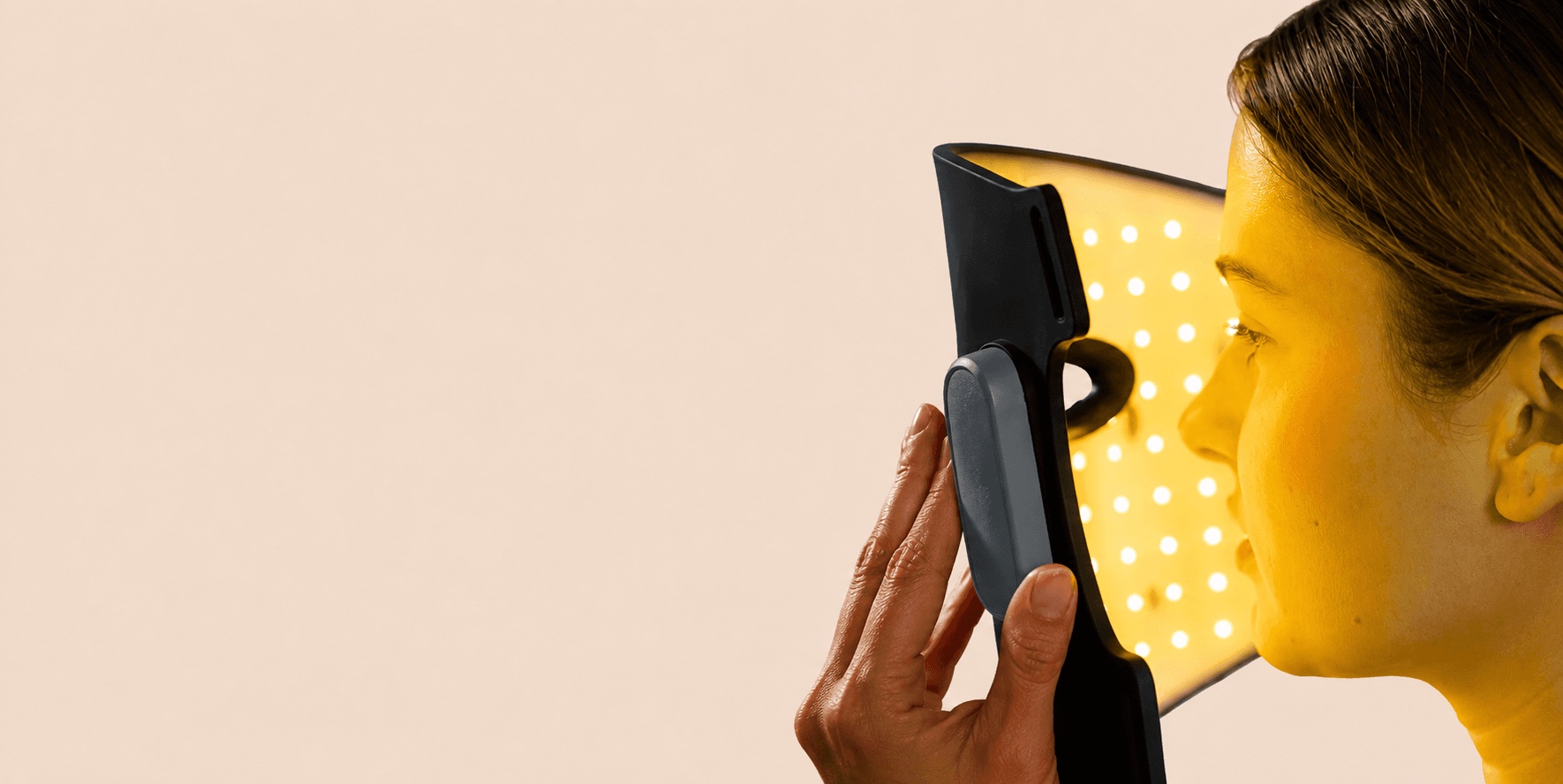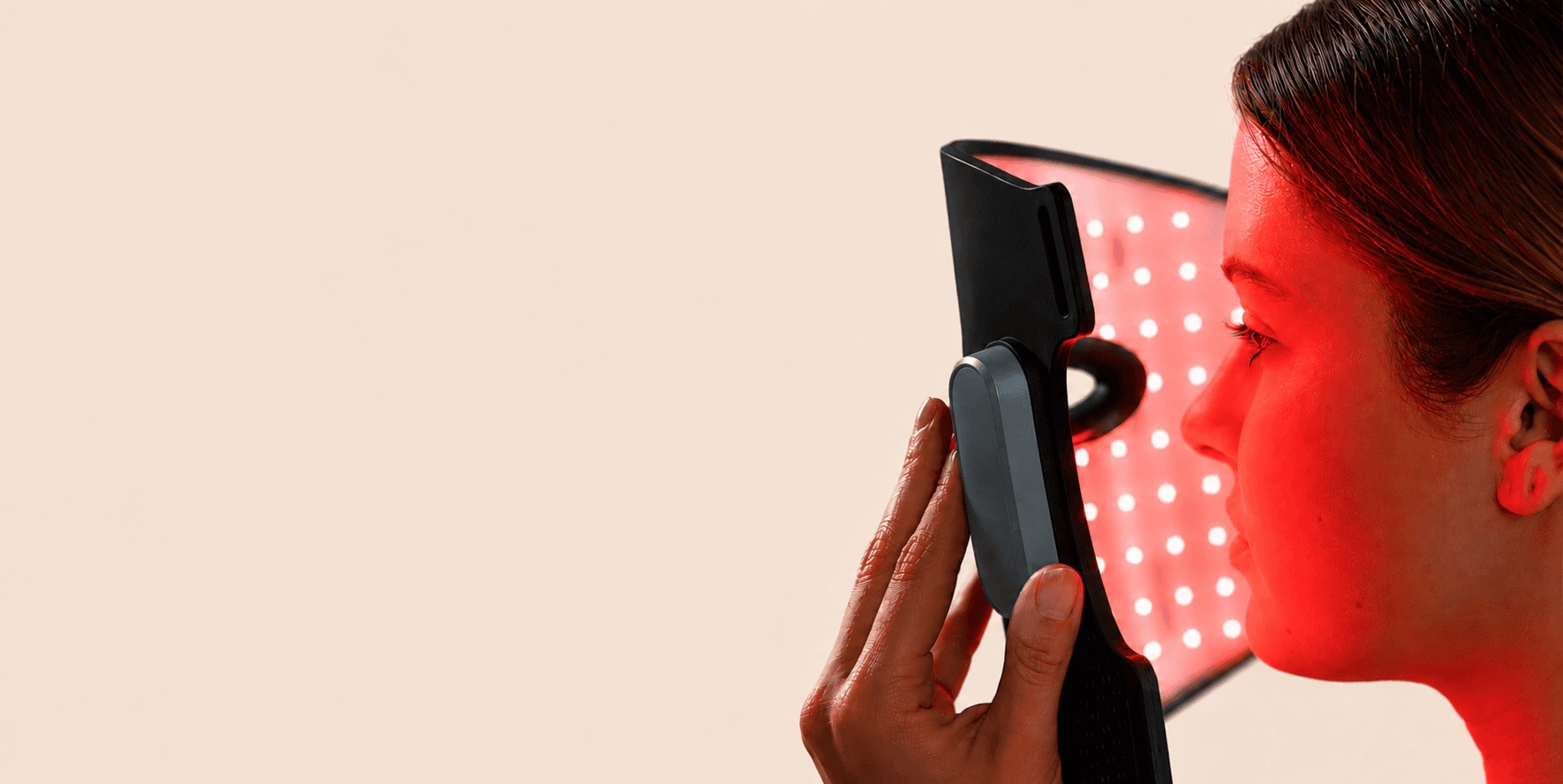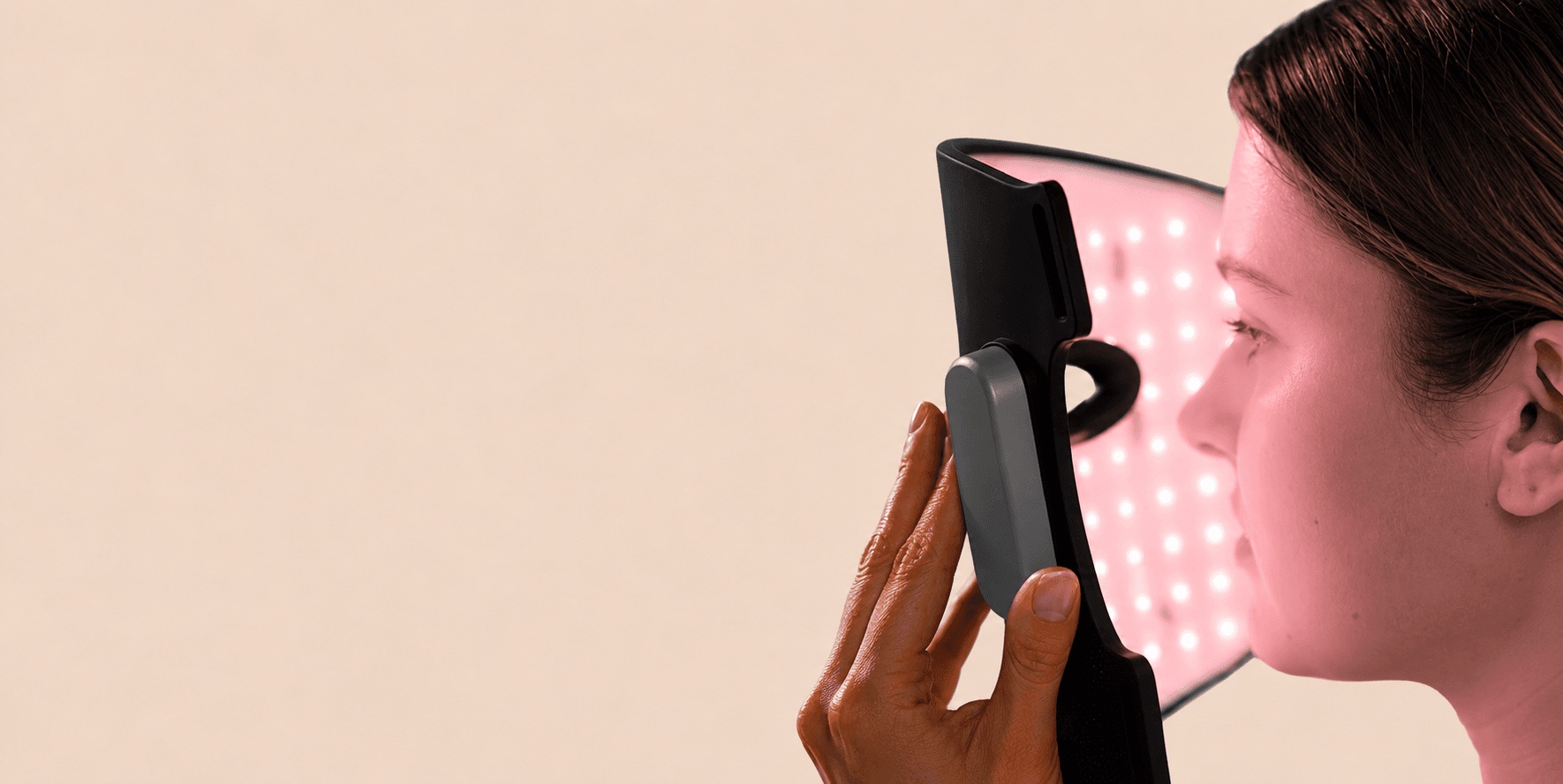
Near-infrared light (850 nm) penetrates deeper than any other wavelength — right down to the connective tissue. Clinically proven to support collagen production and deep skin repair at home.
- Near-infrared (850 nm) penetrates deeper than any other LED wavelength
- Acts deep into the subcutaneous tissue and connective tissue — where collagen and elastin are produced
- In research, the combination of 630 + 830 nm reduced wrinkle depth by up to 36% (Lee et al., 2007)
- Ideal for deep repair, scar reduction and firmness — not for superficial acne
- Complements red light perfectly: surface and depth in a single routine
Most light therapy works on the surface. Near-infrared goes further. With a wavelength of around 850 nanometres, NIR is the deepest-penetrating wavelength in LED treatments — it reaches skin layers that red and blue light cannot reach. There, in the subcutaneous tissue and connective tissue, it supports the processes that keep your skin firm and resilient.
In this article, we explain exactly what NIR light does, why it works so well in combination with red light, and how to make the most of it at home. No exaggerated claims — just what the science shows.
What is near-infrared light therapy?
Near-infrared (NIR) light lies just outside the visible spectrum — you can’t see much of it, but your skin absorbs it all the better. At 850 nm, it penetrates deeper than red, yellow or blue light: right down to the subcutaneous tissues where collagen and elastin are produced.
Just like other wavelengths, NIR works via photobiomodulation: light as a biological stimulus for your cells. The difference lies in the depth. Whilst red light mainly reaches the upper dermis, NIR works in the layers beneath — ideal for recovery, firmness and the appearance of imperfections.
- Deepest penetration — reaches the subcutaneous tissue and connective tissue
- No UV light — no risk of burns or DNA damage
- Non-thermal — you’ll feel nothing more than a pleasant warmth
- Works in tandem with red light: surface and depth
How does it work at a molecular level?
NIR light at 850 nm is absorbed by cytochrome c oxidase in the mitochondria — the powerhouses of your cells. As this enzyme absorbs more light, the mitochondria work more efficiently and produce more ATP (cellular energy), particularly in the deeper layers where collagen and elastin are formed.
More energy in those layers means faster repair of damaged tissue, less inflammation and the production of new connective tissue. That is why NIR is so popular after cosmetic or medical procedures: it accelerates recovery at a depth that other wavelengths cannot reach.
Red light (630 nm) penetrates to around 2–3 mm; near-infrared (850 nm) goes even deeper. The two complement each other — which is why they are often used together in both research and practice.
The proven benefits at a glance
1. More collagen and elastin — at depth
NIR stimulates the fibroblasts in the deeper dermis, resulting in a firmer, smoother skin surface. In a double-blind study, a combination treatment using 630 nm and 830 nm reduced wrinkle depth by up to 36% and improved skin elasticity by 19%, without side effects (Lee et al., 2007).
2. Supports natural recovery
Through its deep energy boost, NIR supports the skin’s natural healing capacity and promotes a smoother, more even-looking skin surface. It is therefore a popular choice for supporting the skin following, for example, a peel.
3. Deep anti-inflammatory action
NIR inhibits inflammatory processes deep within the underlying tissues, reducing redness and swelling. This makes it suitable for skin that requires more than just superficial soothing.
4. Firmer contours and elasticity
Improved collagen and elastin production provides greater resilience and firmer facial contours — exactly what mature skin loses over time.
5. Skin rejuvenation at a cellular level
Because NIR supports cellular energy metabolism, it addresses the root cause rather than just the symptoms: healthier, better-functioning cells in the deeper layers.
Who is near-infrared light suitable for?
NIR is the choice if you want to go deeper than superficial skincare. It is particularly beneficial for recovery, firmness and mature skin.
- You want to work deep within the skin to address sagging or scarring
- You are recovering from a medical or cosmetic procedure and want to speed up the process
- You want to tackle skin ageing on multiple levels
- You have mature skin that could benefit from a boost in elasticity and firmness
- You are already using red light and want to enhance the effect
For clear-cut acne, blue or purple light is a better choice — NIR works too deeply to tackle superficial bacteria. Consult a doctor if you are taking light-sensitive medication, have an active skin condition or are pregnant.
How to get the most out of near-infrared at home
Consistency makes all the difference. NIR works cumulatively and at depth — give it time to kick-start the repair process in the underlying layers.
Step-by-step routine
- Cleansing: remove make-up and sunscreen so that the light can penetrate unhindered.
- Optional serum: a moisturising serum may be applied before the session. Save retinol and strong acids for another time.
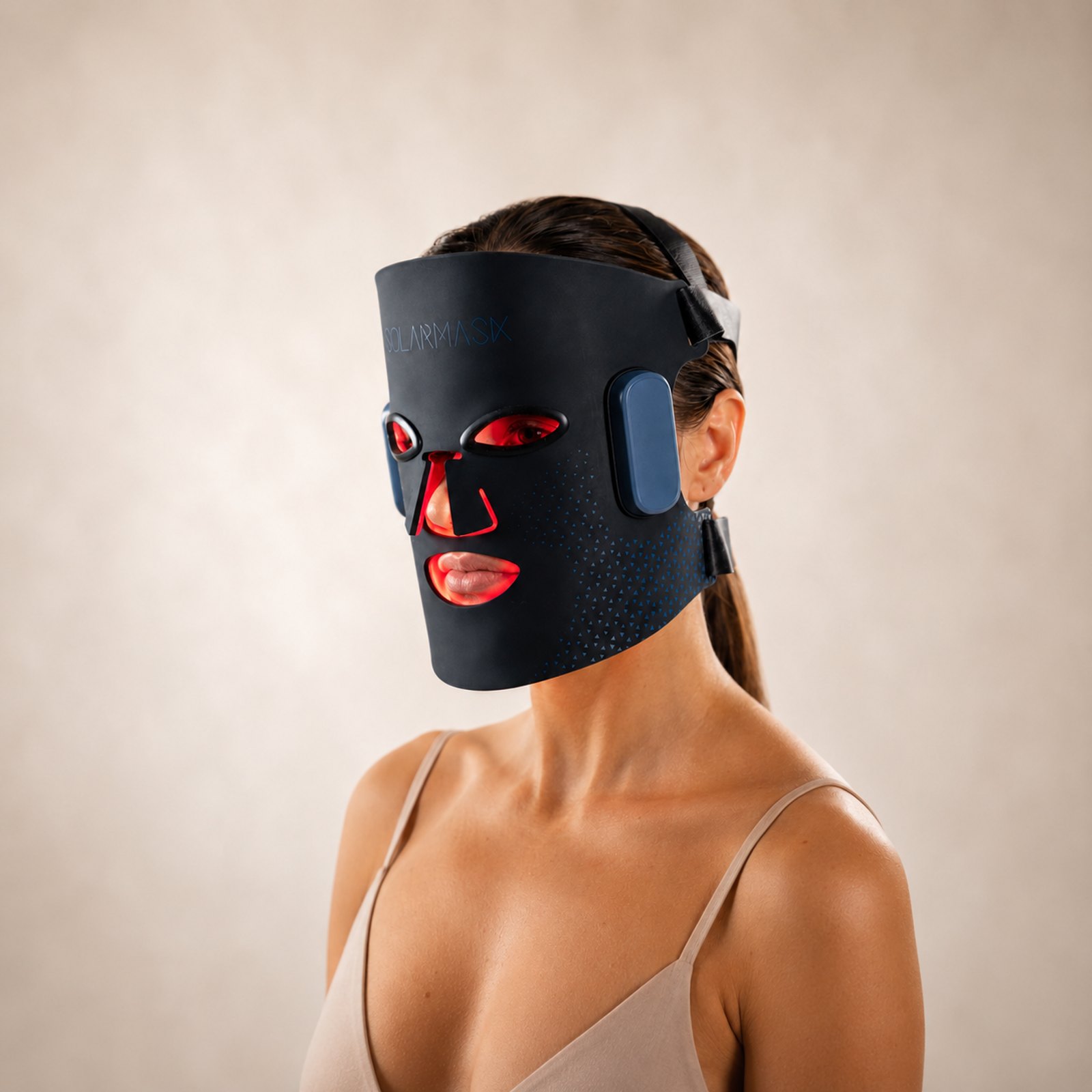
- Put on the mask: select the near-infrared mode, 0–5 cm from your face.
- 15 minutes: wear the included eye protection and relax.
- Finish: apply a hydrating moisturiser. Always use SPF during the day.
NIR combines excellently with red light in the same routine — the two wavelengths reinforce each other at different depths.
What can you realistically expect?
NIR works deeply, and deep treatment takes time. You’ll feel the first effects sooner than you’ll see them — visible results build up over weeks.
- ✓ Improved skin texture
- ✓ Skin feels firmer and more resilient
- ✓ Less visible scars
- ✓ Improved skin contours
- ✓ Increased elasticity
- ✓ Up to 36% reduction in wrinkle depth when combined with red (clinical)
- ✓ Continued improvement in firmness and radiance with maintenance
Results vary from person to person. Age, skin type, consistency and lifestyle all play a role.
Is near-infrared light therapy safe?
Yes. NIR light at 850 nm has been extensively studied and is considered very safe when used correctly. It works with non-ionising radiation, contains no UV and causes no damage to DNA.
- No proven side effects when used correctly
- Any mild warmth or slight redness subsides quickly
- The SolarMask LED Mask is CE-certified
- Wear the included eye protection during the session
Frequently Asked Questions
What is the difference between red and near-infrared light?
Red light (630 nm) works mainly in the upper dermis and is effective for superficial anti-ageing. Near-infrared (850 nm) penetrates deeper, reaching the subcutaneous tissue and connective tissue — ideal for repair, firmness and scar treatment. They complement each other.
How soon will I see results from NIR light?
The skin often feels firmer and more resilient within a few weeks. Visible improvement in scars and contours occurs after 6–12 weeks of consistent use; deeper anti-ageing effects build up over the longer term.
Does near-infrared help with blemishes?
Not primarily. NIR works too deeply to target blemishes on the surface. Blue or purple light is more suitable for that. NIR is specifically aimed at deep repair and firmer-looking skin.
Can I combine NIR with red light?
Yes, in fact, that is the recommended combination. Research (Lee et al., 2007) specifically used 630 + 830 nm together. The SolarMask mask features both wavelengths.
Is near-infrared safe for daily use?
Yes, NIR is safe when used correctly. 3–5 sessions per week are usually effective enough; wear the eye protection provided and follow the recommended duration of use.
Near-infrared is the deep skin care solution: it works where other wavelengths cannot reach and keeps your skin not only radiant, but also firm and healthy in the long term. And with the SolarMask LED Mask, you get not just NIR, but all five clinically researched wavelengths in a single device.
Would you like to give this a go yourself?
The SolarMask LED Mask — all five wavelengths
Professional light therapy for home use. One mask, five treatments, 15 minutes per session. CE-certified.
View the mask →Before & after with this light
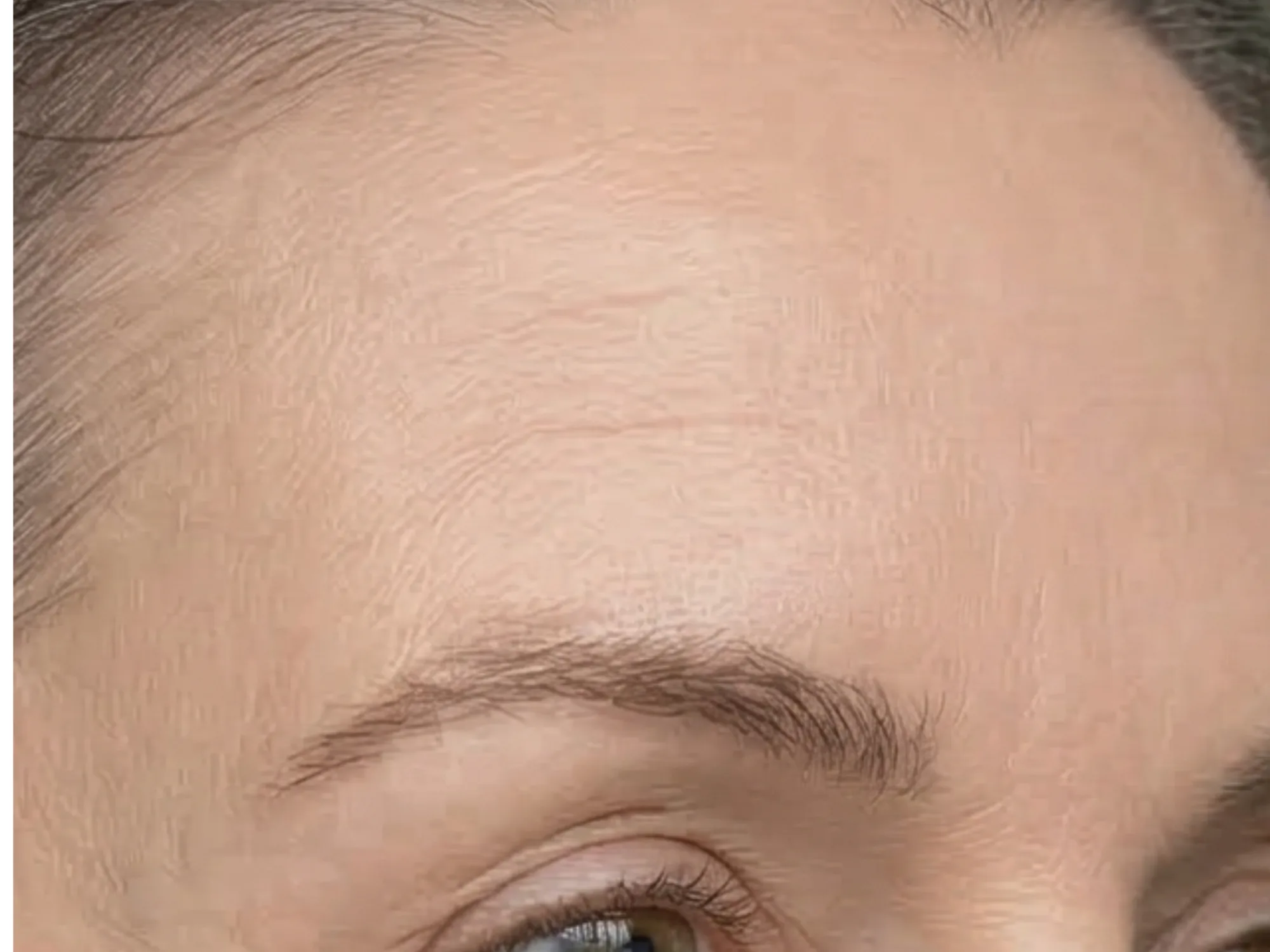
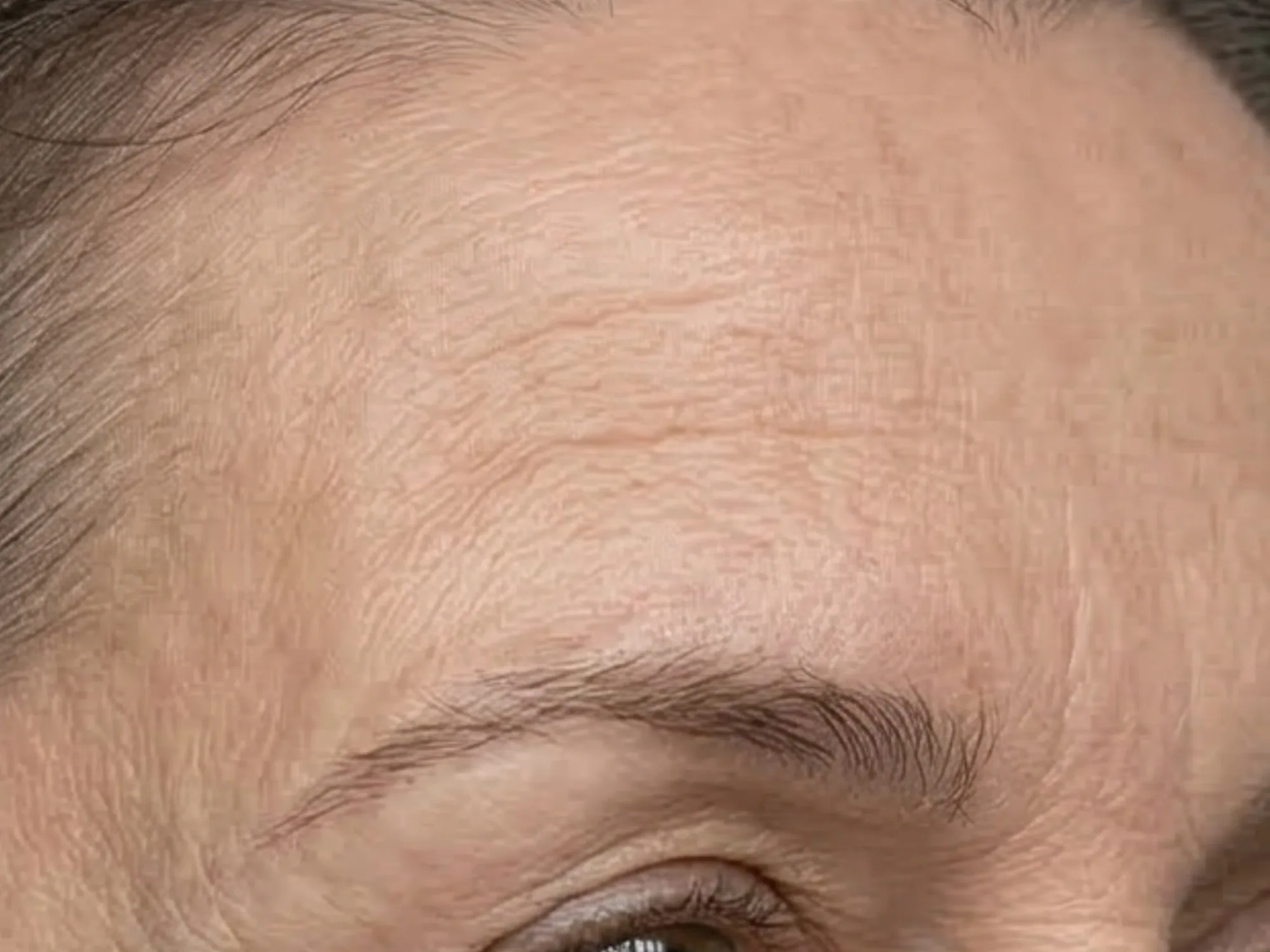
Drag the slider to see the difference.
Esmee writes about skincare, LED light therapy and the science behind SolarMask. Any questions? Please email contact@solarmask.eu.
 Recommended by Dr. Farah MacDonald — physician & skin specialist
Sources & scientific studies
- Wunsch A, Matuschka K (2014). A controlled trial to determine the efficacy of red and near-infrared light treatment in patient satisfaction, reduction of fine lines, wrinkles, skin roughness, and intradermal collagen density increase. Photomedicine and Laser Surgery.
- Avci P et al. (2013). Low-level laser (light) therapy (LLLT) in skin: stimulating, healing, restoring. Seminars in Cutaneous Medicine and Surgery.
- Hamblin MR (2017). Mechanisms and mitochondrial redox signaling in photobiomodulation. Photochemistry and Photobiology.
- De Arruda Vidal C et al. (2020). LED phototherapy for facial rejuvenation. Journal of Cosmetic and Laser Therapy.
Medical disclaimer: This article is for informational purposes only and does not constitute medical advice. LED light therapy supports the skin but does not cure conditions; results vary from person to person. If you are pregnant, taking light-sensitive medication or have a skin condition, please consult your doctor first.