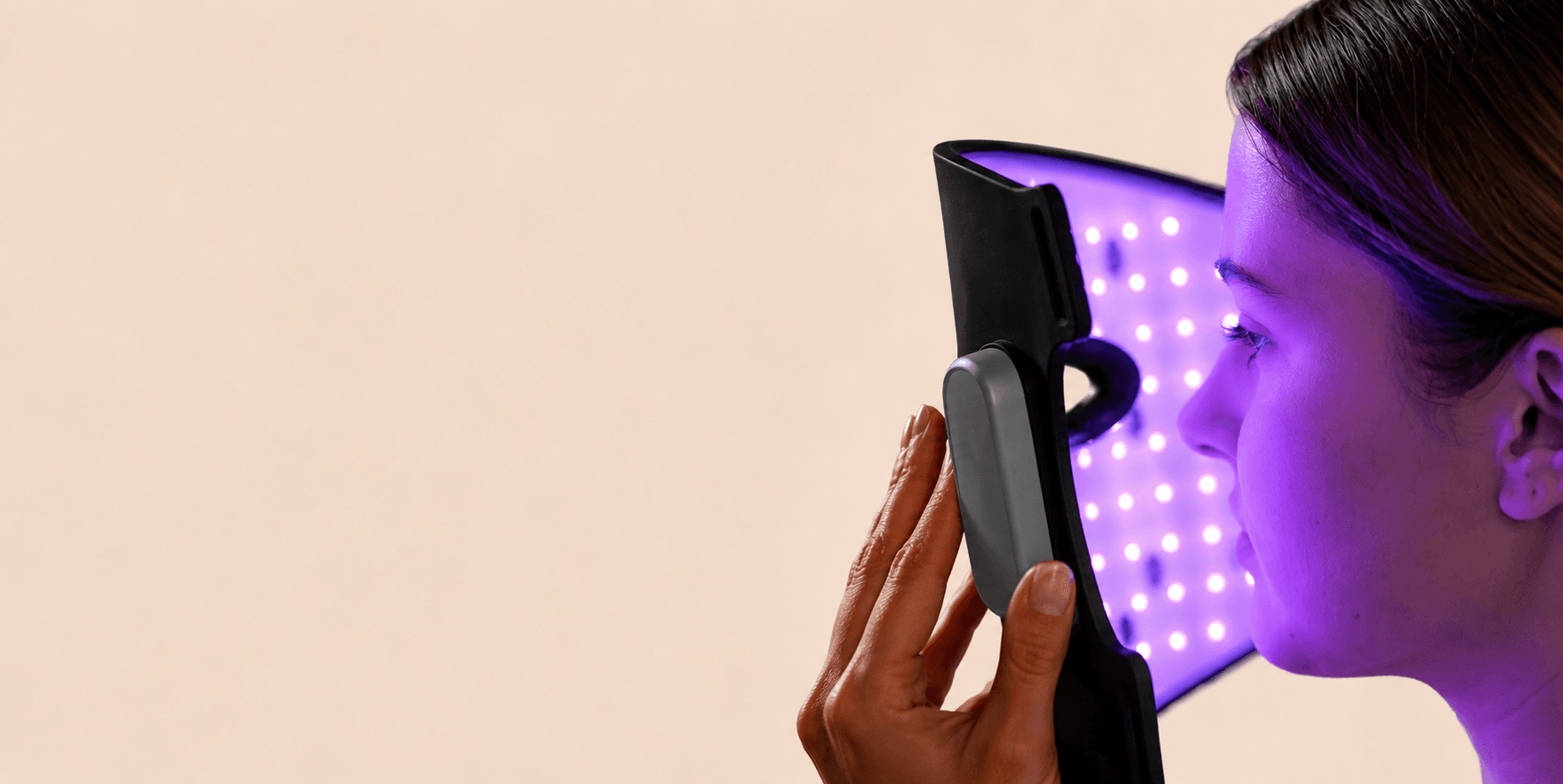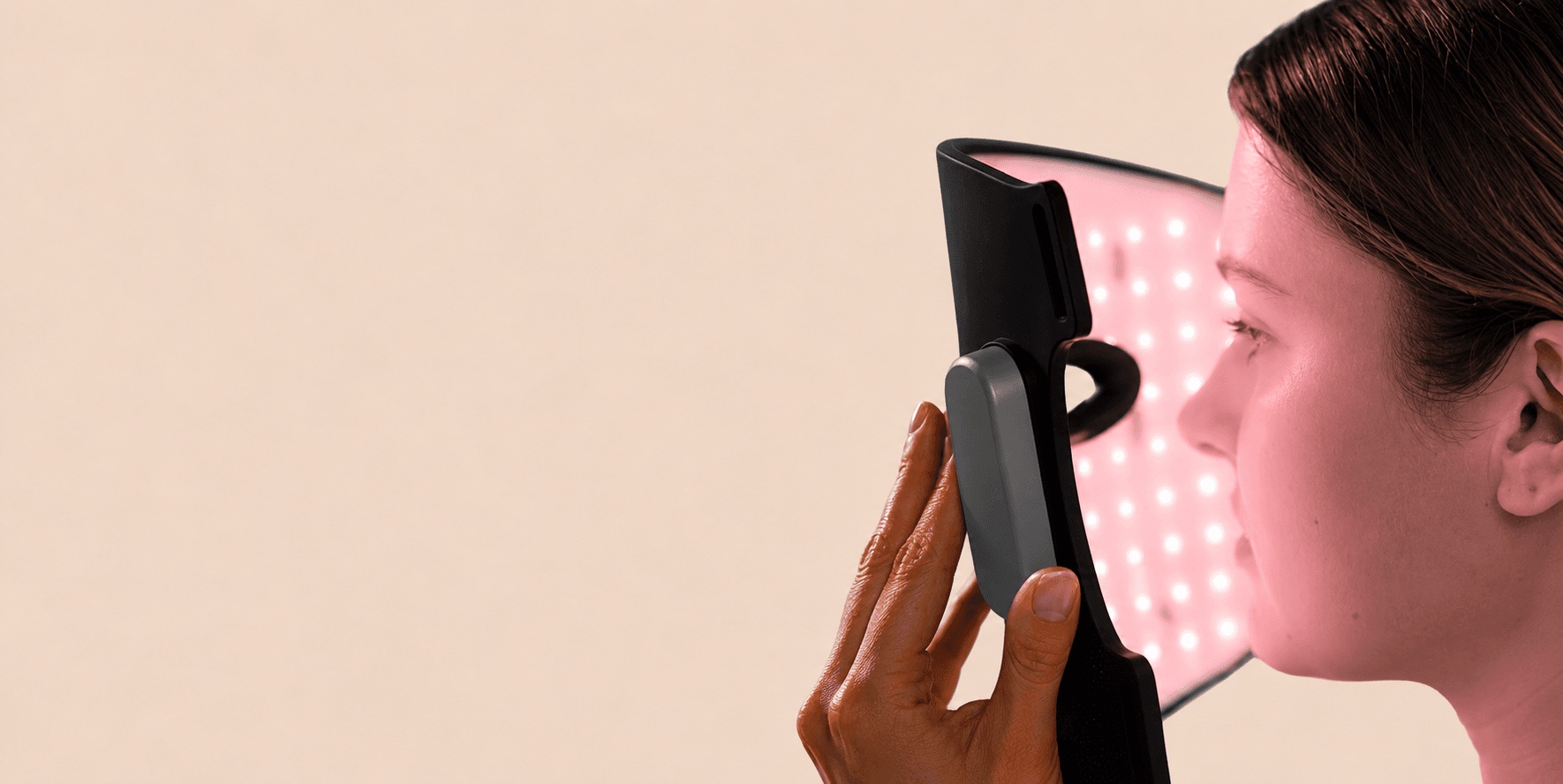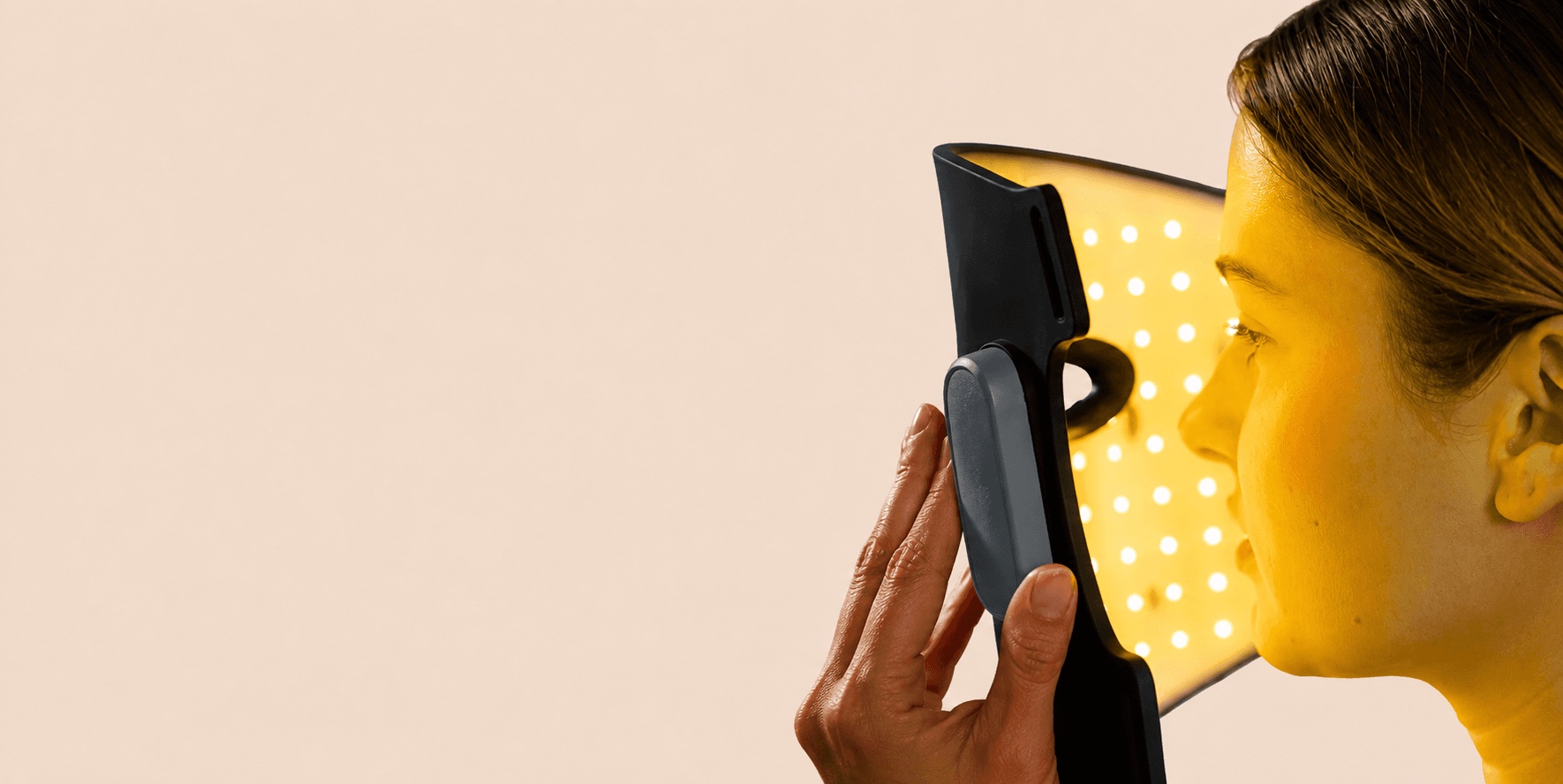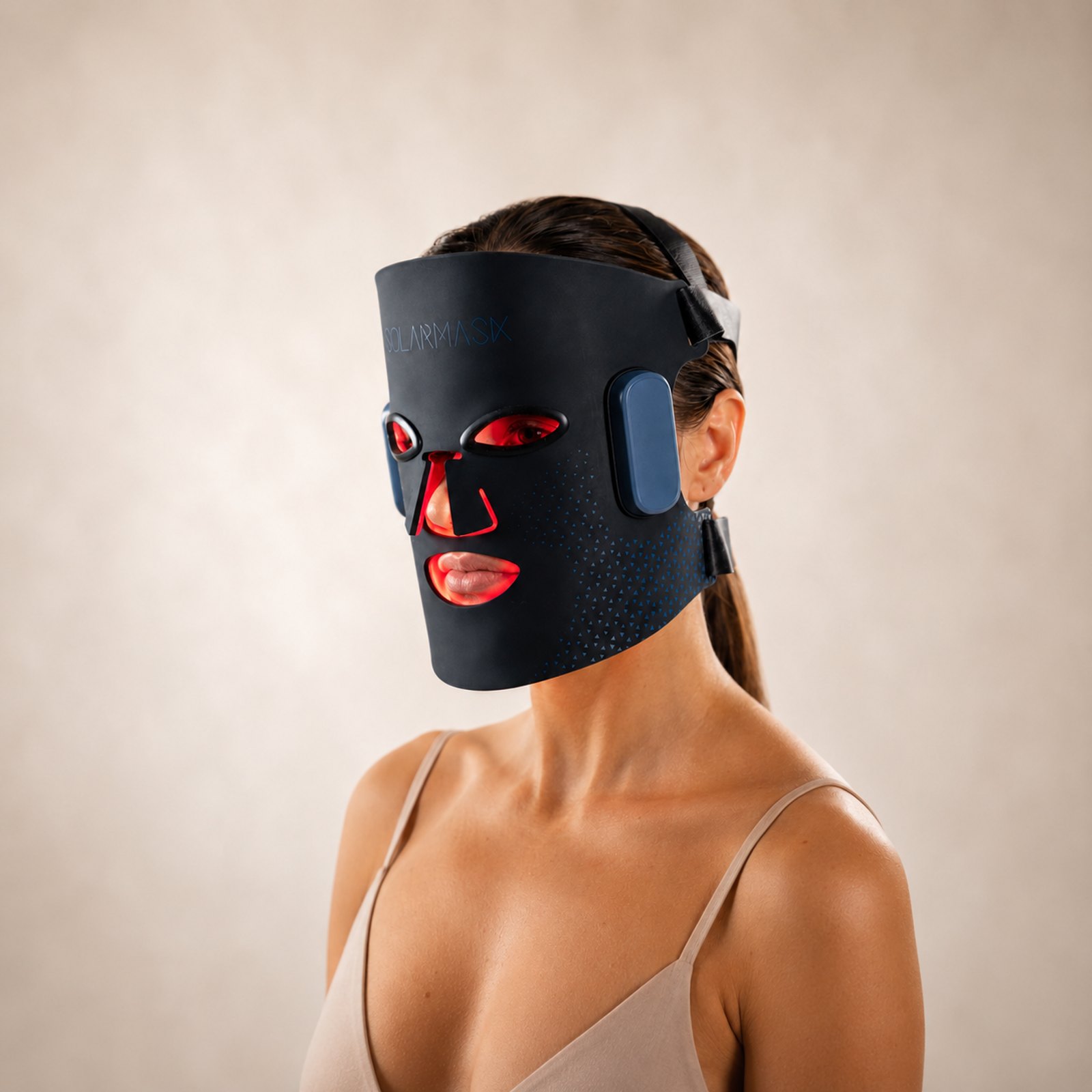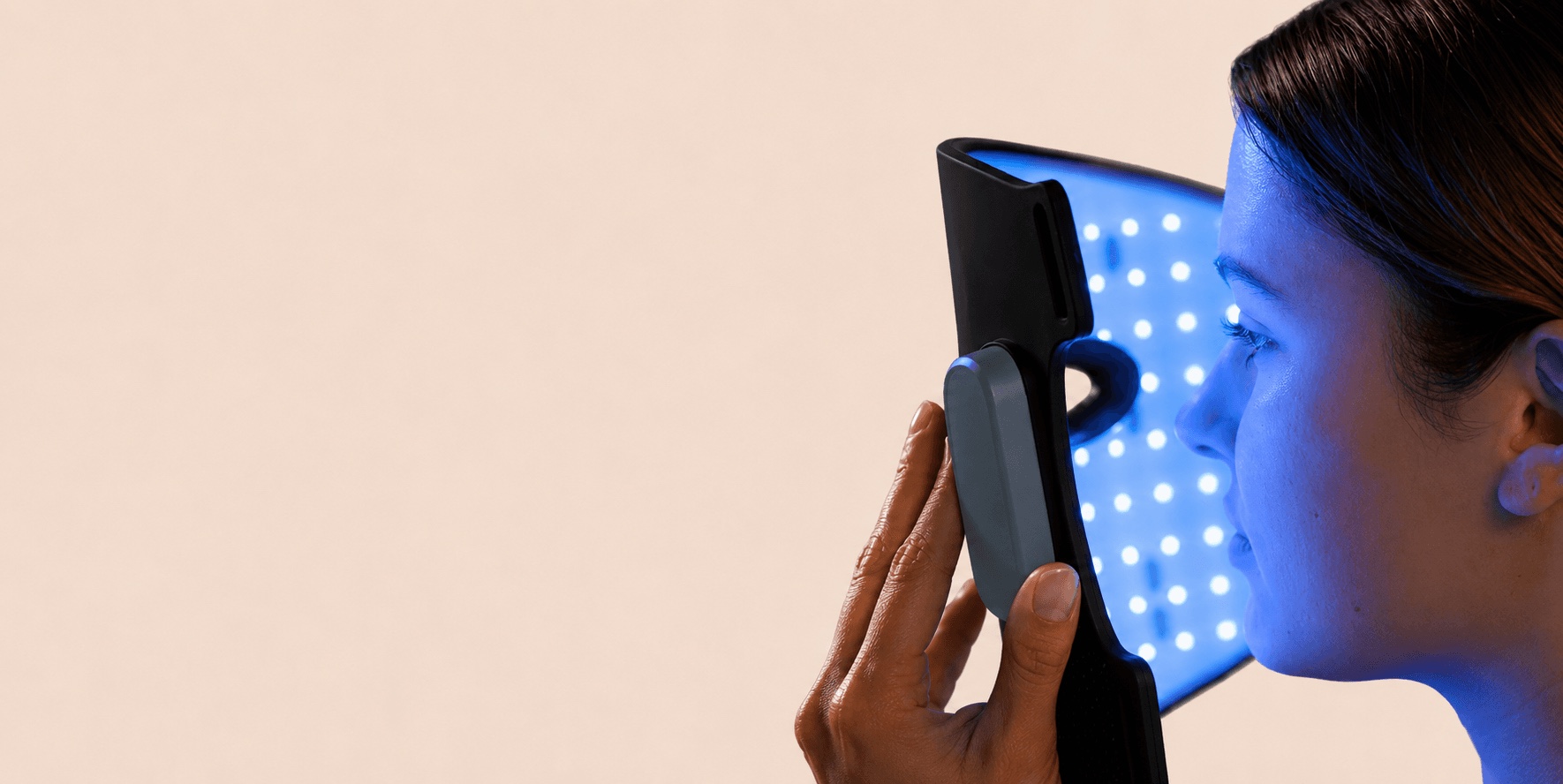
Blue LED light (450 nm) targets blemishes and helps achieve clearer, more even-toned skin. Find out how this wavelength works and how to get the most out of it at home.
- Blue light (450 nm) targets blemishes and leaves skin visibly brighter and smoother
- Targets the bacteria responsible for blemishes — without the use of harsh chemicals
- Research into blue light shows a clear improvement in skin appearance
- Penetrates 1–2 mm: superficial, gentle and non-invasive
- UV-free and suitable for all ages — for use at home
Blemished skin is often treated with creams and acids — sometimes at the cost of dryness or irritation. Blue LED light takes a gentler, non-invasive approach. With a wavelength of around 450 nm, blue light targets blemishes and promotes a clearer, more even complexion — safe, gentle and suitable for daily use.
In this article, we explain how blue light works on blemishes, what the research shows, and how to use it effectively at home. No exaggerated claims — just what the science shows.
What is blue LED light therapy?
Blue light around 450 nm is not a beauty trend, but pure science. It is a targeted, non-invasive wavelength that acts on the bacteria behind blemishes. No harsh acids — just light at the right wavelength, for clearer-looking skin.
Just like the other colours, blue works via photobiomodulation: specific light waves act as a biological stimulus. What makes blue special is that it doesn’t so much stimulate your skin cells as target the bacteria associated with blemishes.
- Targets blemishes — for a clearer, more even complexion
- No UV light — no risk of sunburn or DNA damage
- No harsh ingredients — no acids, no dryness
- Suitable for young and old with blemished or easily blemished skin
How does it work at a molecular level?
Blue light works in a highly targeted way: it penetrates 1–2 mm into the skin — just deep enough to reach the bacteria on the surface, but not so deep as to damage healthy skin cells.
The bacteria associated with blemishes — Cutibacterium acnes — naturally produce porphyrins. When blue light shines on these porphyrins, oxygen radicals are created that break down the bacteria. The visible result: calmer, clearer and more even-looking skin — without harsh chemicals.
Blue light is deliberately kept shallow. As a result, it works on the surface, whilst the deeper layers of skin remain untouched — exactly the opposite depth to near-infrared.
The proven benefits at a glance
1. Visibly clearer skin
Research into blue light shows a clear reduction in visible blemishes over 4–12 weeks. As well as fewer visible spots, users also experience a more even, calmer-looking complexion.
2. Less visible redness
Blue light soothes the skin around a spot, making red bumps less noticeable and giving the skin a calmer appearance.
3. A fresher, clearer complexion
By targeting the bacteria responsible for blemishes and helping to balance the skin, the skin looks clearer and calmer — even in the long term.
4. No harsh ingredients
Unlike strong acids, blue light does not dry out the skin. You can use it long-term without the drawbacks of a harsh skincare routine.
5. Safe for daily use
Blue light has an excellent safety profile, even for younger skin — the group most commonly affected by blemishes.
Who is blue LED light suitable for?
Blue light is the ideal wavelength for anyone who wants to tackle blemishes at the source, gently and without harsh chemicals.
- You have blemished or easily blemished skin
- You want to reduce visible redness around spots
- You want your skin to look brighter and more even-toned
- You’re looking for a gentle routine without harsh acids
- You want to keep your pores calmer and cleaner
For severe or persistent skin conditions, guidance from a GP or dermatologist remains important. Consult a doctor if you are taking light-sensitive medication or are pregnant. Do you have redness or small scars as well as blemishes? Then purple light (red + blue) is a powerful addition.
How to get the most out of blue LED light at home
Consistency is the key. Blue light works cumulatively — the bacterial population decreases the more faithfully you stick to your schedule. Do not skip sessions in the first few weeks.
Step-by-step routine
- Cleansing: remove make-up and dirt. Clean skin allows the light to penetrate better and is essential for blemish-prone skin.
- No harsh exfoliants: do not combine blue light with strong acids or scrubs in the same routine.
- Apply the mask: select the blue mode, 0–5 cm from your face.
- 15 minutes: do not look directly into the bright light; wear the eye protection and relax.
- Finish: apply a light, non-comedogenic moisturiser. Always use SPF during the day.
In research into blue light using a similar regimen, a clear reduction in visible blemishes was observed over 4–8 weeks. Results vary from person to person.
What can you realistically expect?
Blue light is not a miracle cure that will magically clear up blemished skin overnight — but the visible improvement is real and consistent. This is what most users experience:
- ✓ Less visible redness
- ✓ Skin that looks calmer
- ✓ Existing spots are less noticeable
- ✓ Visibly clearer complexion
- ✓ Fewer new blemishes
- ✓ A more even, fresher complexion
- ✓ Significantly calmer-looking skin
Results vary from person to person. Skin type, texture and lifestyle all play a role.
Is blue LED light therapy safe?
Yes. Blue LED light has an excellent safety profile: it contains no UV, is non-ionising and does not cause DNA damage.
- Do not look directly into the bright light — wear the eye protection provided
- Follow the recommended treatment duration
- Do not combine with harsh exfoliants in the same routine
- The SolarMask LED Mask is CE-certified; temporary redness or slight dryness subsides quickly
Frequently asked questions
How quickly will I see results from blue light?
Most people notice less visible redness and calmer-looking skin after 1–2 weeks. By week 4, the complexion looks brighter, and after 8 weeks of consistent use, it looks more even and fresher.
Does blue light also help with fine lines?
Blue light mainly targets visible blemishes. For the appearance of redness and fine lines, red light works better — that’s why purple (red + blue) is a powerful combination.
Is blue light safe for younger skin?
Yes. Blue light contains no UV and has a good safety profile, making it suitable for all ages. Wear eye protection and stick to the recommended usage time.
Can I combine blue light with my skincare products?
It works well with mild, non-comedogenic products. Avoid strong acids or scrubs in the same routine. Are you using prescribed medication? If so, please check with your doctor.
Do I only need blue light?
For blemished skin, blue is a strong choice. If you also have redness or small scars, add red light — combined to create purple. The SolarMask device features blue, purple and the three other wavelengths in a single unit.
No harsh creams, no fuss. Just light at the right wavelength: blue targets blemishes for visibly clearer, more even skin. And with the SolarMask LED Mask, you get not just blue, but all five researched wavelengths in a single device — at a fair price.
Would you like to give this a go yourself?
The SolarMask LED Mask — all five wavelengths
Professional light therapy for home use. One mask, five treatments, 15 minutes per session. CE-certified.
View the mask →Before & after with this light
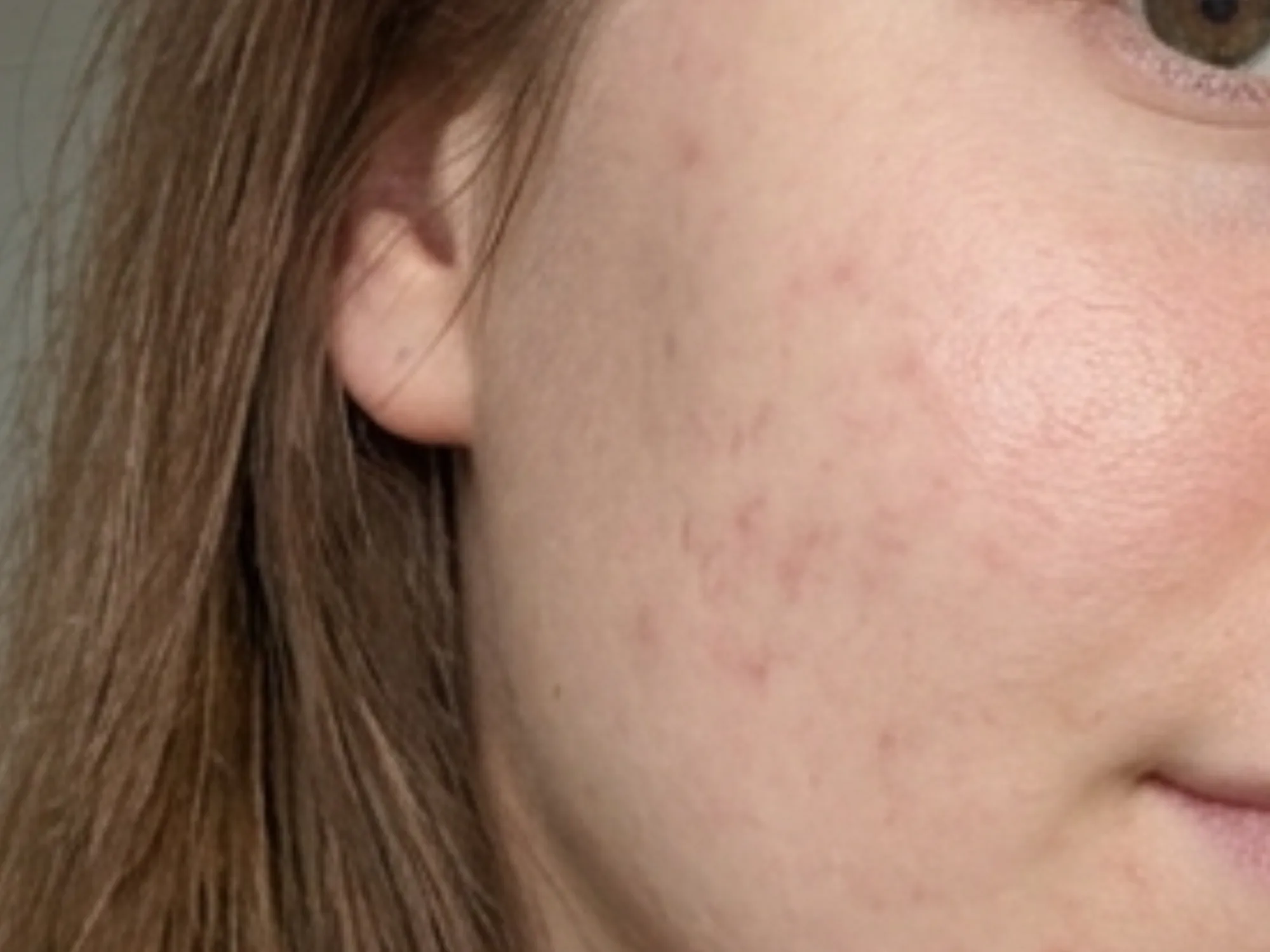
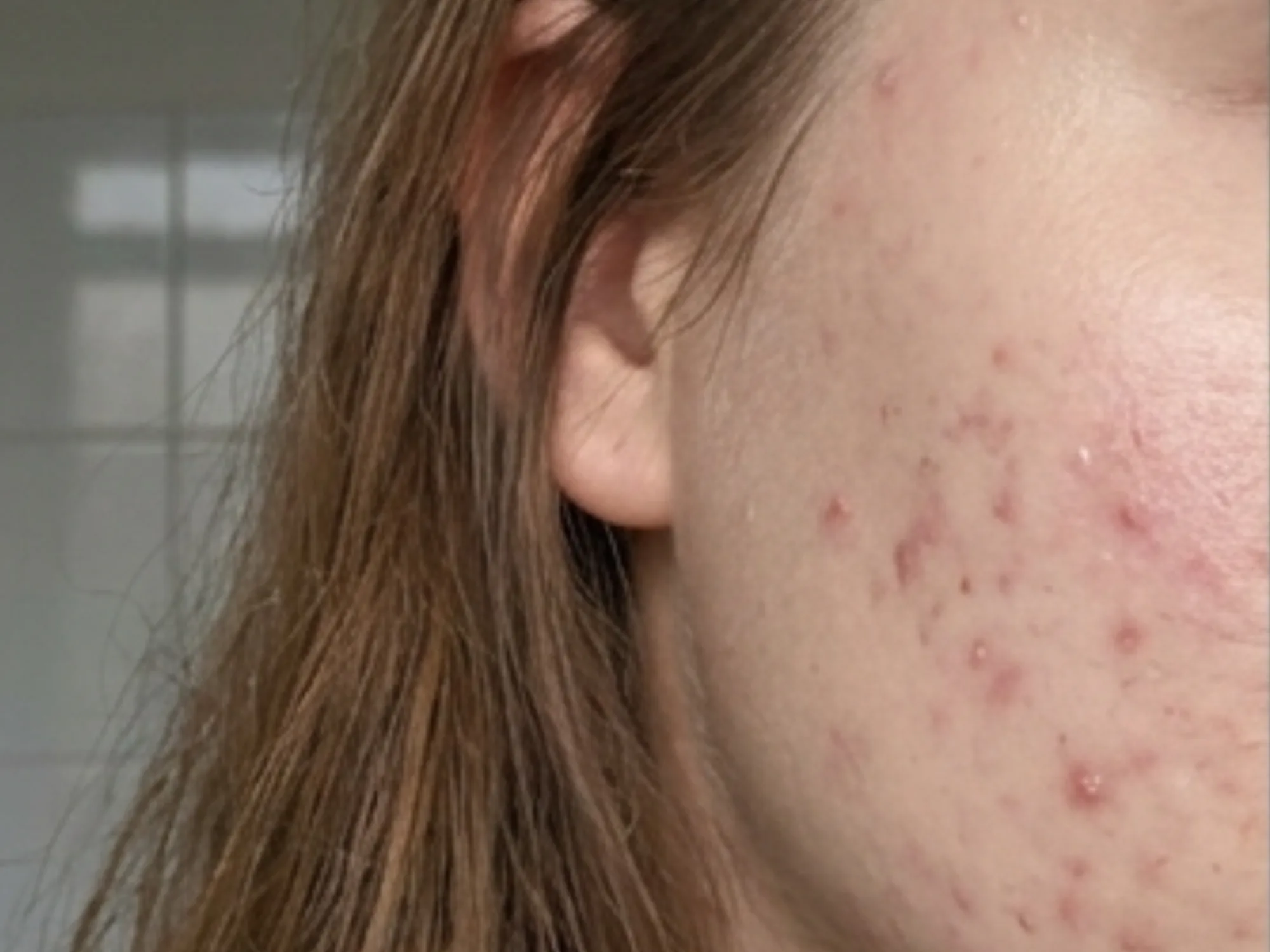
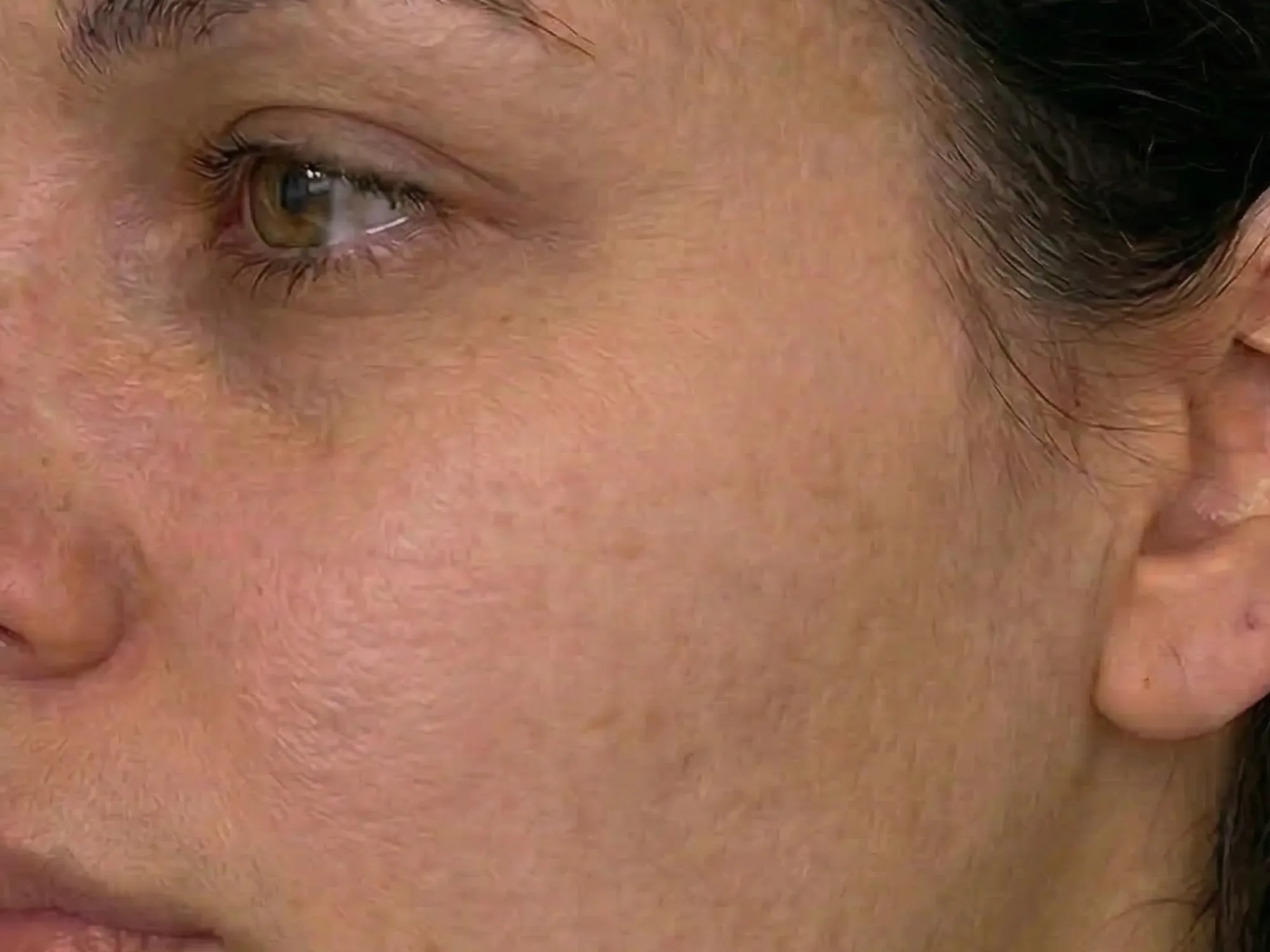
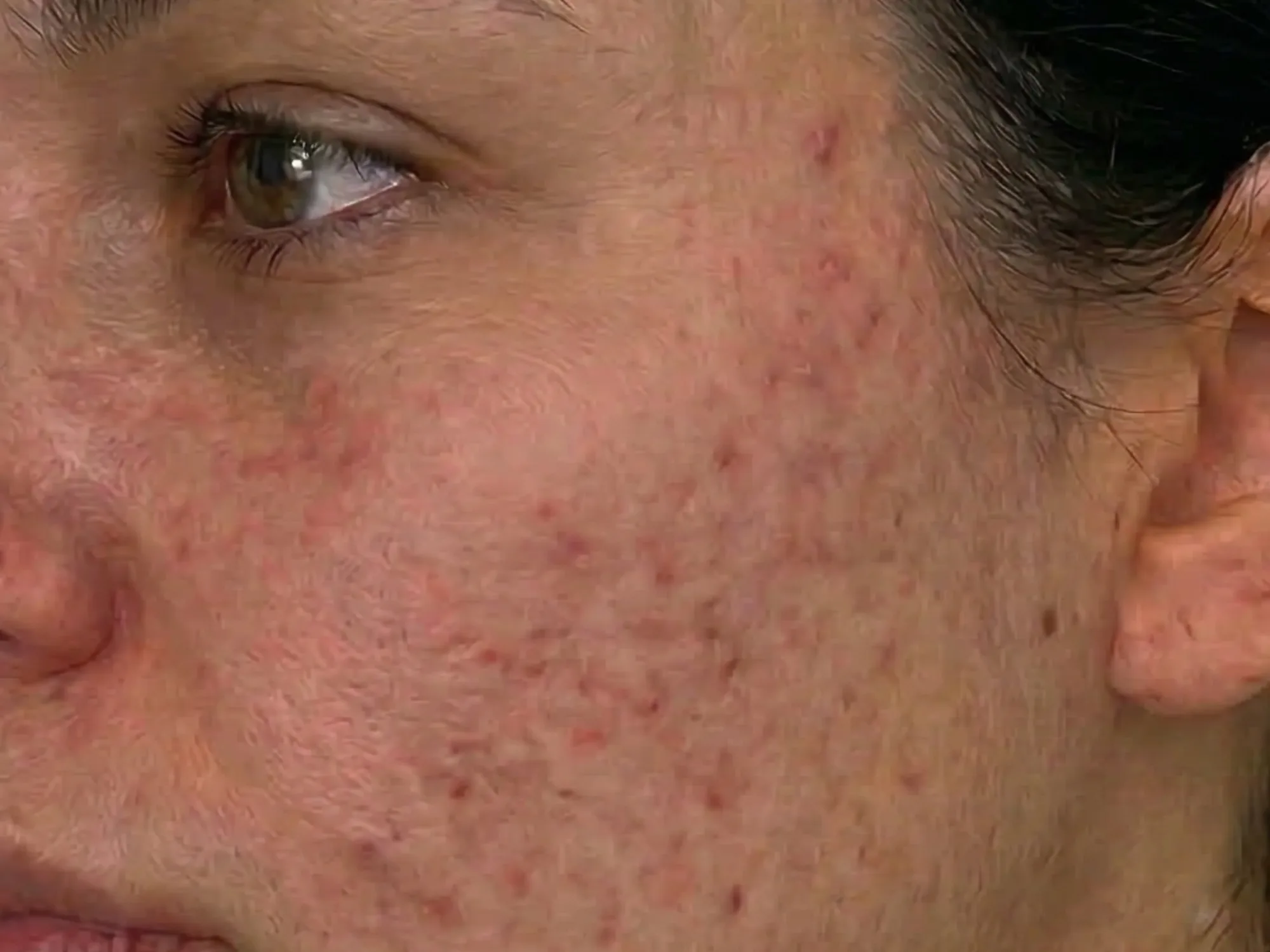
Drag the slider to see the difference.
Esmee writes about skincare, LED light therapy and the science behind SolarMask. Any questions? Please email contact@solarmask.eu.
 Recommended by Dr. Farah MacDonald — physician & skin specialist
Sources & scientific studies
- Wunsch A, Matuschka K (2014). A controlled trial to determine the efficacy of red and near-infrared light treatment in patient satisfaction, reduction of fine lines, wrinkles, skin roughness, and intradermal collagen density increase. Photomedicine and Laser Surgery.
- Avci P et al. (2013). Low-level laser (light) therapy (LLLT) in skin: stimulating, healing, restoring. Seminars in Cutaneous Medicine and Surgery.
- Hamblin MR (2017). Mechanisms and mitochondrial redox signaling in photobiomodulation. Photochemistry and Photobiology.
- De Arruda Vidal C et al. (2020). LED phototherapy for facial rejuvenation. Journal of Cosmetic and Laser Therapy.
Medical disclaimer: This article is for informational purposes only and does not constitute medical advice. LED light therapy supports the skin but does not cure conditions; results vary from person to person. If you are pregnant, taking light-sensitive medication or have a skin condition, please consult your doctor first.