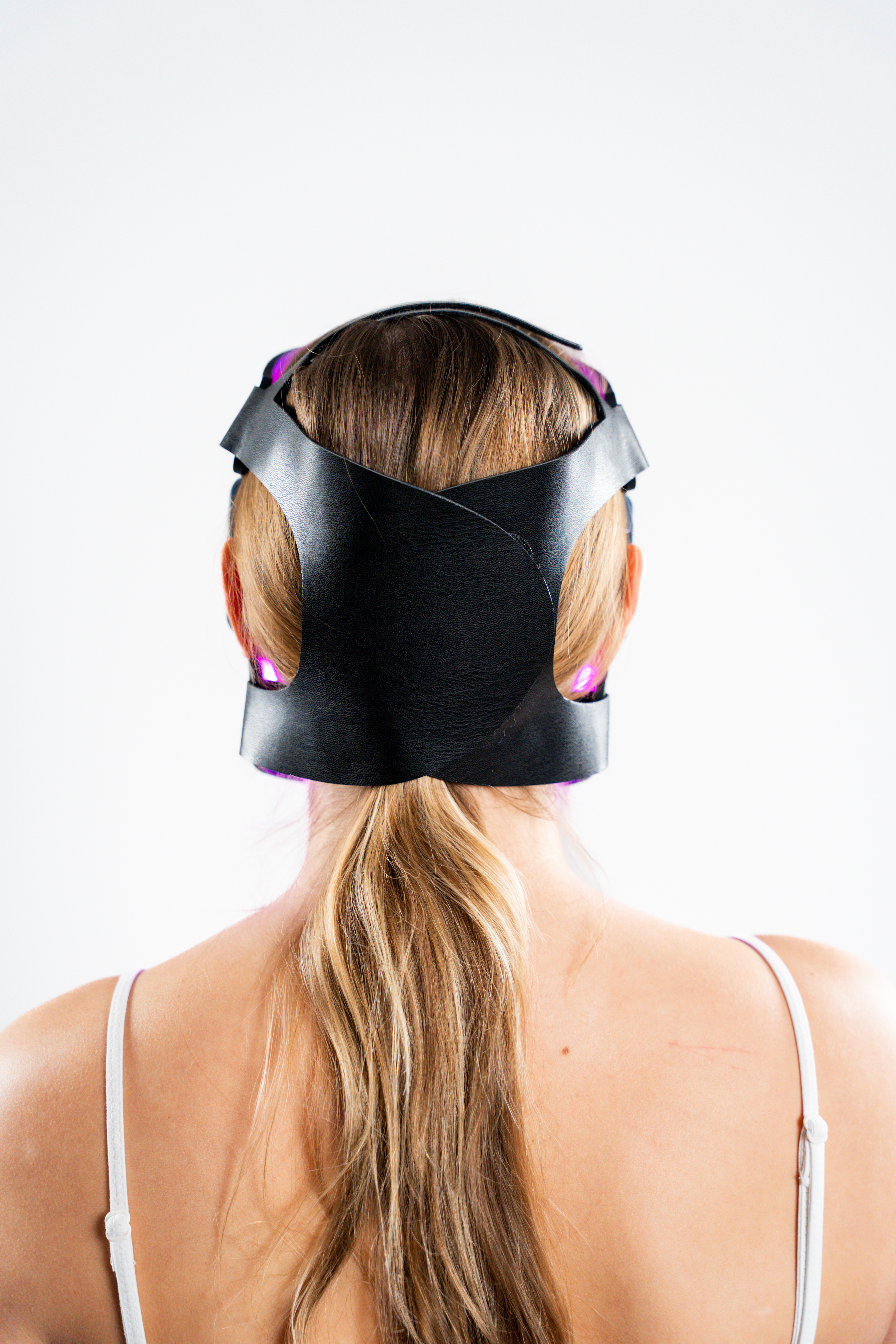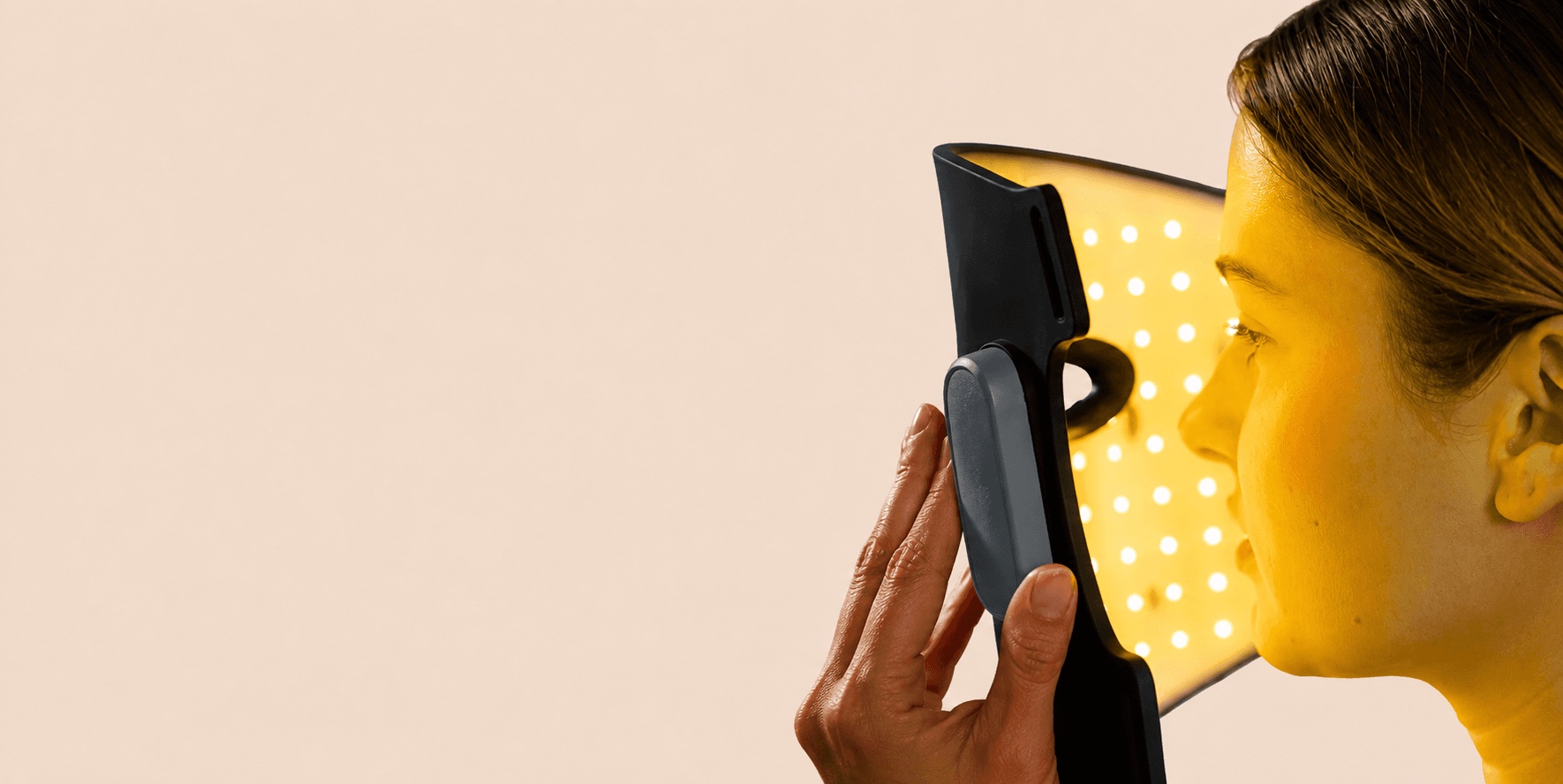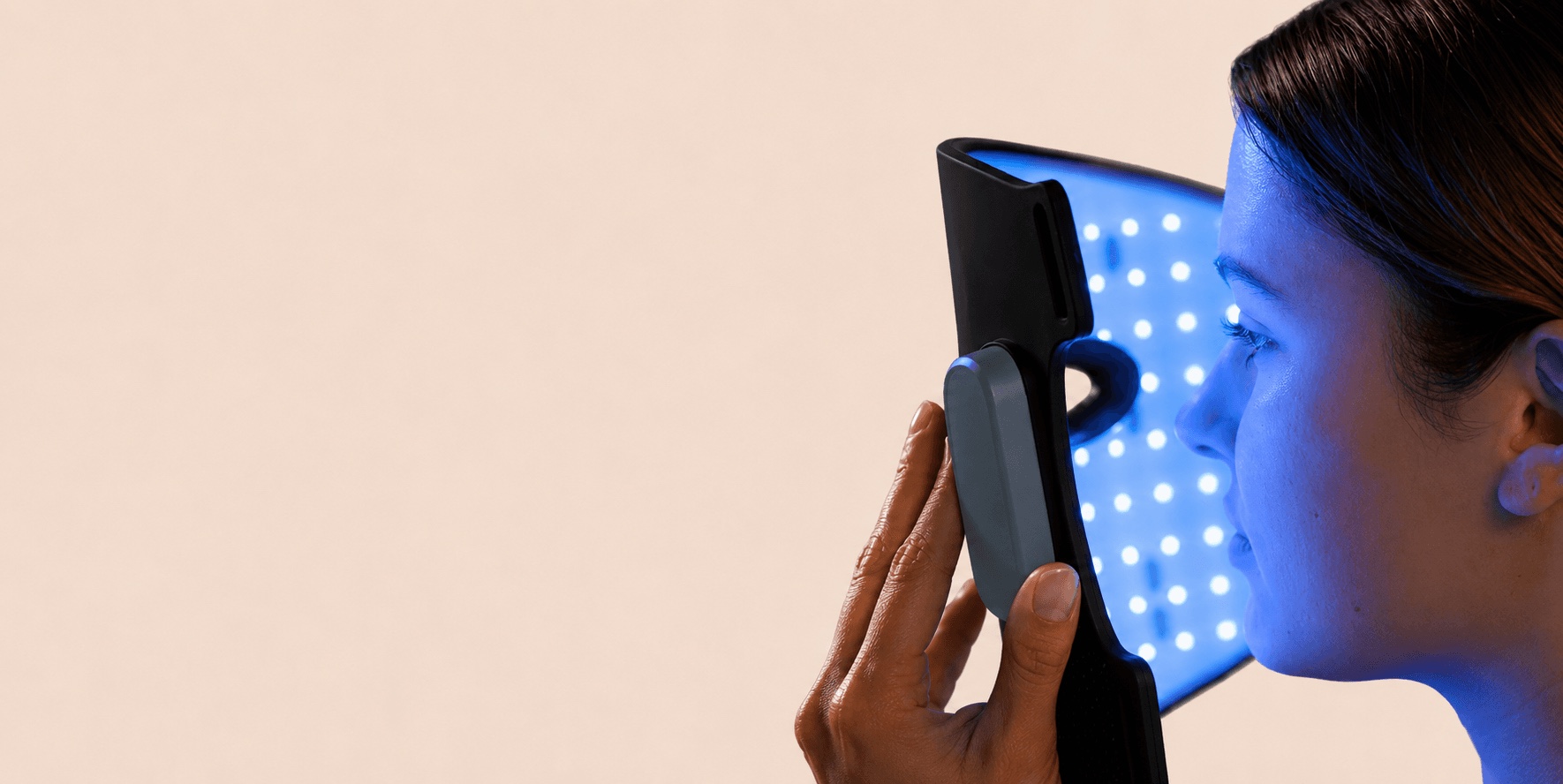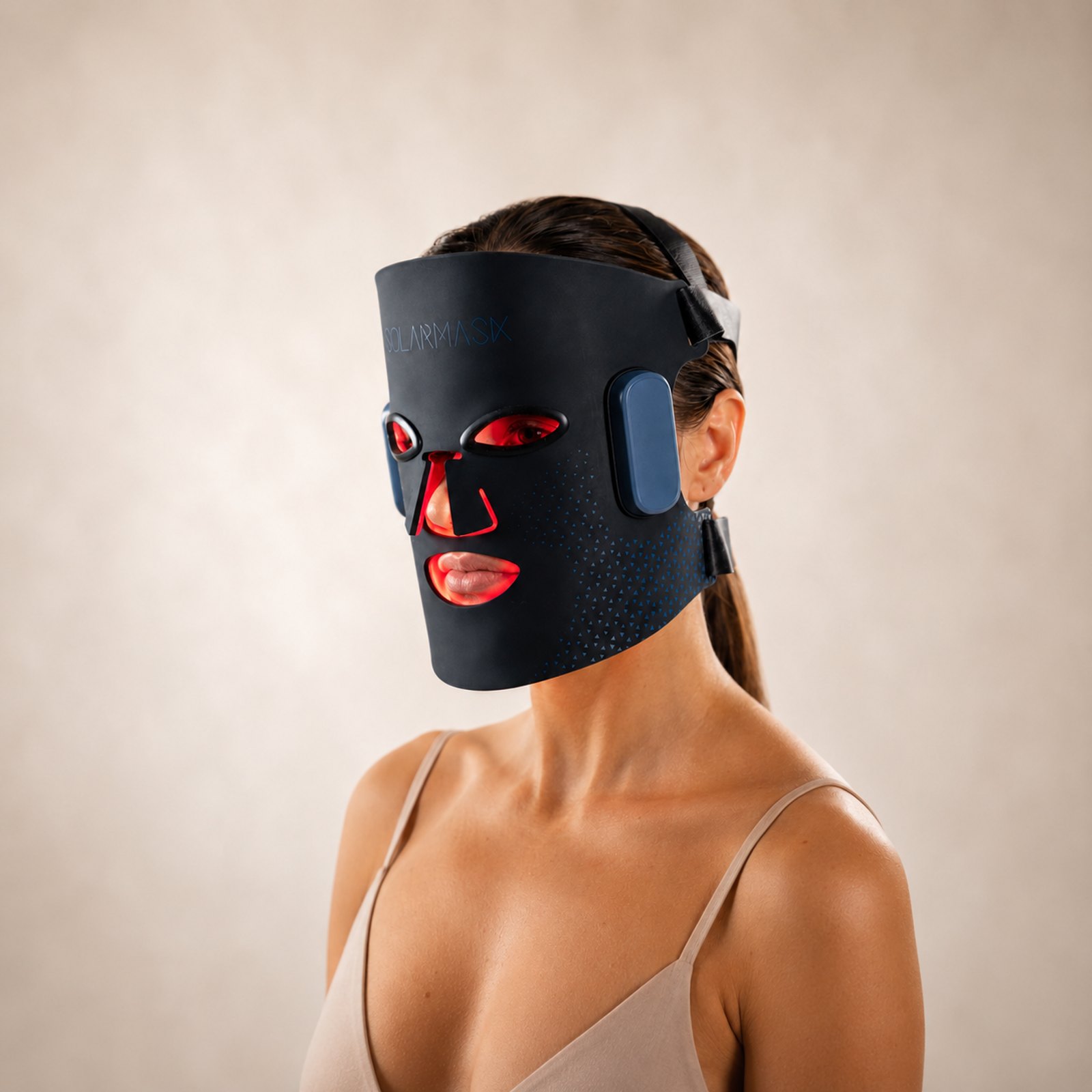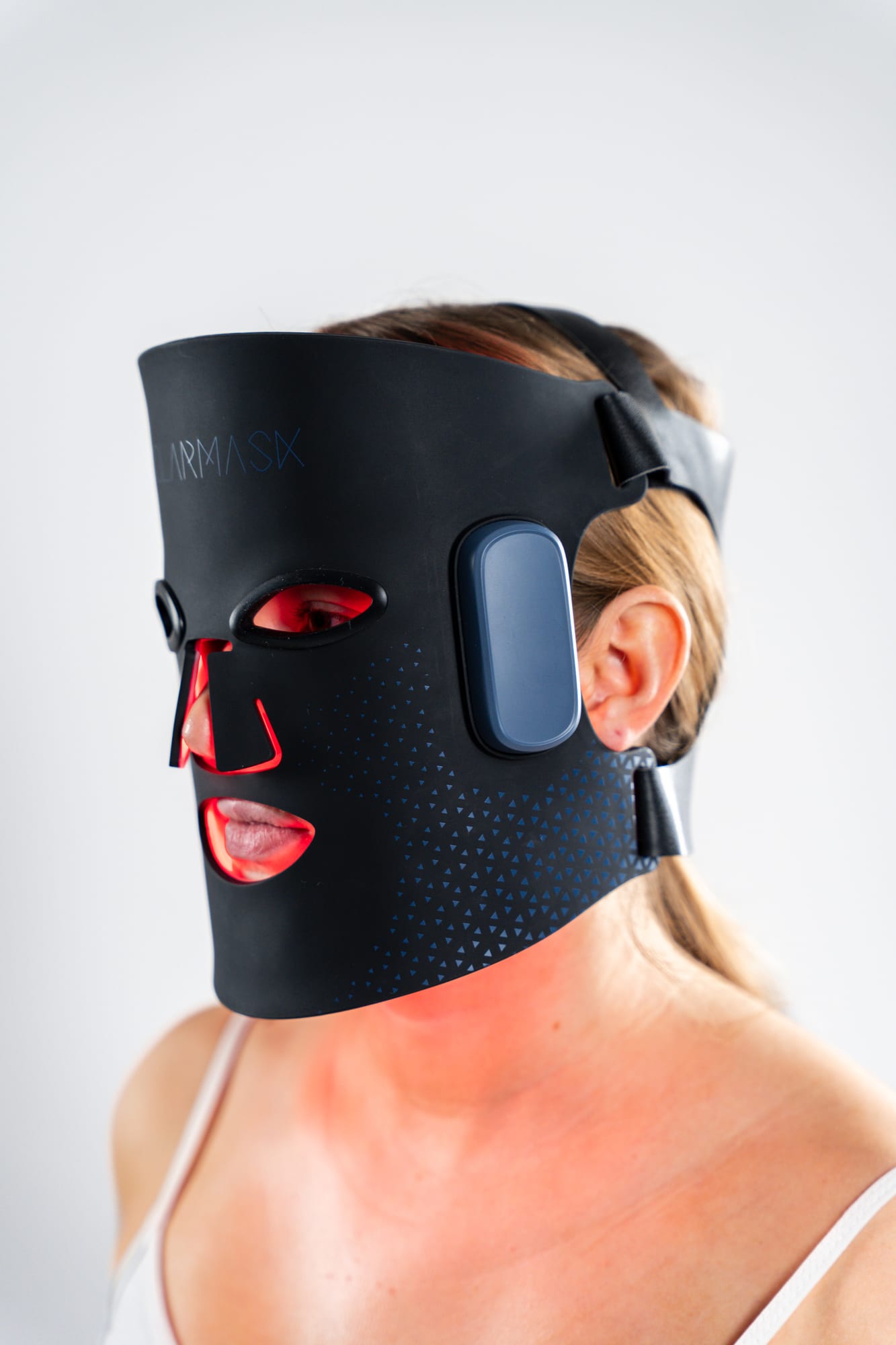
Where does your LED mask fit into your skincare routine? Which products should you use it with, which ones are best avoided just before, and why SPF remains essential during the day.
- Apply your LED mask to clean, dry skin — before applying your rich creams
- Works well with a light, hydrating serum (e.g. hyaluronic acid)
- Avoid retinol, strong acids and scrubs immediately before a session
- Finish with a moisturiser; always use SPF during the day — essential
- Session duration 15 minutes (auto-timer), 3–5 times a week
An LED mask works best when it’s in the right place in your routine. Good news: it’s simple. The key is clean skin so the light can penetrate properly, and combining it smartly with your skincare products. That’s how you get the most out of every session.
Where does the mask fit into your routine?
Immediately after cleansing and before your richer creams. Clean, dry skin allows the light to penetrate best; a layer of heavy cream or make-up actually gets in the way. LED therapy works via photobiomodulation — for this to happen, the light must be able to reach your skin cells.
What can you combine it with?
- Hydrating serum (hyaluronic acid, panthenol): can be used before the session — thin and non-occlusive, so the light passes through easily.
- Soothing ingredients (niacinamide, centella): good to combine, especially for sensitive skin.
- Moisturiser after the session: seals in moisture and counteracts any slight dryness.
What should you avoid using just before a session?
- Retinol and strong acids (AHA/BHA): save these for another time; combined with light, they can irritate the skin unnecessarily.
- Scrubs and harsh exfoliants: not immediately beforehand — freshly exfoliated skin is more sensitive.
- Thick, occlusive layers (heavy creams, oils): these block the light; save them for after the session.
Are you using prescribed medication such as isotretinoin, or light-sensitive products? Then consult your doctor first.
SPF: essential during the day
LED light contains no UV and does not make your skin more sensitive to the sun. But if you want to maintain your results — especially for pigmentation or anti-ageing — daily SPF is crucial. UV is the main cause of pigmentation and skin ageing; without protection, you’ll be working against your own results.
Your routine step by step
You can find out how often to do this in the section on how often to use an LED mask.
Frequently asked questions
Should I use the mask before or after my serum?
A light, moisturising serum is fine before the session. Thicker creams, oils and active products (retinol, acids) should be applied after the session, so they don’t block the light or irritate the skin.
Can I use retinol and my LED mask on the same evening?
It’s best not to use retinol immediately before the session. Apply retinol at a different time or after the treatment to avoid unnecessary irritation.
Do I need to cleanse my face before every session?
Yes. Clean, dry skin free of make-up or heavy cream allows the light to penetrate best and gives the best results.
Do I need to use SPF after an LED session?
LED light doesn’t make your skin sensitive to the sun, but daily SPF protects your results — especially for pigmentation and anti-ageing. So always use SPF during the day.
The right place in your routine makes all the difference: clean skin, a light serum, 15 minutes of light, finish with skincare — and SPF during the day. With the SolarMask, you can easily adjust the setting to suit your goal, with all five wavelengths in a single device.
Would you like to give this a go yourself?
The SolarMask LED Mask — all five wavelengths
Professional light therapy for home use. One mask, five treatments, 15 minutes per session. CE-certified.
View the mask →Esmee writes about skincare, LED light therapy and the science behind SolarMask. Any questions? Please email contact@solarmask.eu.
 Recommended by Dr. Farah MacDonald — physician & skin specialist
Sources & scientific studies
- Wunsch A, Matuschka K (2014). A controlled trial to determine the efficacy of red and near-infrared light treatment in patient satisfaction, reduction of fine lines, wrinkles, skin roughness, and intradermal collagen density increase. Photomedicine and Laser Surgery.
- Avci P et al. (2013). Low-level laser (light) therapy (LLLT) in skin: stimulating, healing, restoring. Seminars in Cutaneous Medicine and Surgery.
- Hamblin MR (2017). Mechanisms and mitochondrial redox signaling in photobiomodulation. Photochemistry and Photobiology.
- De Arruda Vidal C et al. (2020). LED phototherapy for facial rejuvenation. Journal of Cosmetic and Laser Therapy.
Medical disclaimer: This article is for informational purposes only and does not constitute medical advice. LED light therapy supports the skin but does not cure conditions; results vary from person to person. If you are pregnant, taking light-sensitive medication or have a skin condition, please consult your doctor first.