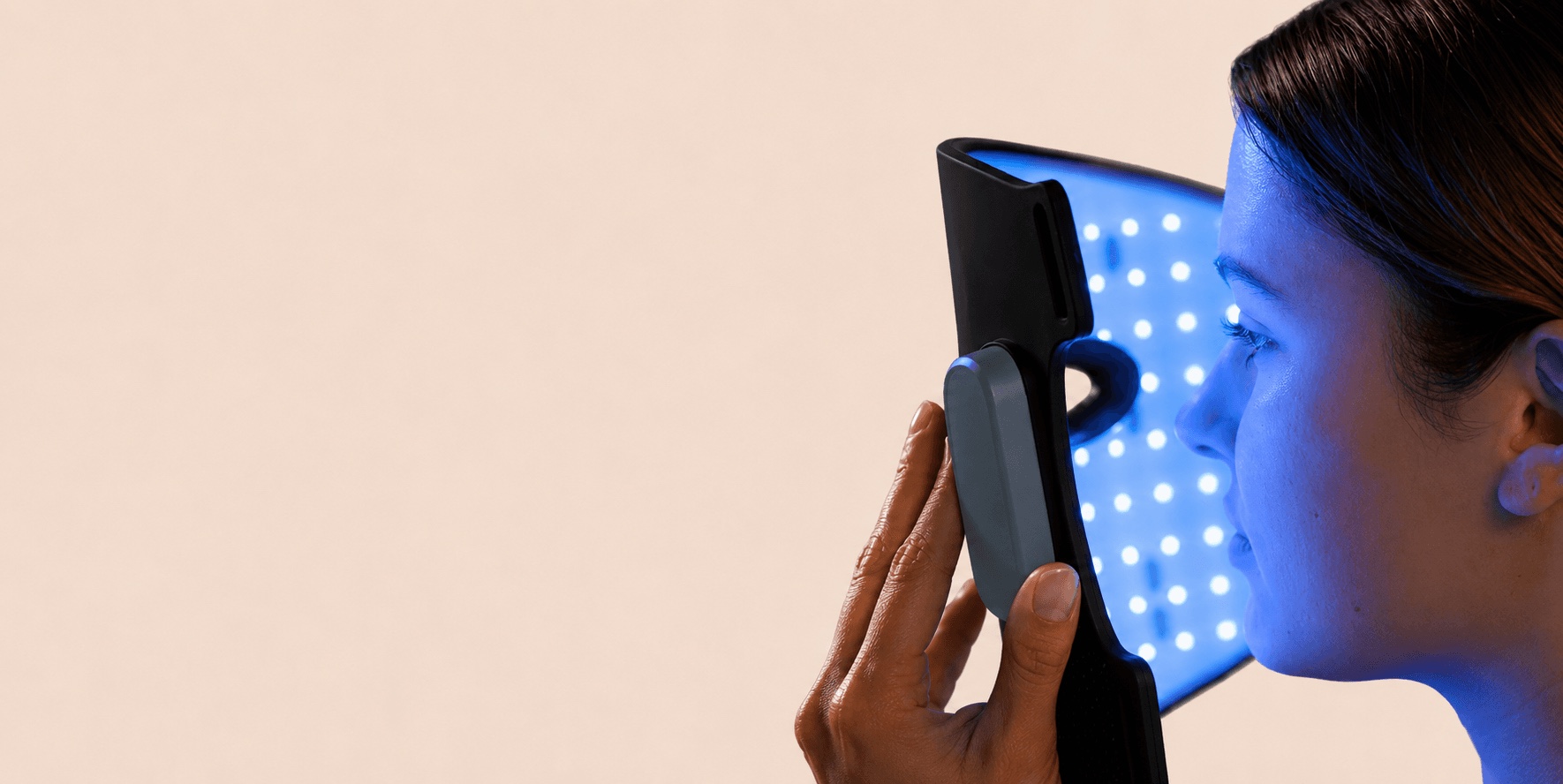
LED masks use safe, non-ionising light that does not contain UV rays. Find out why it is safe, what mild side effects may occur, and when to consult a doctor.
- LED light therapy uses visible and near-infrared light — no UV, so no risk of burns or DNA damage
- The light is non-ionising and non-invasive — one of the gentlest at-home skincare routines
- Mild, temporary redness or dryness may occur and subsides quickly
- Take extra care if you are pregnant, taking light-sensitive medication or have eye conditions — consult your doctor first
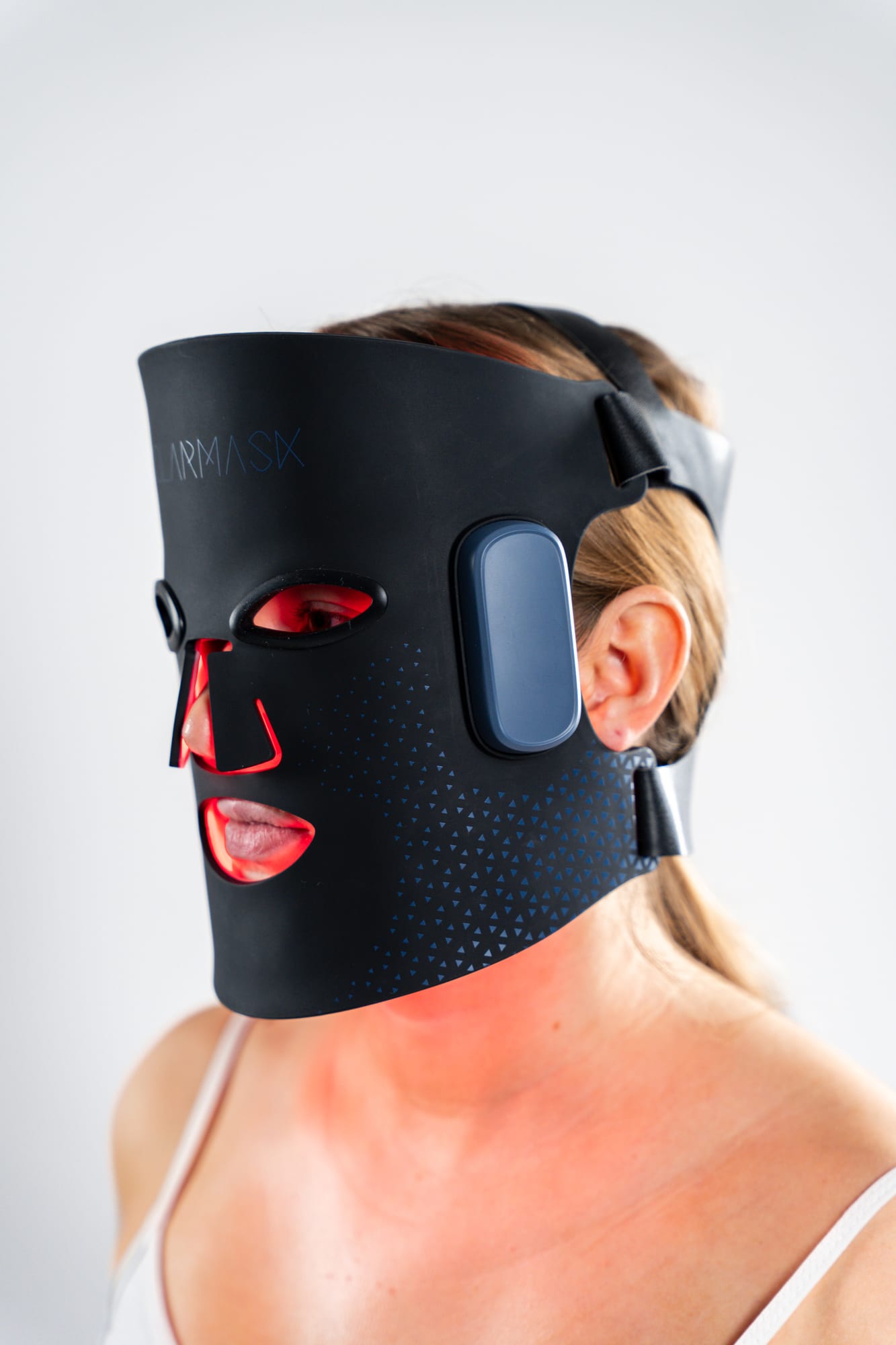
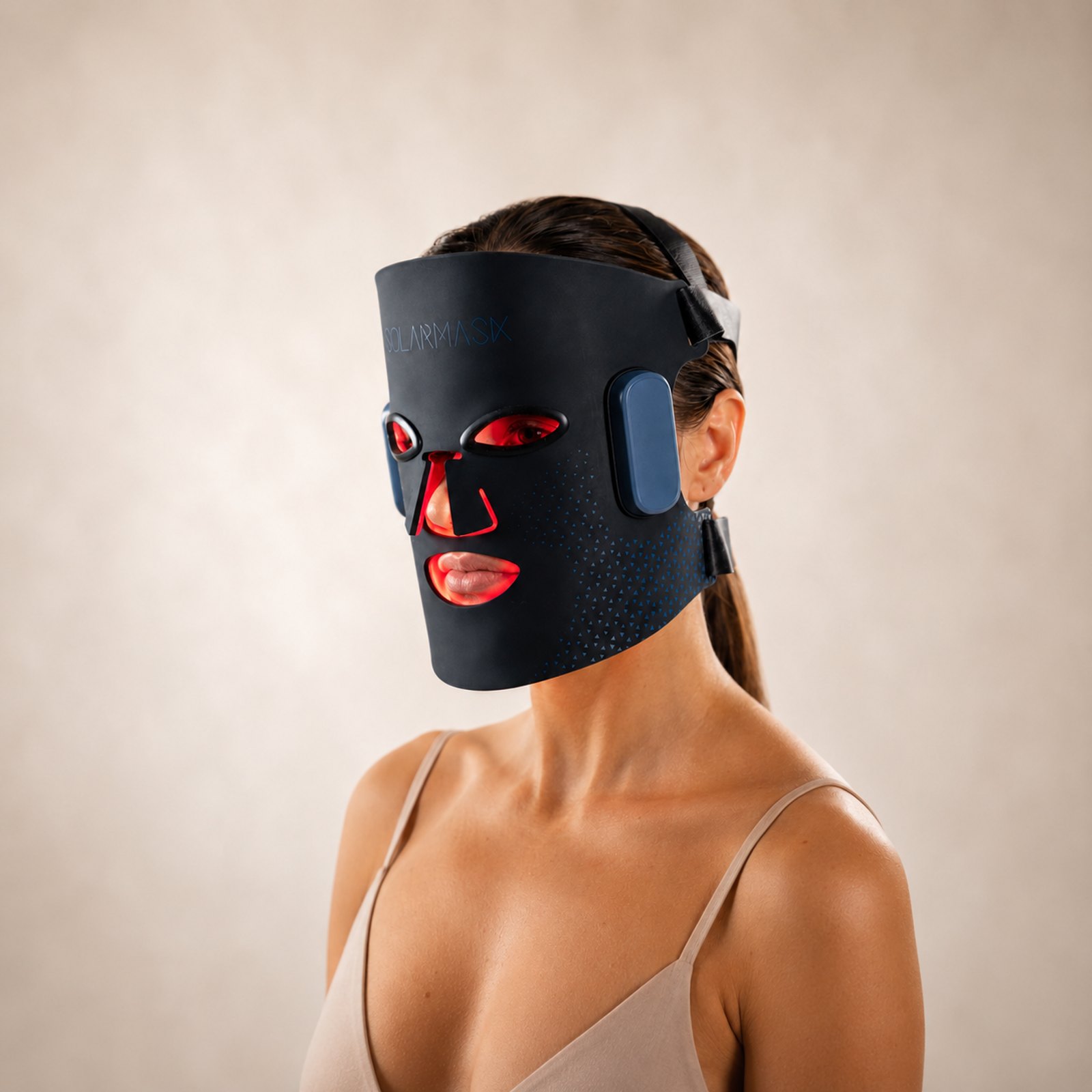
- Wear the eye protection and stick to the recommended usage time (SolarMask switches off automatically after 15 minutes)
“Won’t the light damage your face?” is perhaps the most frequently asked question about LED masks. Understandably so — we tend to associate “light on the skin” with the sun and sunburn. But LED light therapy works fundamentally differently from UV radiation. In this article, we explain why it is safe, what the exceptions are, and what you need to watch out for.
Why LED light is not UV
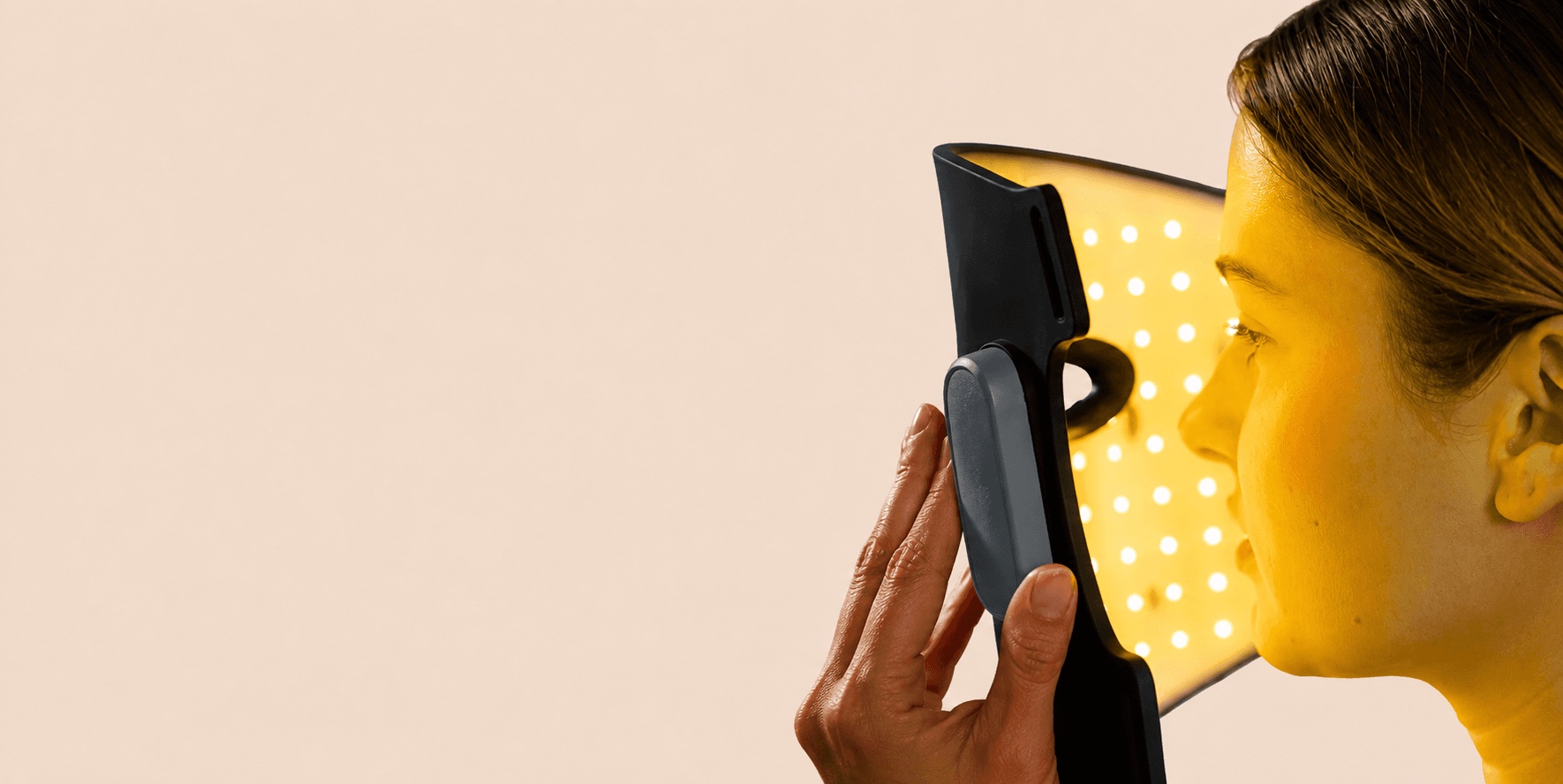
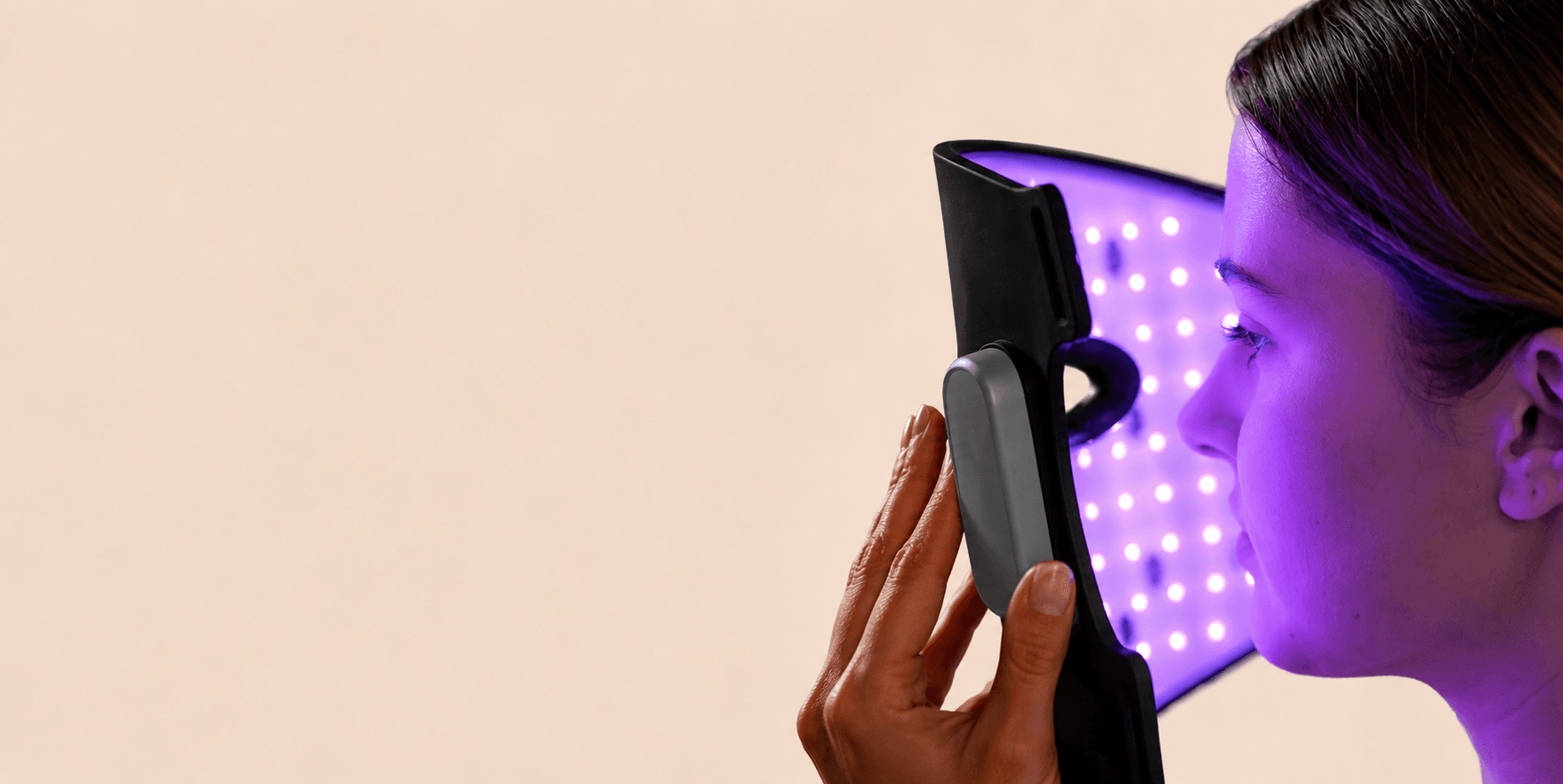
The difference lies in the wavelength. UV light (below 400 nm) carries enough energy to damage skin cells and DNA — this is what causes sunburn and skin ageing. LED light therapy, on the other hand, uses visible and near-infrared light (around 450–850 nm): lower energy, non-ionising, and it does not damage cells. Instead, it stimulates them through a process called photobiomodulation.
- No UV — no burning, no accelerated skin ageing
- Non-ionising — too little energy to damage DNA
- Non-invasive — no needles, no heat damage, no recovery time
What the research says
LED light therapy has been studied since the 1960s and is used in clinics for wound healing and skin conditions. Its safety profile is well documented: studies on red, blue and near-infrared light rarely report serious side effects (Hamblin, 2018). Blue light (450 nm) is used worldwide in skincare to achieve a clearer complexion — read more about this in our article on blue light and blemishes.
Important: ‘safe’ does not mean ‘cures everything’. LED light supports the skin; it is not a substitute for medical treatment of a skin condition.
Possible side effects
These are rare and mild. What sometimes occurs:
- Mild, temporary redness immediately after a session (usually subsides within an hour)
- A slight feeling of dryness — which can be alleviated with a mild moisturiser
- Tired eyes when looking into the bright light — hence the eye protection
These effects are temporary. If irritation persists, reduce the frequency or take a short break.
Who should take extra care?
For most healthy people, LED therapy is safe when used normally. However, do consult your doctor first if any of the following apply to you:
- You are pregnant or breastfeeding
- You are taking light-sensitive medication (e.g. certain antibiotics, isotretinoin or St John’s wort)
- You have an eye condition or epilepsy
- You have an active skin condition or a history of cancer
Results and sensitivity vary from person to person.
Safe for home use
The SolarMask LED Mask is CE-certified and switches off automatically after 15 minutes, ensuring you do not exceed the recommended dose. Wondering how often you should use it? Read about how often to use an LED mask.
Frequently asked questions
Can I damage my eyes with an LED mask?
The visible light is bright but contains no UV. Do not look directly into the LEDs and wear the eye protection provided; then there is no risk to your eyes.
Is LED light safe for daily use?
Yes, provided you stick to the recommended usage time. For most purposes, 3–5 sessions of 15 minutes per week are sufficient; using it more often does not automatically lead to better results.
Will it give me a tan?
No. LED therapy does not contain UV light, so your skin will not tan and you will not get sunburnt.
Is it safe during pregnancy?
There is no evidence of harm, but as little research has been conducted on pregnant women, we recommend consulting your doctor first.
LED light therapy is one of the safest skin treatments you can do at home: no UV, non-invasive and well-researched. Follow the simple guidelines and you can enjoy all five wavelengths of the SolarMask without any worries.
Would you like to give this a go yourself?
The SolarMask LED Mask — all five wavelengths
Professional light therapy for home use. One mask, five treatments, 15 minutes per session. CE-certified.
View the mask →Esmee writes about skincare, LED light therapy and the science behind SolarMask. Any questions? Please email contact@solarmask.eu.
 Recommended by Dr. Farah MacDonald — physician & skin specialist
Sources & scientific studies
- Wunsch A, Matuschka K (2014). A controlled trial to determine the efficacy of red and near-infrared light treatment in patient satisfaction, reduction of fine lines, wrinkles, skin roughness, and intradermal collagen density increase. Photomedicine and Laser Surgery.
- Avci P et al. (2013). Low-level laser (light) therapy (LLLT) in skin: stimulating, healing, restoring. Seminars in Cutaneous Medicine and Surgery.
- Hamblin MR (2017). Mechanisms and mitochondrial redox signaling in photobiomodulation. Photochemistry and Photobiology.
- De Arruda Vidal C et al. (2020). LED phototherapy for facial rejuvenation. Journal of Cosmetic and Laser Therapy.
Medical disclaimer: This article is for informational purposes only and does not constitute medical advice. LED light therapy supports the skin but does not cure conditions; results vary from person to person. If you are pregnant, taking light-sensitive medication or have a skin condition, please consult your doctor first.