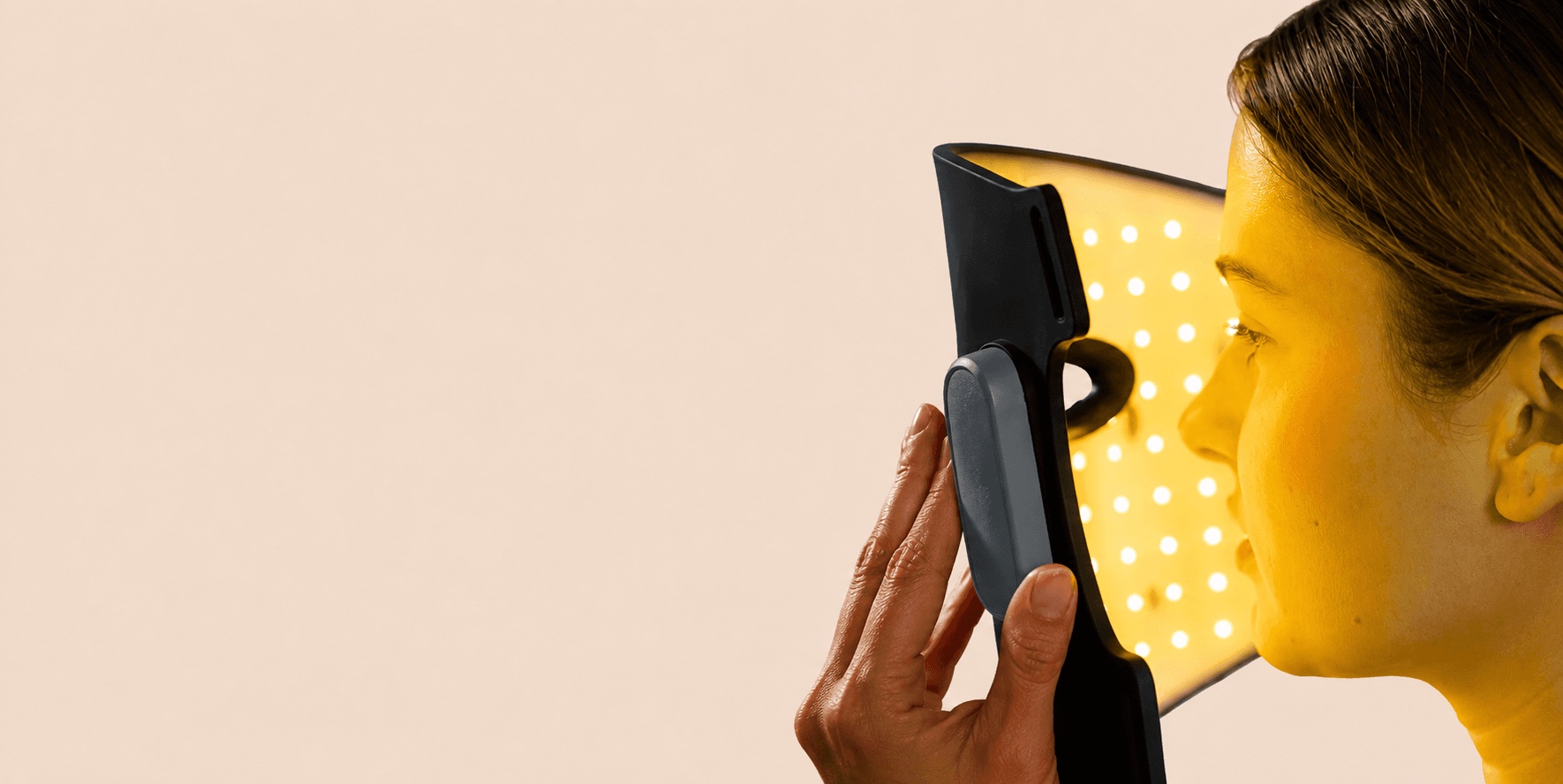
Pigmentation or dull skin? Find out which LED wavelengths can help achieve a more even complexion and why SPF is essential for maintaining your results.
- Pigment spots are mainly caused by sun damage and hormones (as in the case of melasma)
- Yellow (580 nm) and red (630 nm) light can even out the skin and refresh the complexion
- Research shows a more even complexion and less visible pigmentation — not a miracle cure, but backed by evidence
- SPF is essential: without sun protection, pigmentation will keep returning
- Patience pays off — pigmentation improves gradually over 8–12 weeks of consistent use
A dull complexion or brown patches can make your skin look older and more tired than you feel. LED light therapy can help even out and refresh the skin — not by ‘magically making pigment disappear’, but by supporting the skin at a cellular level. We’ve set out what’s realistic below.
What causes pigmentation spots?
Pigmentation occurs when the skin produces too much melanin, often due to UV radiation (sunspots) or hormones (melasma, for example during or after pregnancy). Dull skin is also caused by slower cell renewal and reduced blood flow. These are precisely the processes that LED light can support.
Which wavelengths can help?
- Yellow light (580 nm): soothes and has been linked in research to a more even complexion and reduced pigmentation. Read more about this under yellow LED light.
- Red light (630 nm): stimulates cell renewal and blood flow for fresher, more radiant skin. See red LED light.
- Near-infrared (850 nm): works deeper and supports long-term skin repair.
Pigmentation isn’t found at a single depth — that’s why a combination of wavelengths usually works better than a single colour. A more detailed explanation can be found under ‘The science behind light therapy’.
What does the research say?
The results are cautiously positive. In one study, 590 nm yellow light reduced the severity of melasma by an average of over 20% after eight weeks, without any serious side effects (Dai et al., 2022). Other research found that yellow light, combined with red and near-infrared light, improved brown patches and skin texture after eight weeks (Park et al., 2025).
Important and honest: these are improvements, not a cure. Persistent melasma is difficult to treat and may return — always have this assessed by a dermatologist as well.
What can you realistically expect?
- ✓ A fresher, slightly more radiant complexion
- ✓ Skin feels calmer
- ✓ More even skin tone
- ✓ Dark spots appear less pronounced
- ✓ Gradual reduction in pigmentation with consistent use and good sun protection
Results vary greatly depending on the individual, skin type and the cause of the pigmentation.
How to use it at home
Combine your sessions with a good routine: read how to incorporate the mask into your skincare routine. Sun protection is not a luxury when it comes to pigmentation, but the foundation.
Frequently asked questions
Do pigmentation spots disappear completely with an LED mask?
Not necessarily. LED light can gradually reduce pigmentation and even out the complexion, but it is not a cure. Persistent or hormonal pigmentation (melasma) may return; have this assessed by a dermatologist as well.
Which colour is best for pigmentation?
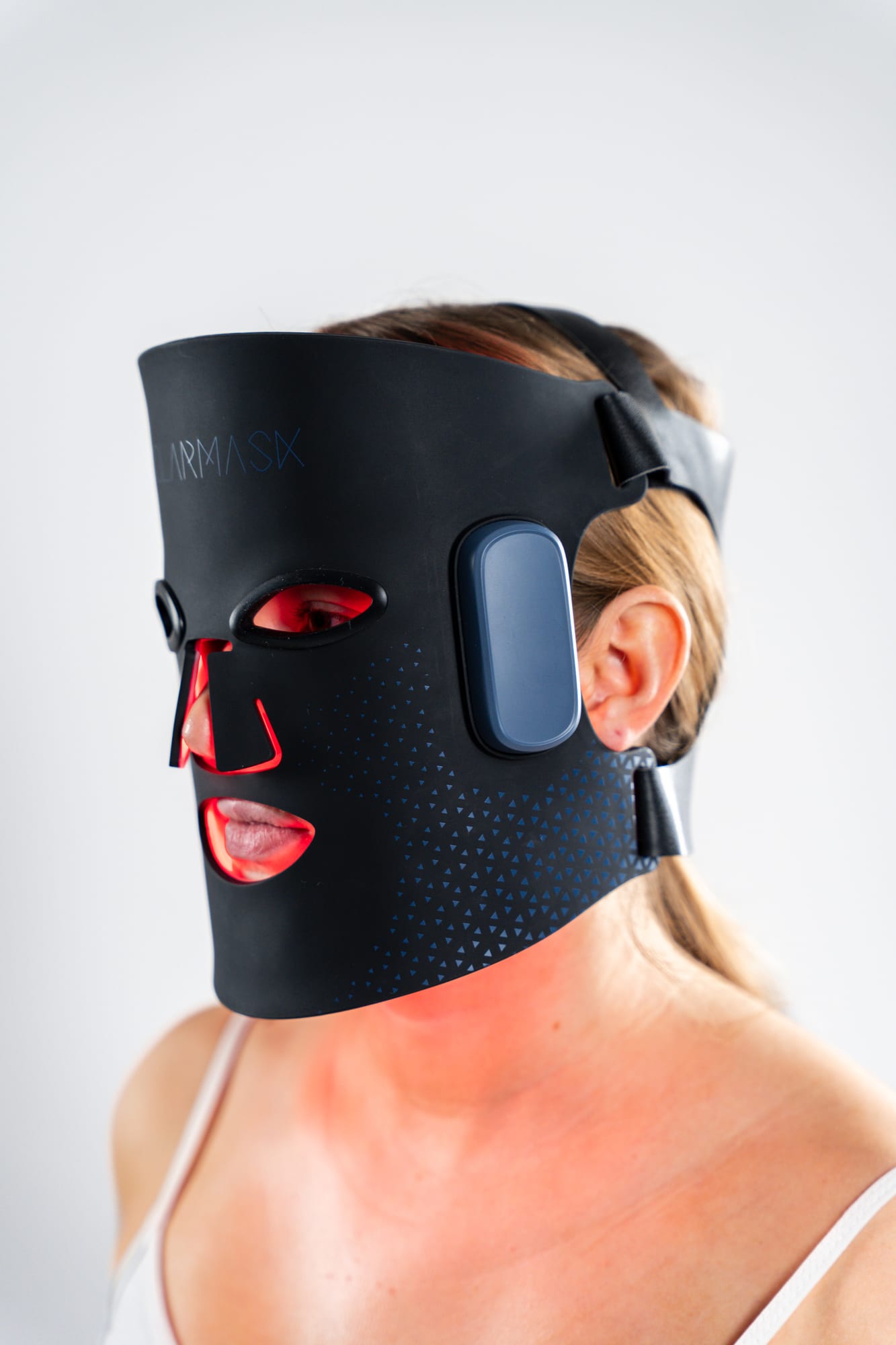
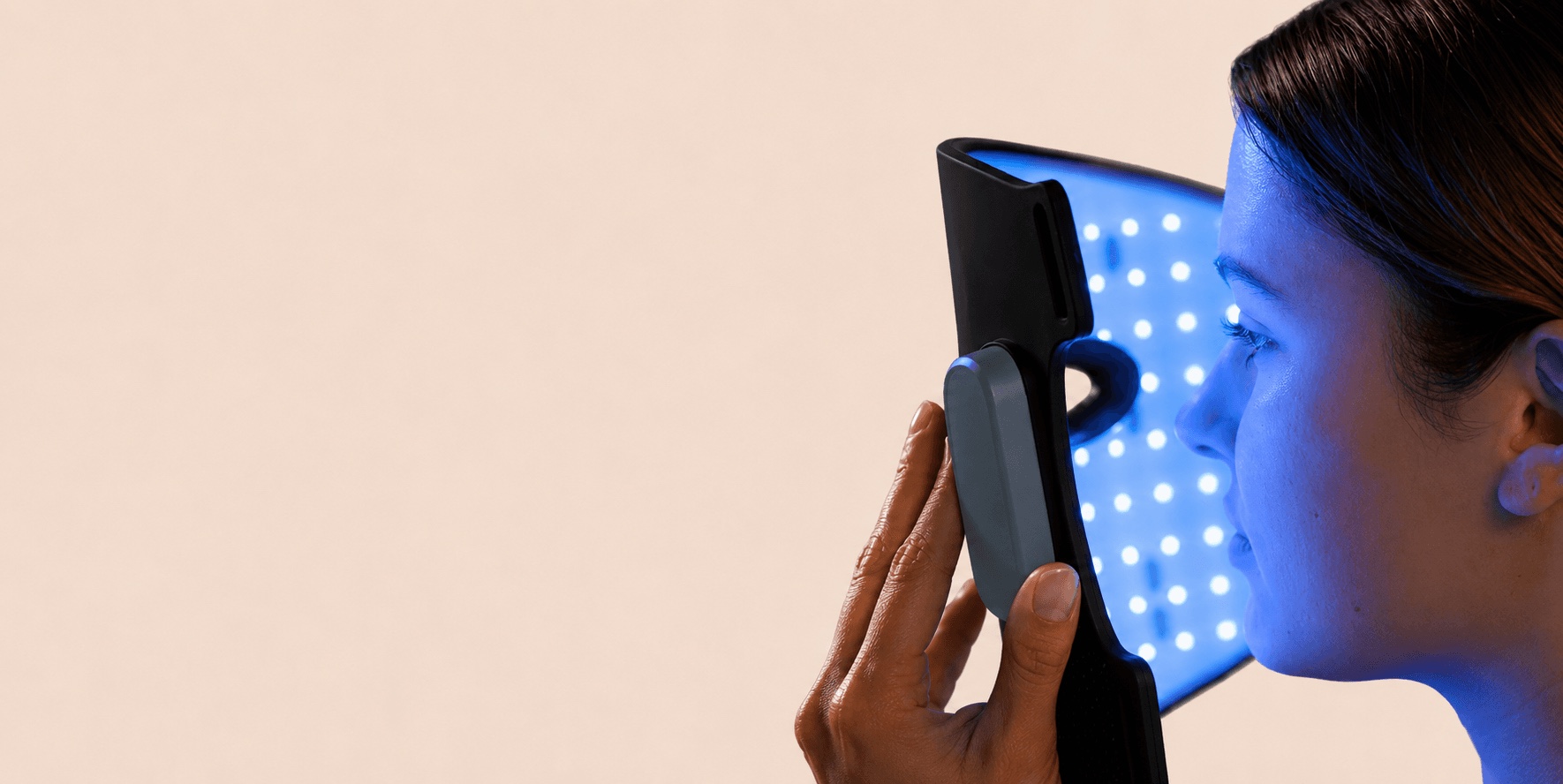
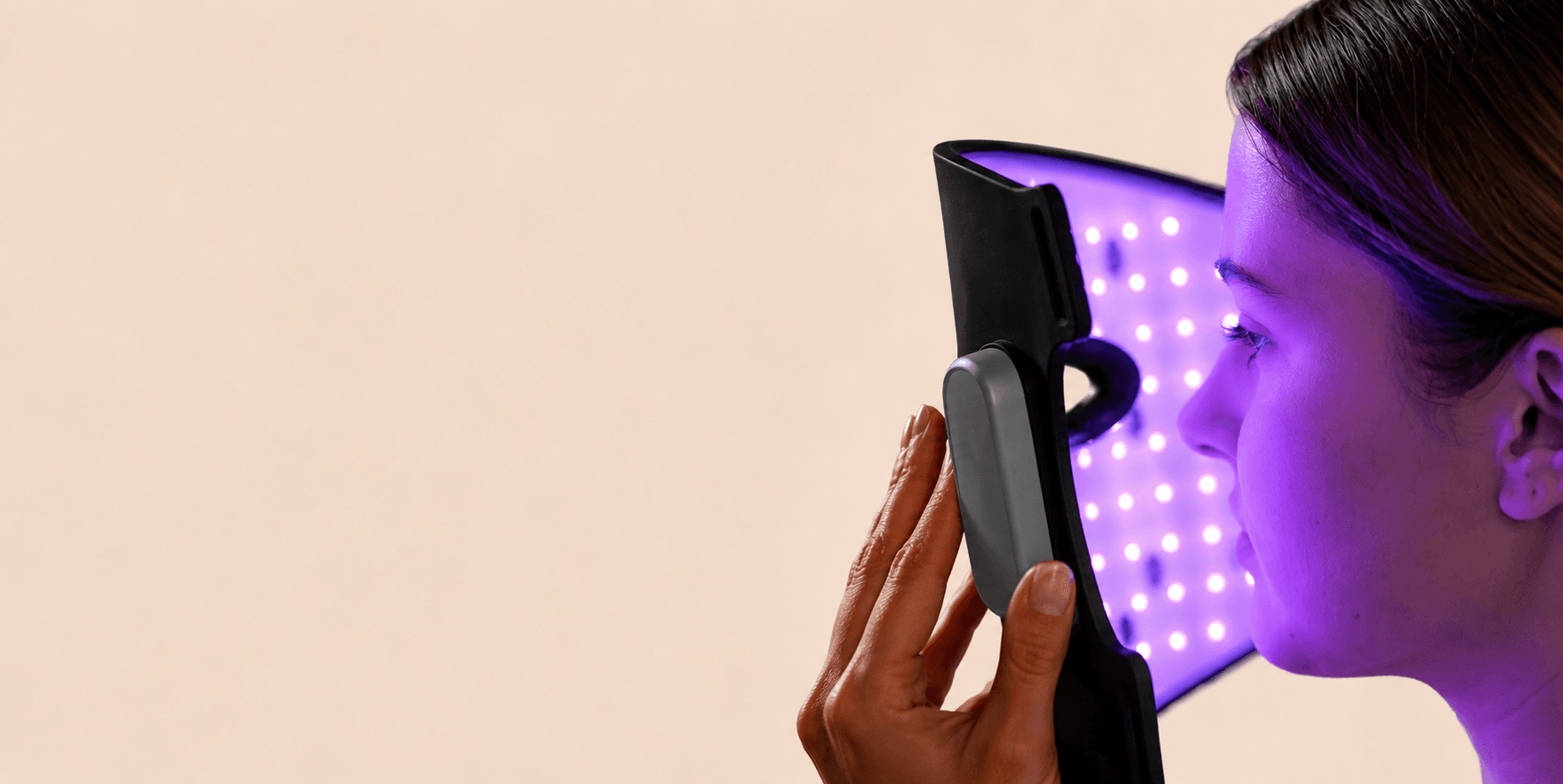
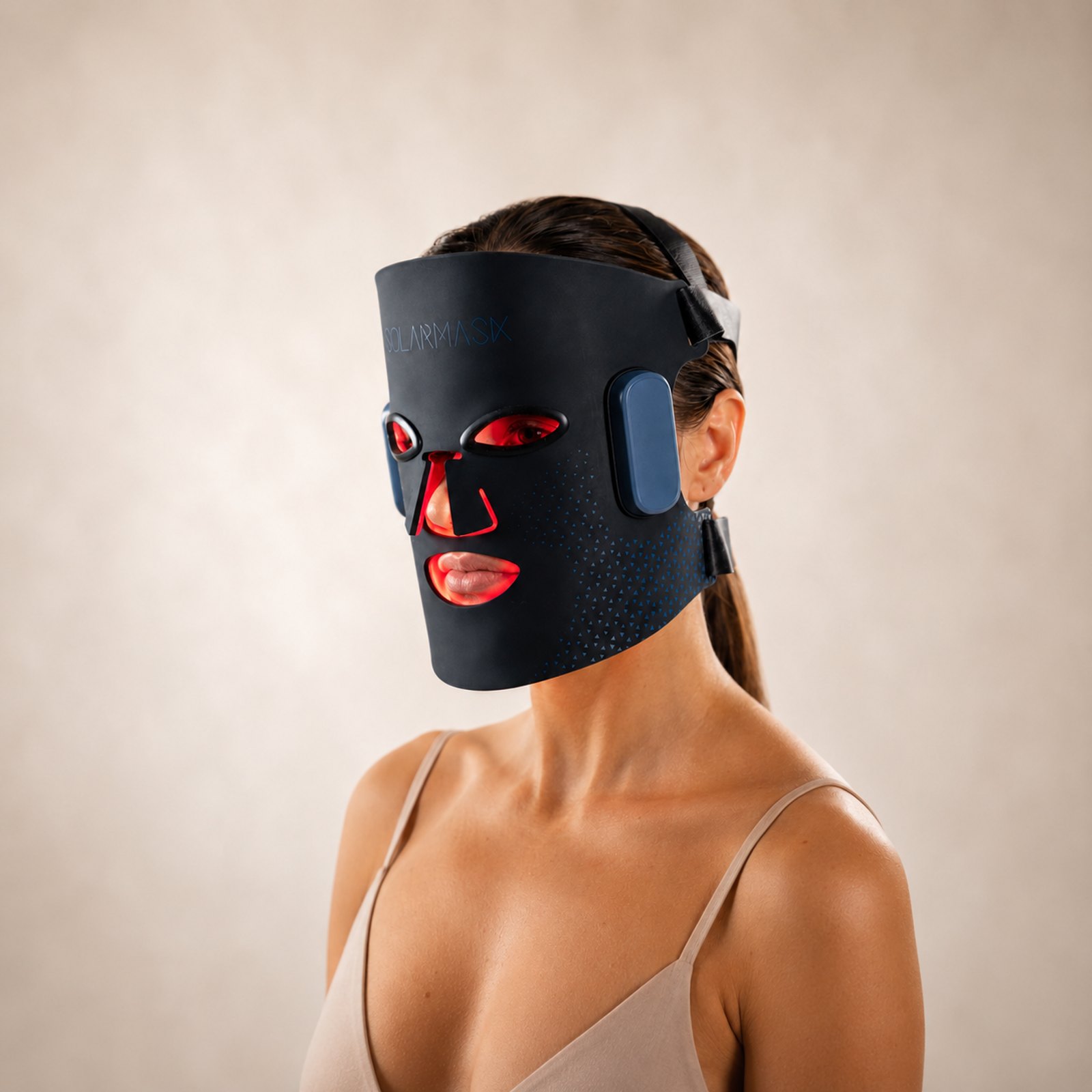
A combination usually works best: yellow (580 nm) and red (630 nm), possibly supplemented with near-infrared. The SolarMask mask features all five wavelengths in a single device.
How long will it take before I see a difference?
Pigmentation improves slowly. Allow for 8–12 weeks of consistent use, and keep this up with daily SPF to prevent recurrence.
Why is SPF so important for pigmentation?
UV radiation is the main trigger for pigmentation. If you treat your skin with light but don’t protect it from the sun, the pigmentation will keep coming back.
Pigmentation and dull skin require patience and consistency — there’s no miracle cure, but there is a proven approach. Yellow, red and near-infrared light promote a more even, fresher complexion, and daily SPF helps you maintain those results. The SolarMask features all five wavelengths.
Would you like to give this a go yourself?
The SolarMask LED Mask — all five wavelengths
Professional light therapy for home use. One mask, five treatments, 15 minutes per session. CE-certified.
View the mask →Esmee writes about skincare, LED light therapy and the science behind SolarMask. Any questions? Please email contact@solarmask.eu.
 Recommended by Dr. Farah MacDonald — physician & skin specialist
Sources & scientific studies
- Wunsch A, Matuschka K (2014). A controlled trial to determine the efficacy of red and near-infrared light treatment in patient satisfaction, reduction of fine lines, wrinkles, skin roughness, and intradermal collagen density increase. Photomedicine and Laser Surgery.
- Avci P et al. (2013). Low-level laser (light) therapy (LLLT) in skin: stimulating, healing, restoring. Seminars in Cutaneous Medicine and Surgery.
- Hamblin MR (2017). Mechanisms and mitochondrial redox signaling in photobiomodulation. Photochemistry and Photobiology.
- De Arruda Vidal C et al. (2020). LED phototherapy for facial rejuvenation. Journal of Cosmetic and Laser Therapy.
Medical disclaimer: This article is for informational purposes only and does not constitute medical advice. LED light therapy supports the skin but does not cure conditions; results vary from person to person. If you are pregnant, taking light-sensitive medication or have a skin condition, please consult your doctor first.