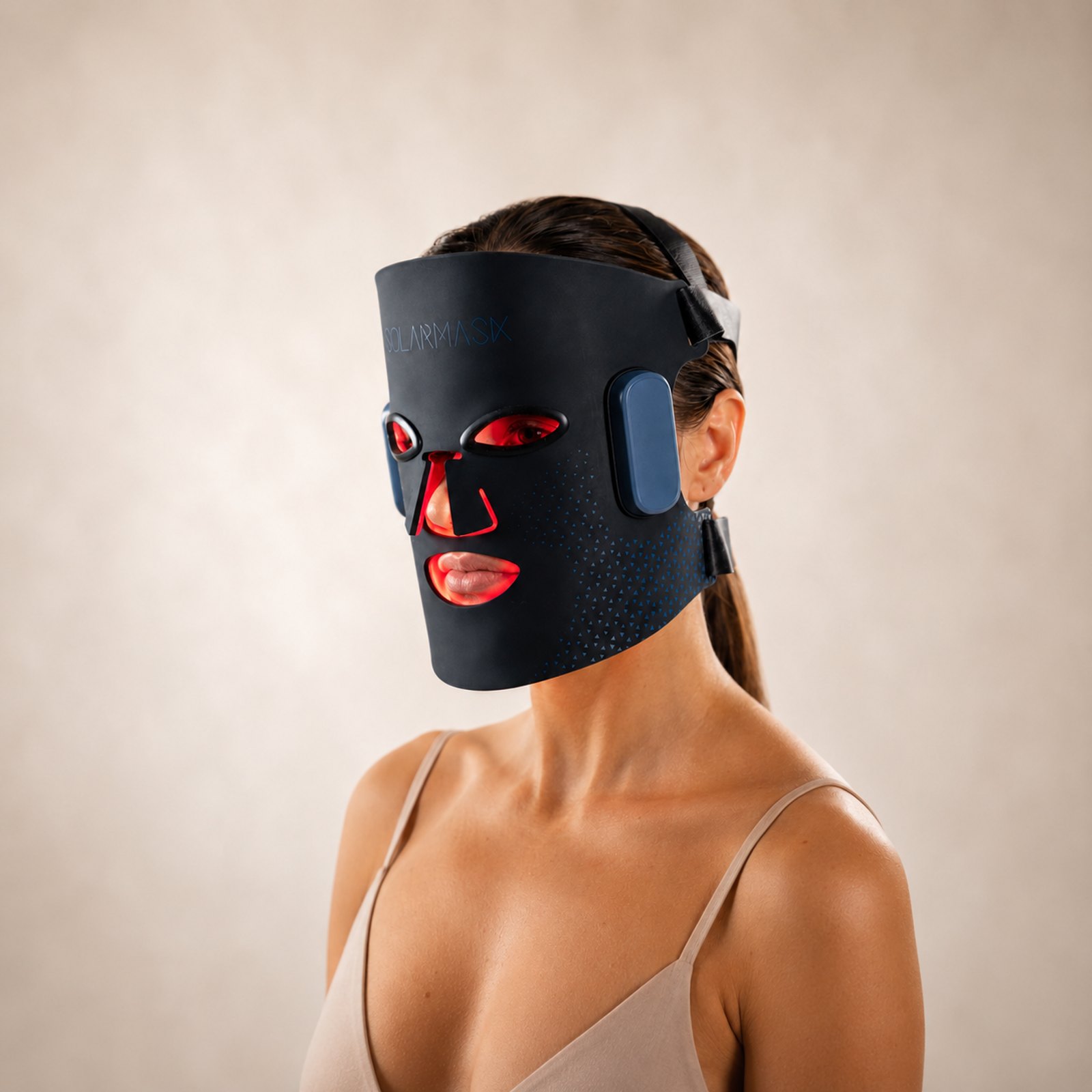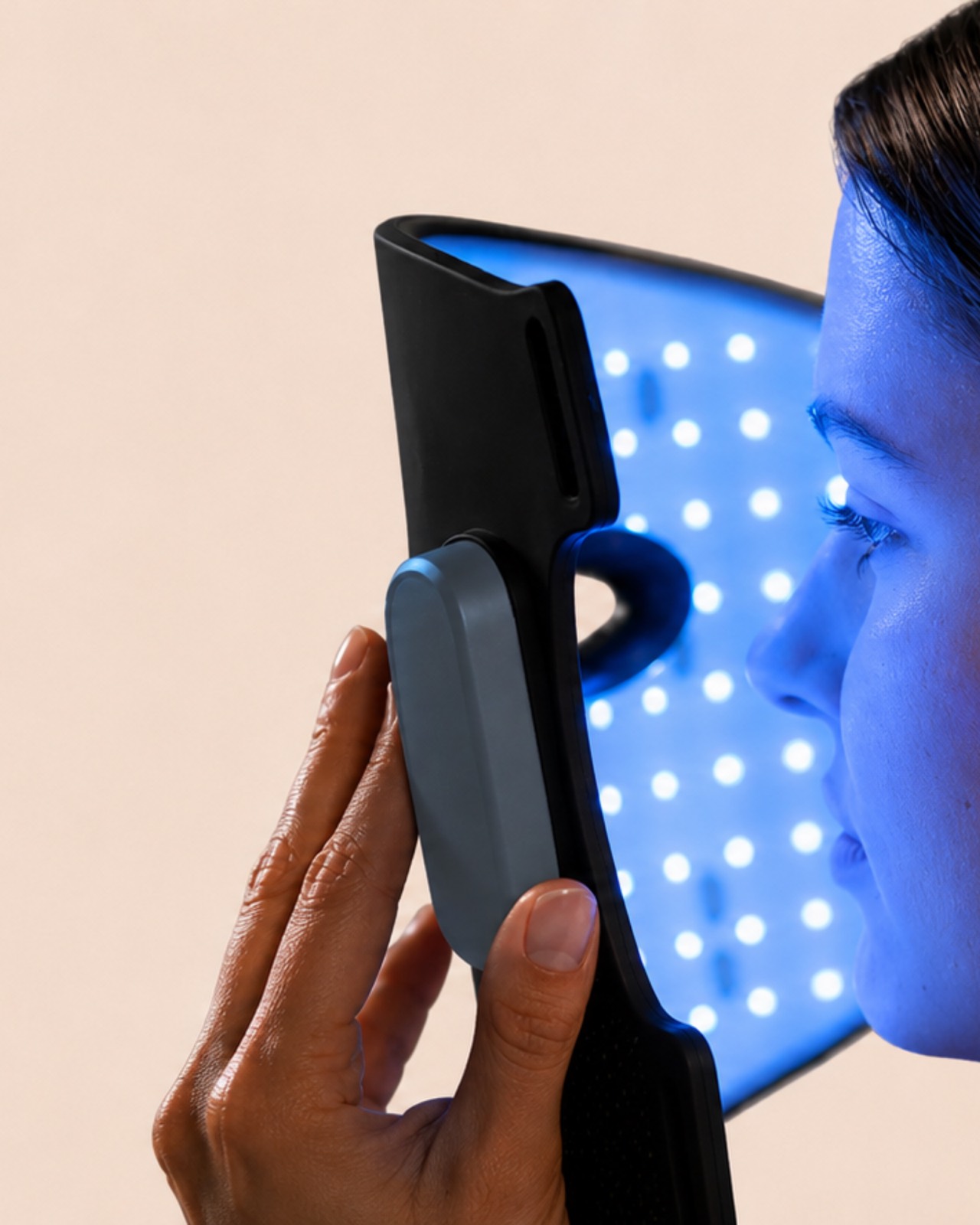
Yellow LED light appeals to many people with reactive, easily flushed skin — but what does 580 nm actually do? We lay out the facts honestly, without the hype.
Your skin is easily triggered: a bit of sun, a stressful day, the wrong product — and your face is already flushed. Many people with sensitive skin look for extra support in their routine and end up discovering LED light therapy. Yellow light in particular catches their eye, because it sounds gentler than blue or red. But what does 580 nm actually do, and is it really right for you? Here's the honest story — no inflated promises.
What is yellow light therapy, and why is it relevant for sensitive skin?
Light therapy works with specific wavelengths that penetrate deeper into the skin than ordinary visible light. Each wavelength reaches a different depth and activates different processes in the skin cells. Yellow light sits at 580 nm — right between red and green in the colour spectrum. It penetrates less deeply than red (630 nm) or near-infrared (850 nm), but that's precisely what makes it interesting for people with reactive, easily flushed skin.
Research suggests that yellow LED light may contribute to a calmer-looking complexion and a more even skin tone. Many users find that, with regular use, their skin looks less dull or prone to redness. That's why yellow light has become one of the most talked-about wavelengths among people who describe their skin as sensitive. Want to dig deeper into the science? Head over to our page on the science behind light therapy.
Yellow light for sensitive skin: what does the research say?
Scientific interest in yellow LED light focuses in part on its influence on lymphatic drainage and skin barrier function — two factors that matter when skin reacts quickly to external triggers. Broad review articles on photobiomodulation (such as Hamblin, 2017) describe how different wavelengths may each have their own potential effects on the skin; for yellow light specifically, the scientific evidence base is still more limited than it is for red and near-infrared.
One important point: yellow LED light is not a treatment for rosacea or any other skin condition. If you have rosacea or a similar skin concern, a GP or dermatologist is the right person to speak to. What we can say is that many users with sensitive, easily flushed skin describe their complexion as calmer and more even-toned after consistent use — and that's exactly what yellow light is known for. Want to read more? See our in-depth article on the proven uses of yellow LED light therapy.
Yellow light in combination with the other wavelengths
Yellow light is powerful, but it never works in isolation. The skin is a complex organ that benefits from attention at multiple levels. Red light (630 nm) can contribute to a visibly radiant, plumper-looking complexion. Blue light (450 nm) is associated with a fresher, clearer appearance. Near-infrared (850 nm) penetrates deepest and may help the skin look and feel more supple. And purple light — red and blue activated simultaneously — combines the benefits of both wavelengths in a single session.
That's exactly why a multi-wavelength mask is so appealing: you don't have to choose. With SolarMask you get all five wavelengths — red (630 nm), blue (450 nm), yellow (580 nm), near-infrared (850 nm) and purple — in one device. That way you support your skin at every level, and you can tailor each session to what your skin needs at that moment.
How to use yellow light safely and effectively
SolarMask has a fixed automatic timer of 15 minutes per session — the mask switches off by itself, so there's nothing to keep track of. For best results, SolarMask recommends using it three to four times a week during the first four to six weeks. After that, one to two sessions per week is enough to maintain your results. Consistency is key: improvements build up gradually and vary from person to person.
A few practical tips for sensitive skin:
- Start with yellow light if your skin is especially reactive — it's the gentlest wavelength in the range.
- Use the mask on clean, dry skin with no make-up or SPF applied.
- Apply a soothing moisturiser after your session to support the skin barrier.
- Don't skip sessions during the build-up phase — consistency makes the difference.
- Are you taking photosensitive medication, pregnant, or do you have a diagnosed skin condition? Always consult a doctor first.
Wondering how to fit light therapy around the rest of your routine — serums, retinol, and SPF included? Read our article on using an LED mask in your skincare routine.
Is SolarMask right for your skin?
SolarMask is a CE-certified cosmetic product that emits no UV radiation. It's designed for home use and features 312 LEDs across five wavelengths. At €169 you have a complete 5-in-1 system at home, letting you choose which wavelength to use and when — including the gentle 580 nm for the moments your skin needs a little extra calm.
Results vary from person to person, and light therapy is not a substitute for medical advice. But if you're looking for a consistent, accessible addition to your home skincare routine — and your skin tends to react to just about everything — yellow LED light is well worth exploring. Visit the SolarMask product page for the full specifications.
Frequently asked questions
Does yellow LED light help with easily flushed skin?+
Yellow LED light (580 nm) is reported by many users with sensitive, easily flushed skin as a comfortable and positive experience. Research suggests it may contribute to a calmer-looking, more even complexion. It is not, however, a treatment for rosacea or any other skin condition — if in doubt, speak to a doctor.
How long does a SolarMask session last?+
Each session lasts exactly 15 minutes. The automatic timer switches the mask off on its own, so there's nothing to monitor.
How often should I use the mask to see results?+
During the first four to six weeks, use the mask three to four times a week. After that, one to two times a week is sufficient for maintenance. Results build up gradually and differ from person to person.
Can I use yellow light alongside the other wavelengths in SolarMask?+
Absolutely — and that's one of SolarMask's key strengths. You have red, blue, yellow, near-infrared, and purple (red + blue simultaneously) all in one mask. You can choose whichever wavelength suits your skin on any given day, or switch between them as your routine evolves.
Is SolarMask safe for sensitive skin?+
SolarMask is CE-certified and emits no UV radiation. It is a cosmetic product, not a medical device. If you are taking photosensitive medication, are pregnant, or have a diagnosed skin condition, please consult a doctor before you begin.
Yellow LED light at 580 nm is the wavelength that resonates most with people who have sensitive skin and are looking for a calmer, more even-looking complexion. It's not a miracle solution, and it doesn't replace medical advice — but as part of a consistent routine, it can make a meaningful contribution to how your skin looks and feels. And with SolarMask, you don't have to choose just one wavelength: all five are built into a single mask, for a complete skincare experience at home.
Would you like to give this a go yourself?
The SolarMask LED Mask — all five wavelengths for €169
Professional light therapy for home use. One mask, five treatments, 15 minutes per session. CE-certified.
View the mask →Esmee writes about skincare, LED light therapy and the science behind SolarMask. Any questions? Please email contact@solarmask.eu.
 Recommended by Dr. Farah MacDonald — physician & skin specialist
Sources & scientific studies
- Wunsch A, Matuschka K (2014). A controlled trial to determine the efficacy of red and near-infrared light treatment in patient satisfaction, reduction of fine lines, wrinkles, skin roughness, and intradermal collagen density increase. Photomedicine and Laser Surgery.
- Avci P et al. (2013). Low-level laser (light) therapy (LLLT) in skin: stimulating, healing, restoring. Seminars in Cutaneous Medicine and Surgery.
- Hamblin MR (2017). Mechanisms and mitochondrial redox signaling in photobiomodulation. Photochemistry and Photobiology.
- De Arruda Vidal C et al. (2020). LED phototherapy for facial rejuvenation. Journal of Cosmetic and Laser Therapy.
Medical disclaimer: This article is for informational purposes only and does not constitute medical advice. LED light therapy supports the skin but does not cure conditions; results vary from person to person. If you are pregnant, taking light-sensitive medication or have a skin condition, please consult your doctor first.